Museum - Synagogue Complex in Włodawa
Muzeum - Zespół Synagogalny we Włodawie
- Wheelchair: Yes
Location
What to expect
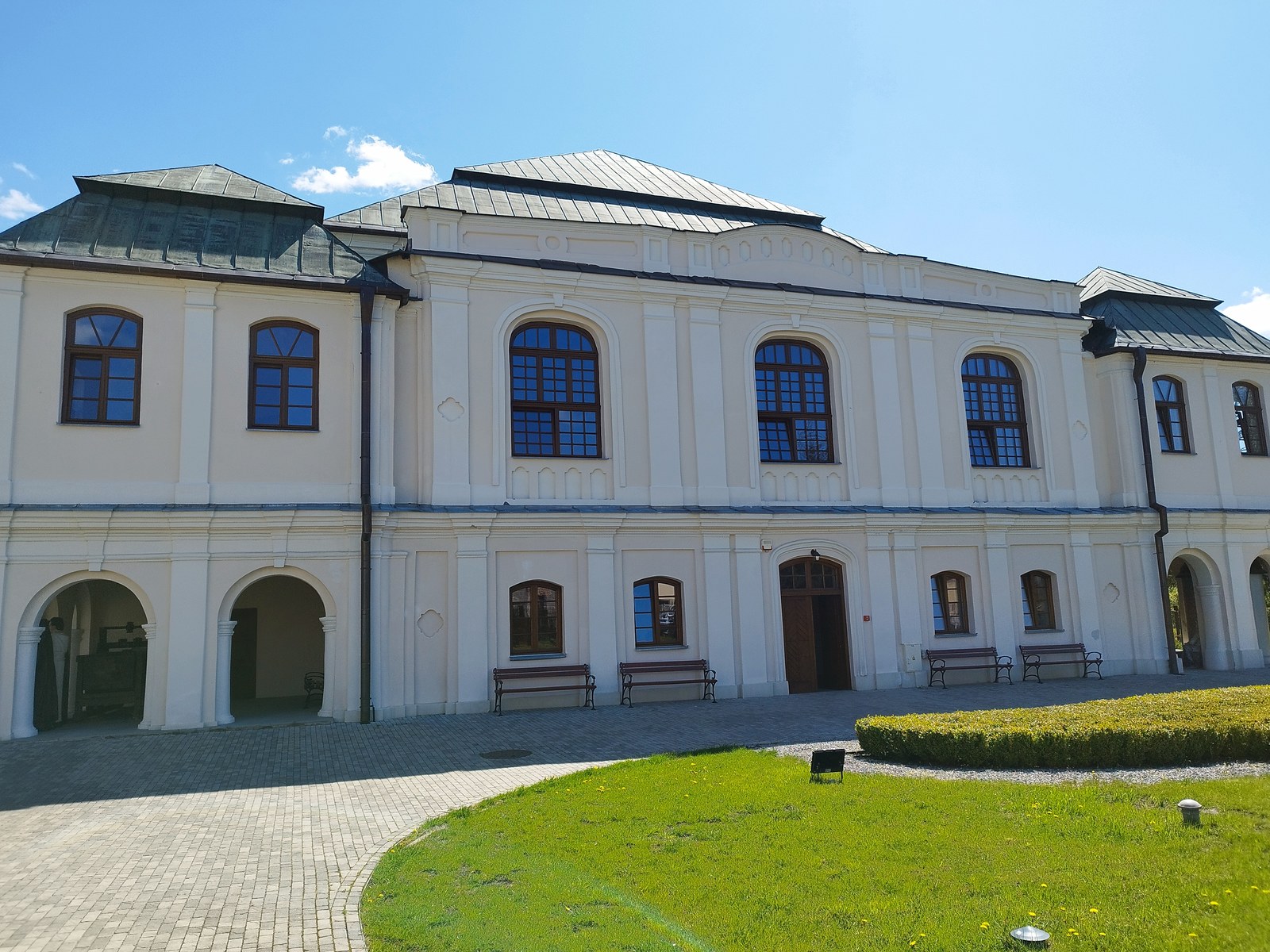
Most surviving synagogues in Poland stand alone, stripped of everything that once surrounded them. The Włodawa synagogue complex is the exception: a prayer house, a study house and the community’s own office building, all three still standing behind one gate. That is the reason to make the detour to a small town on the river Bug, in the far north-eastern corner of the Lublin region, close to the Belarusian and Ukrainian borders. In 2025 the readers of the Polish edition of National Geographic Traveler voted it the wonder of the region.
The Great Synagogue of 1764-1774 faces you as you come through the gate, and it is reserved for Jewish subjects: a permanent Judaica display, a reconstructed women’s gallery and a melamed’s room from a traditional cheder. Of the men’s hall’s old fittings exactly one survives, the stucco ark of 1936. The rest of the room is architecture - four stylised columns holding a nine-bay vault, with an empty square between them where the bimah once stood.
The Small Synagogue is the old study house, recorded in writing between 1782 and 1786. A 2023 refurbishment uncovered its 1930s wall paintings: psalm texts and prayers set among plant and animal motifs. The kahal house of 1928 holds ethnographic and non-European displays plus a collection of wood sculpture by Jan Pawłowski, a local artist.
Come if you are following Jewish heritage across the Lublin borderland, or if you want to understand what a complete community compound looked like rather than one restored prayer hall. Give the third building a miss if your time is short; the two synagogues carry the visit.
Włodawa makes no attempt to package itself for tourists, and a Polish travel feature puts it plainly: this is not a second Kazimierz Dolny. Expect no queues. On TripAdvisor the museum holds 4.6 out of 5 from ten reviews and ranks second among the town’s attractions, which tells you how few people come this far.
Tips
- Winter means weekdays only. From October to April the museum opens Monday to Friday 9:00-15:00 and does not open at weekends at all. May, June and September run 9:00-16:00 on weekdays and 10:00-14:00 at weekends; the full 9:00-17:00 applies only in July and August. It closes on New Year’s Day, Epiphany, Easter, Corpus Christi, 15 August, 1 and 11 November, Christmas Eve, Christmas Day and 31 December.
- Monday is free, but only in one building. Free entry covers the exhibitions inside the Great Synagogue. The other displays cost 10 PLN standard and 7 PLN concession that day, instead of the usual 18 PLN and 12 PLN.
- No online tickets exist. The museum sells nothing over the internet, so individual visitors simply walk up to the desk. It takes Polish złoty in cash and payment cards, children under seven go free, and holders of the Polish Large Family Card pay 12 PLN and 7 PLN.
- A guide is a group product. Guided visits run for organised groups of up to 30 people and cost 100 PLN in Polish or 200 PLN in English. Book two days ahead by phone, Monday to Friday between 8:00 and 15:00, or through the reservation form on the museum’s site. Outside opening hours the entry ticket rises to 25 PLN and the English guide to 250 PLN.
- Label languages are not published. The site says nothing about what languages the captions are in, while it does price an English-speaking guide. If you read no Polish, book the guide rather than gamble on the labels; the visiting rules note that the museum provides an English guide for Israeli youth study groups.
- The cinema is not an add-on. The museum runs a virtual-reality cinema, Kino “Zachęta”, with two films of its own: Szabat Szalom, a Sabbath dinner staged inside the Włodawa synagogue, and Sobótki Poleskie, on midsummer rites in the Polesie marshes. Screenings Monday to Friday at 10:00, 12:00 and 14:00, by prior arrangement, 10 PLN standard and 7 PLN concession. The name is deliberate: the pre-war Zachęta cinema on today’s ul. 11 Listopada was where the first liquidation action of 22-23 May 1942 took place.
- One hour is the floor. The Great Synagogue and the Judaica display take about an hour. All three buildings with a guide run closer to two, and regional press reports visits of one to four hours, which is why the 2023 works added seating areas.
- The walk to Sobibór. The most interesting line in the price list is not an exhibition. The museum runs a 90-minute guided walk on the Włodawa ghetto and the last road of its Jews to Sobibór. It costs 300 PLN in Polish and 500 PLN in English for up to 30 people, less than the general town walk at 400 PLN and 600 PLN.
- Step-free throughout. Both synagogues and the administrative building have accessible entrances, with adapted toilets on the ground floors. The Small Synagogue has a lift to the upper floors and an induction loop in its men’s hall. Guide dogs are admitted; other animals are not.
Getting there
On foot from the centre. The address is ul. Czerwonego Krzyża 7, a few minutes’ walk from the market square and the Czworobok, an 18th-century ring of single-storey market stalls. The Pauline church of St Louis and the Orthodox church of the Nativity of the Mother of God sit on the same short walk. The three faiths that give the local festival its name are all within about fifteen minutes on foot.
From Lublin. The regional capital is close to 100 km away by road via Chełm or via Parczew, and most visitors drive. Buses and minibuses on the route are run by TRANS-MAR and VIKI Bus through Łęczna, Cyców and Urszulin; check timetables with the carriers directly, because the museum publishes no transport information of any kind.
By car and bicycle. A single gate leads onto the grounds and to all three buildings, the Great Synagogue straight ahead and the Small Synagogue to its left. The museum is certified as cyclist-friendly and lets you leave a bicycle inside the grounds, though it accepts no responsibility for it. No museum car park is described on the site.
Where to sleep. Włodawa has few beds and effectively none during the Festival of Three Cultures in September. That is the one practical complaint that recurs in visitor reviews, and it concerns the town rather than the museum - book well ahead or stay in Chełm.
Nearby
Sixteen kilometres away stands the museum and memorial site at Sobibór , the extermination camp to which Włodawa’s Jews were deported. It is the natural second half of the same day, and the museum’s guided walk follows exactly that route. On the way back towards Lublin, the museum of the Chełm land covers the same borderland from the town-history side. North along the Bug, already in Podlasie, the museum in Biała Podlaska and its Radziwiłł castle park offer a change of register after Włodawa and Sobibór.
Background
Before the war Jews made up roughly 60 per cent of Włodawa, some 5,600 people. The ghetto was opened in January 1940 and, with refugees and deportees from elsewhere, held between 9,000 and 10,000. The museum runs a separate website devoted to its history, and it records four deportation actions to Sobibór in 1942: 22 and 23 May, 7 August, 24 October and 6 November.
The first of them was staged at the Zachęta cinema, where about 2,000 people were assembled. The August action took the children under fourteen. The final action began at the end of April 1943, and the search for those in hiding lasted three days; the liquidation of the first days of May ended the ghetto and the labour camp.
The synagogue building went through two fires, not one. The first destroyed it during the First World War, and the woodwork was restored after 1920. The second broke out in 1934, and that is the one that consumed the wooden fittings of the men’s hall. The stucco ark standing there today dates from two years after that second fire, 1936.
In the Second World War the German occupiers turned the building into a store, and a store it remained after the war until 1970. Conservation work ran through the 1980s, and the museum has occupied all three buildings since 1983.
Temporary exhibitions here
Frontier
18 September 2026 - 31 May 2027
Paintings by Piotr Kowieski in the kahal house of the Włodawa synagogue complex, 18 September 2026 to May 2027. Tickets, winter hours, context and tips.
Memory
18 September 2026 - 31 May 2027
Ewa Trafna's Memory in the upper women's gallery of the Great Synagogue in Włodawa, 18 September 2026 to May 2027: tickets, winter hours, access.
Nearby museums
 History
Museum and Memorial Site in Sobibór
Żłobek 101, 22-200 Włodawa
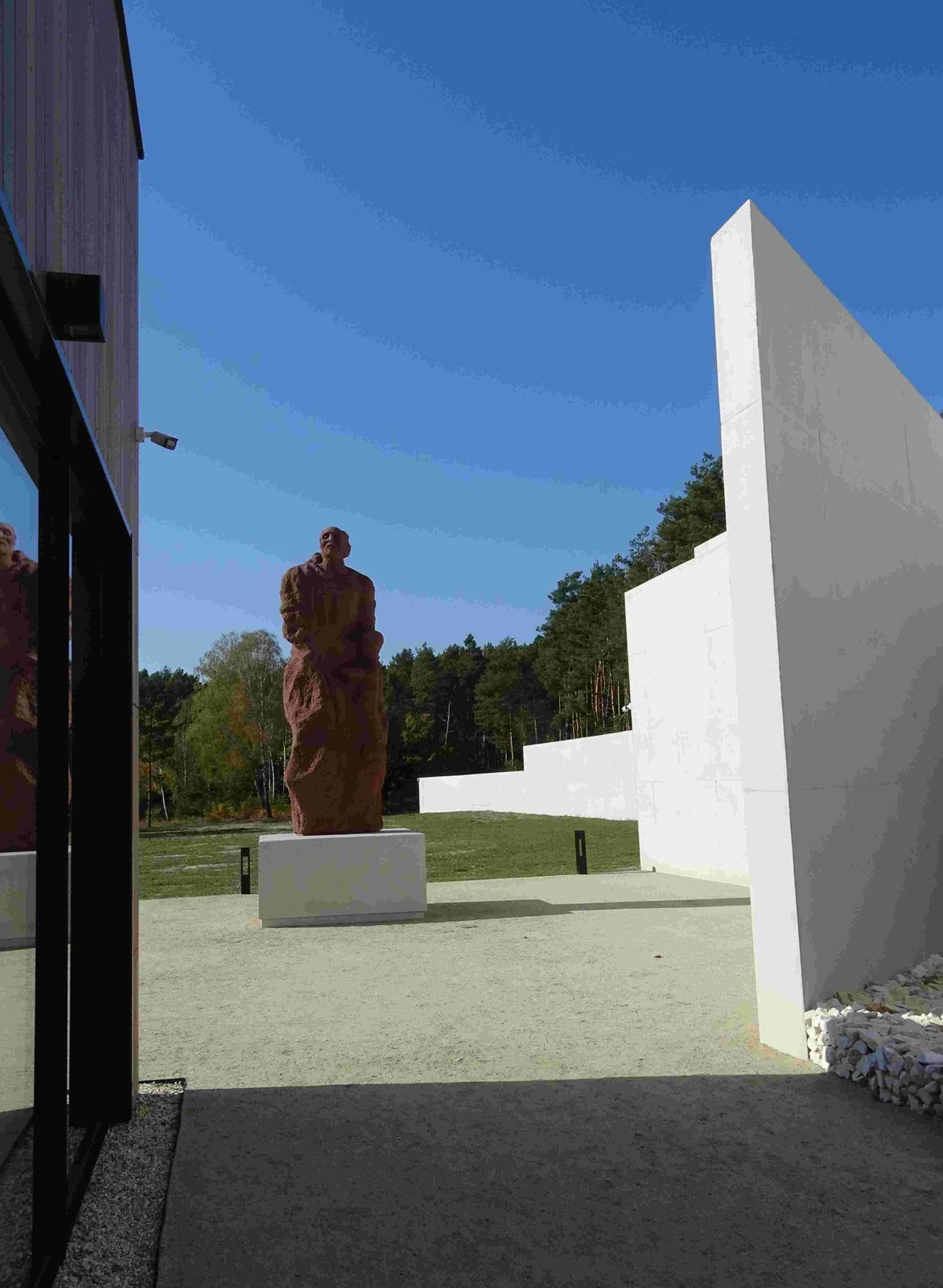
Memorial on the site of the German Nazi extermination camp of 1942-1943 in eastern Poland. Permanent exhibition, over 700 victims' objects. …
 History
Wiktor Ambroziewicz Museum of the Chełm Land
ul. Lubelska 55, 22-100 Chełm
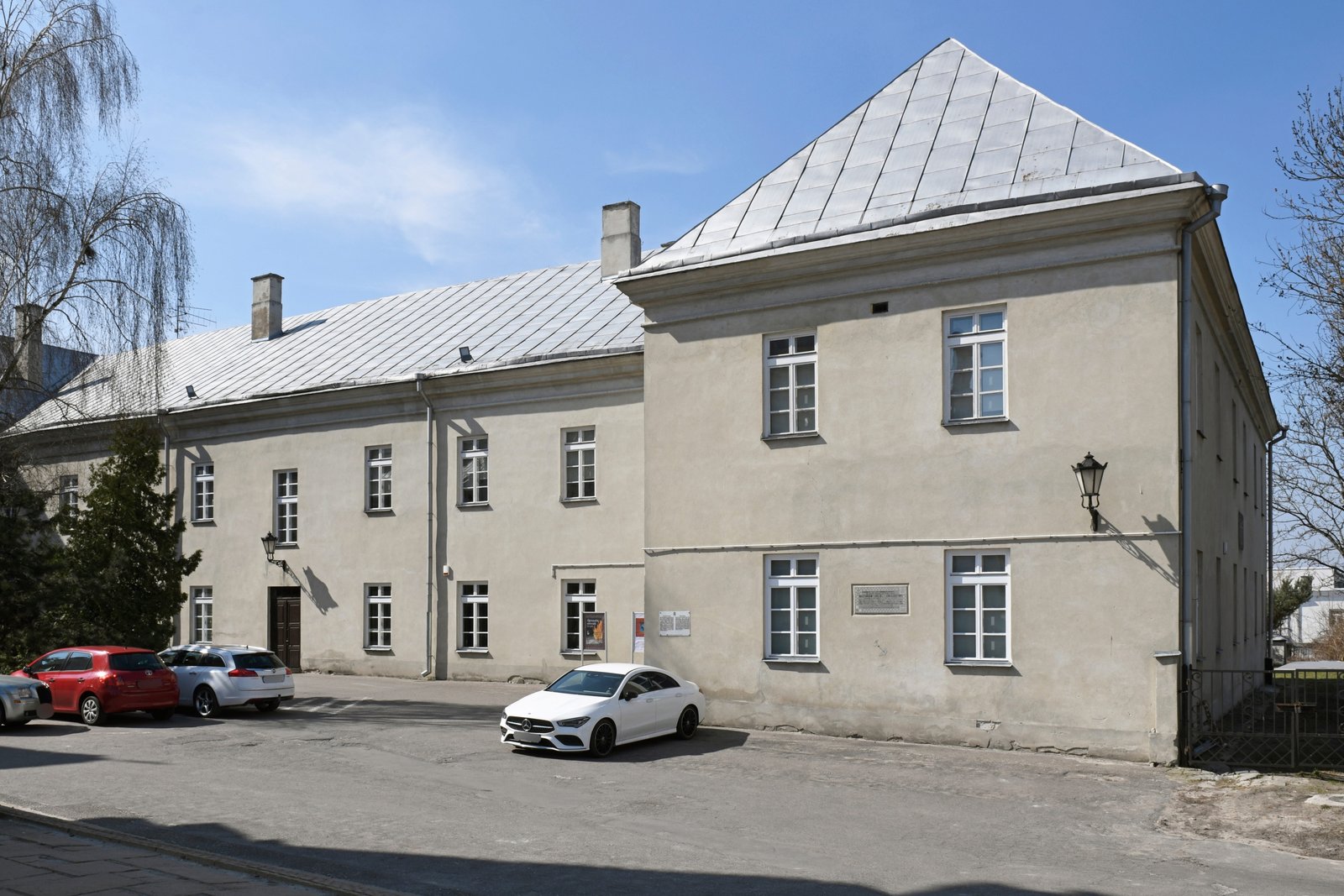
The regional museum of Chełm in eastern Poland fills four historic buildings with archaeology, ethnography and art. A pass costs 40 zl and …
 History
Museum of Southern Podlasie in Biała Podlaska
ul. Warszawska 12, 21-500 Biała Podlaska
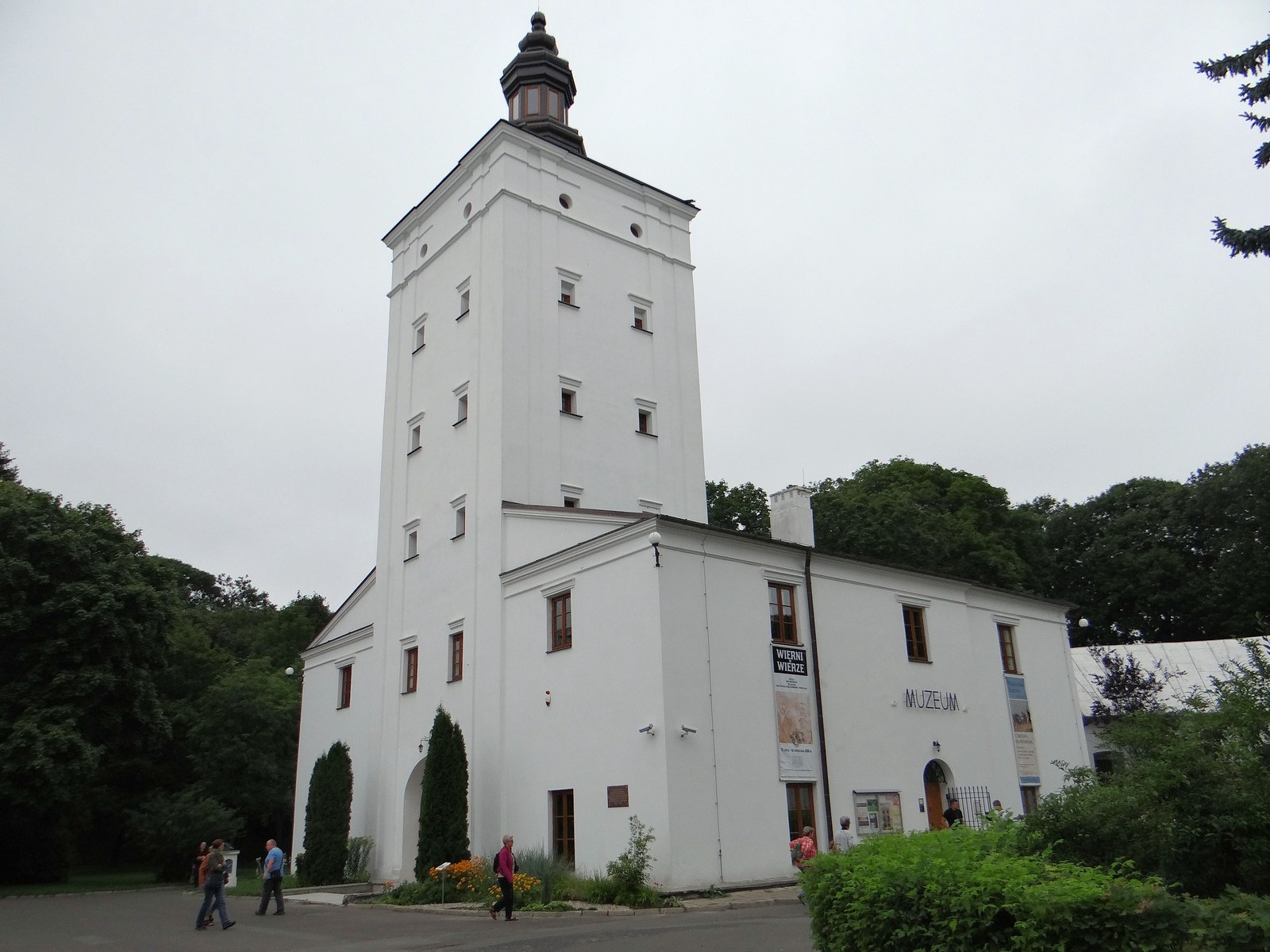
Museum in Biala Podlaska set in the Radziwill palace complex: nearly 1700 icons, permanent exhibitions, ticket prices, opening hours and how …