Cracow Saltworks Museum in Wieliczka
Muzeum Żup Krakowskich Wieliczka
Location
What to expect
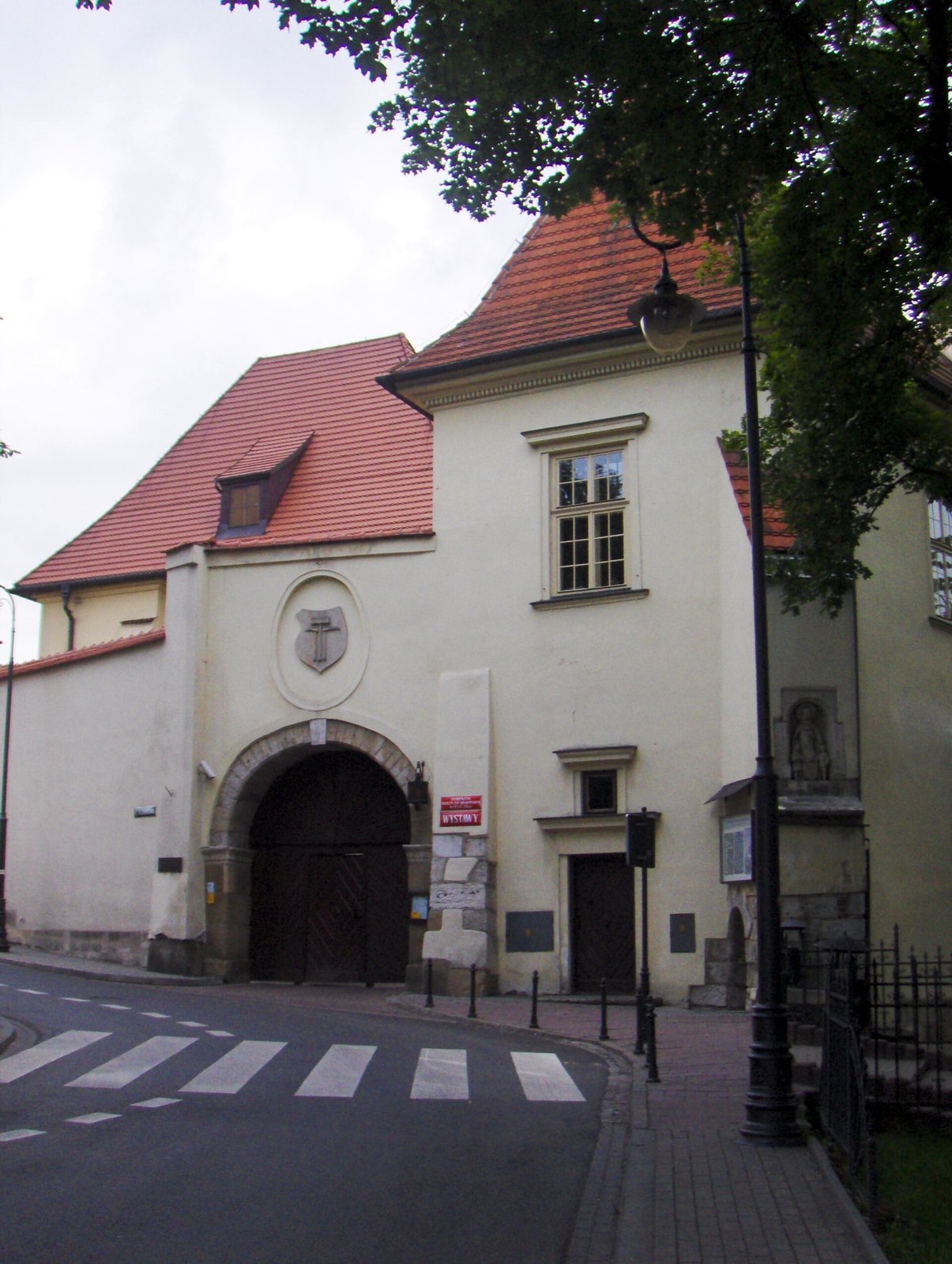
The Cracow Saltworks Museum in Wieliczka is the part of the salt mine that most day-trippers from Krakow walk straight past. When the standard Tourist Route ends, the crowd heads for the lift. Anyone who joins the queue marked “WEJŚCIE DO MUZEUM” (entrance to the museum) carries on instead: another 1.5 km, 17 chambers, level III, 135 metres down. Same ticket, same mine, far fewer people. It is a separate institution from the Wieliczka Salt Mine company, with two seats: the Saltworks Castle above ground and this exhibition below it.
One thing to settle before you plan anything: the Saltworks Castle and its courtyard are closed. The museum says the building works run to the end of 2028, and its own project notice puts the reopening at the turn of 2028 and 2029. The address on this page is where the museum is registered, not where you can go today.
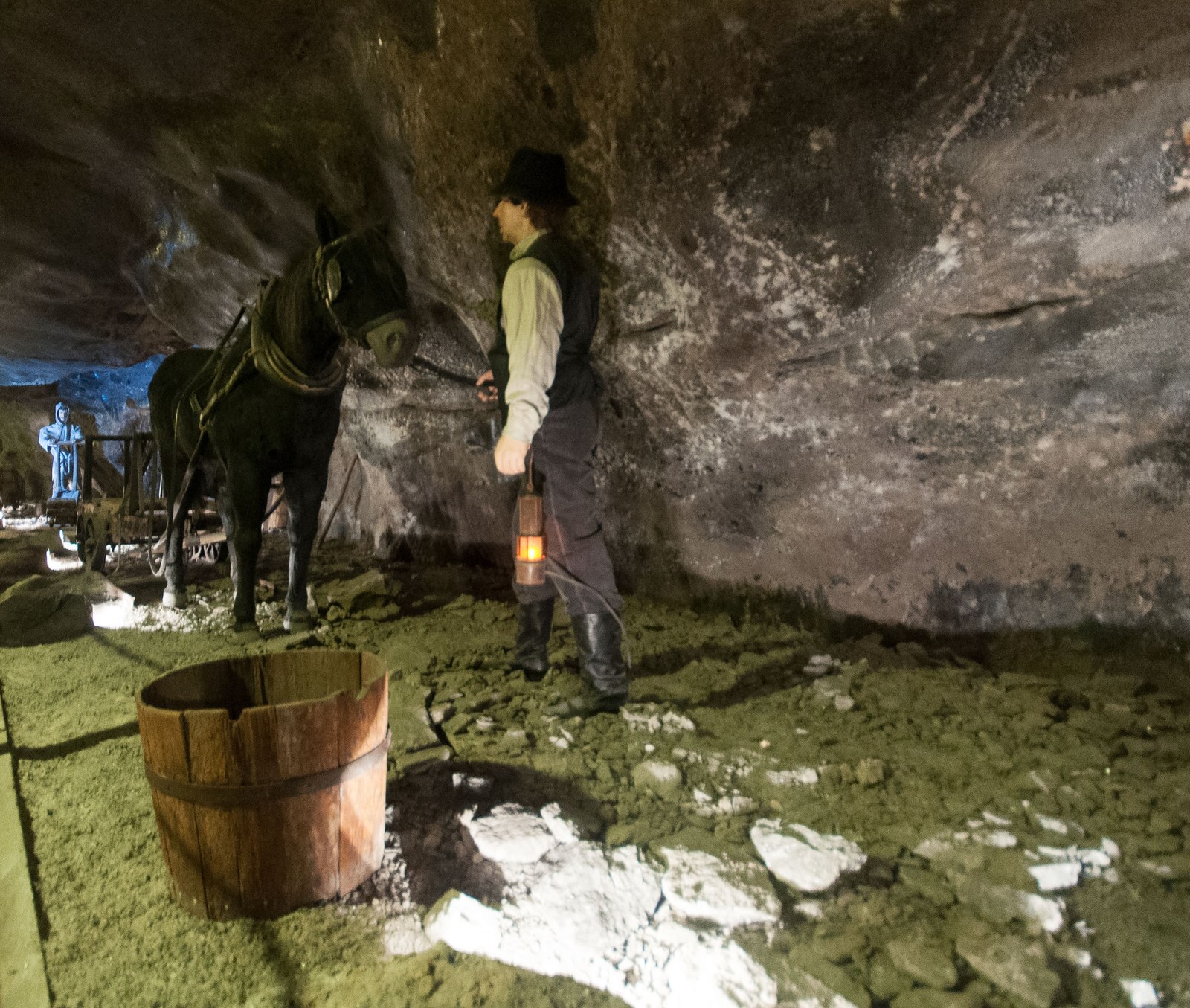
What is down in the mine is worth the extra hour. Three kieraty - Polish, Saxon and Hungarian horse-powered winding machines the size of a two-storey house - dominate the route; the Polish one is reckoned to be the largest wooden mining machine anywhere. Around them sit the 1534 horn of the Miners’ Brotherhood, paintings by Jan Matejko and a plush carriage built for senior Austro-Hungarian officials. Further on, crystals lifted from the Crystal Grottoes and Neolithic vessels used to boil brine into salt. The chambers themselves are the other half of the show: Saurau is 28 metres high, Maria Teresa is the largest in the mine.
Best for adults who came for the industry rather than the underground chapel photograph, and for teenagers who can manage a fourth hour on their feet. Skip it if the Tourist Route has already finished you off, or if you are travelling with small children. You can decide underground: giving it up costs nothing beyond the ticket you have already used.
Tips
- No extra charge. The museum exhibition is included in the mine’s Tourist Route ticket: 119 PLN standard, 93 PLN reduced, 294 PLN for a 2+1 family, 350 PLN for 2+2. A tour led in a foreign language costs 159 PLN standard and 131 PLN reduced. Children under four go free.
- English is available. Individual visitors can join tours in English, German, French, Italian, Russian or Spanish. Both routes are walked with a qualified guide, and the guide’s fee is already in the ticket price.
- Dress for 14 degrees, not 17. The Museum Route holds a constant 14-15 C, three or four degrees colder than the Tourist Route. In July that difference is the whole argument for a jacket.
- Budget three hours underground. That is the museum’s own estimate for both routes together, 2.2 km plus 1.5 km. Add 45-60 minutes each way from Krakow and the trip eats half a day.
- No booking needed on your own. Groups must reserve; individual visitors simply turn up. Descents run between 8:00 and 18:00 (6 PM), with the last group going down at the close of that window.
- Photos yes, flash no. Photography is allowed on both routes without flash. Large bags go to the left-luggage counter; anything up to 35 x 20 x 20 cm can come with you.
- Step-free the whole way. The exhibition sits on one level with no thresholds, reached by the mining lift in the Regis or Daniłowicz shaft. Wheelchairs are lent out, and a week’s notice to the accessibility coordinator (+48 12 289 16 33) gets you an assistant and a trained guide.
- Ignore the prices on tourism portals. Several still list 59-77 PLN, a figure years out of date. Confirm on the museum’s site or with visitor services (+48 12 278 58 49, open 9:00-17:00).
Getting there
Wieliczka is about 15 km south-east of central Krakow and needs no tour bus.
- Train: the SKA1 suburban service from Kraków Główny to Wieliczka Rynek-Kopalnia takes 22-25 minutes and runs roughly every half hour. The Daniłowicz shaft, where visits start, is a five-minute walk from the platform.
- Bus: line 304 from the Dworzec Główny Zachód stop beside the Galeria Krakowska mall, 40-45 minutes, every 15 minutes on weekdays and every 30 at weekends. Get off at Wieliczka Kopalnia Soli.
- Car: the A4 motorway or national road 94 from Krakow; paid car parks sit around ul. Daniłowicza and fill up before noon in summer.
- On foot: the Saltworks Castle at ul. Zamkowa 8 is a few hundred metres from the shaft, but there is nothing to see there until the renovation ends.
Nearby
Next door on the same street is the Wieliczka Salt Mine , the tourist route the museum exhibition continues from. One ticket covers both, so read the two pages as one visit. Back in Krakow, the Museum of Engineering and Technology shows comparable industrial machinery above ground and in the warm. The Archaeological Museum in Krakow picks up the prehistoric end of the salt story.
Background
The museum was founded in 1951 by Alfons Długosz, a Wieliczka schoolteacher and artist who persuaded the mining and culture ministries that worn-out mine equipment was heritage rather than scrap. Its seat became the Saltworks Castle, the administrative centre of the salt operation from the late 13th century until 1945 and rebuilt from war damage between 1976 and 1996. The courtyard still holds Wieliczka’s oldest exploratory shaft, sunk in the mid-13th century, a 14th-century tower and stretches of the medieval walls. The castle joined the UNESCO World Heritage listing in 2013, thirty-five years after the mine itself.
The collection runs to roughly 20,000 objects across geology, archaeology, mining technology, cartography, art, ethnography and the archive. Its most celebrated holding is a set of over 300 salt-cellars, Gothic through Art Deco, in gold, silver and porcelain - among the finest such collections in the world. The current works are the third stage of the castle’s reconstruction: 30.3 million PLN of European funding within a 50.58 million PLN project. It adds lifts, underground passages between the wings and a new permanent exhibition, “Salt Jewel in the Crown”, spanning the 13th century to 1996. Display space will grow from about 400 to 1,470 square metres.
Temporary exhibitions here
Saint Barbara, Pray for Us. The Patron Saint of Miners in the Collection of Fernando de Mello Mendes
11 May 2026 - 30 December 2026
More than 120 images of Saint Barbara from the Portuguese collection of Fernando de Mello Mendes, shown in the Maria Teresa II chamber 135 metres under Wieliczka.
Nearby museums
 Science
Wieliczka Salt Mine
ul. Daniłowicza 10, 32-020 Wieliczka
Wieliczka Salt Mine near Krakow: Tourist Route vs Miners' Route, ticket prices, opening hours, and how to get there by train from Krakow.
 Science
Museum of Engineering and Technology
ul. Świętego Wawrzyńca 15, 31-060 Kraków
Museum of Engineering and Technology Krakow in a historic tram depot. Hours Tue-Sun 10-18, tickets PLN 35/28, free on Tuesdays.
 History
Archaeological Museum of Krakow
ul. Senacka 3, 31-002 Kraków
Archaeological Museum Krakow: during the rebuild only the prehistory of Małopolska is open. Tue-Sat 9-17, Sun 11-16, tickets PLN 15/10, free …