Diocesan Museum in Tarnów
Muzeum Diecezjalne w Tarnowie
Location
What to expect
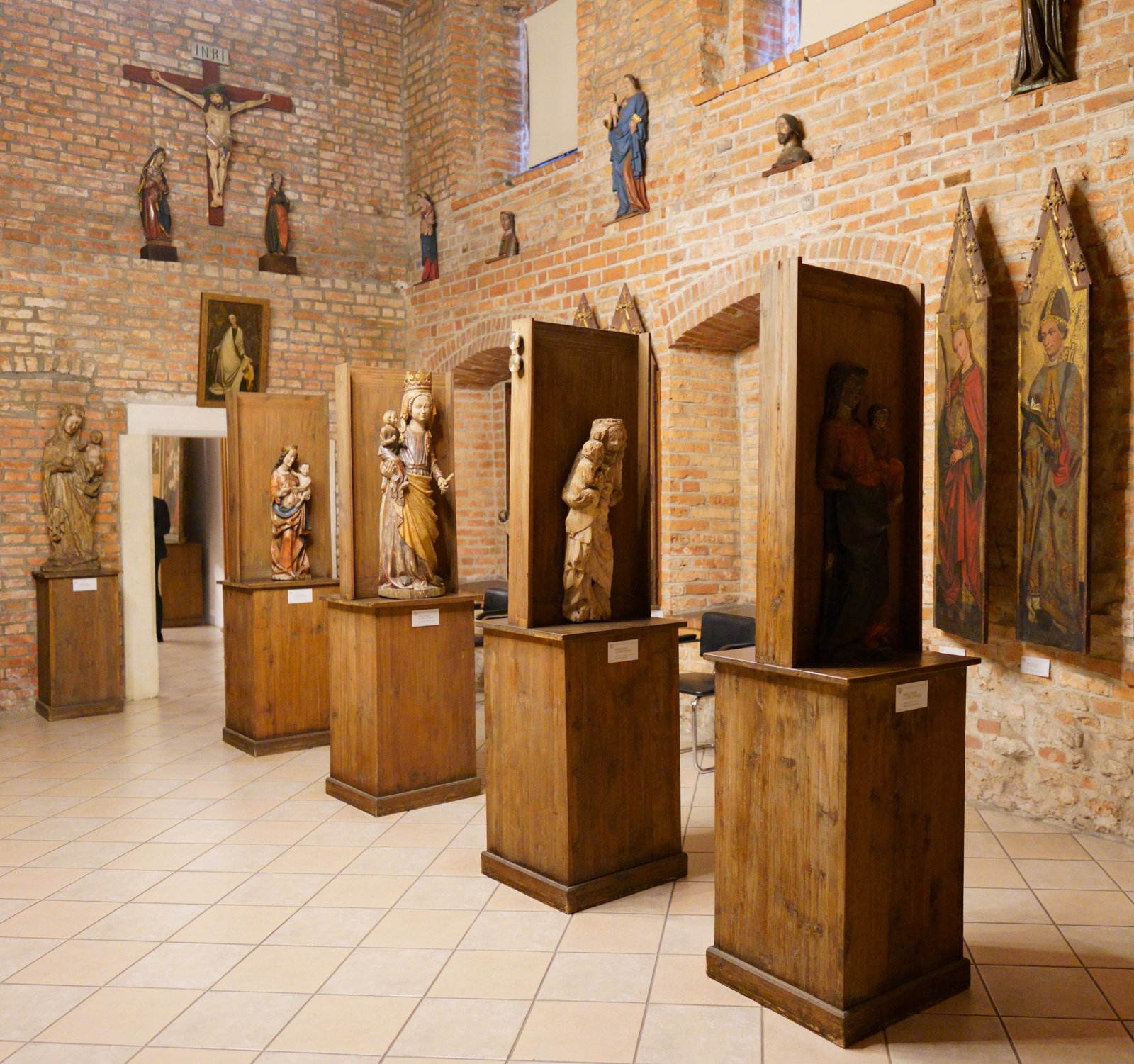
The collection at the Diocesan Museum in Tarnów is better than the display it sits in, and knowing that before you arrive is most of the preparation you need. Gothic panel painting and carved figures of the Kraków-Sącz school, pulled together over 130 years from parish churches across southern Poland, are shown in four linked 16th-century townhouses with no screens, no interpretation and very little lighting design. According to the Tarnów tourist office, admission is free. Nothing else in Tarnów gives you an hour of art of this quality for nothing.
The rooms run through four adjoining houses that wrap the west side of the cathedral. The Scholasteria holds folk paintings on glass, given in 1957 by Norbert Lippóczy, a Tarnów collector of Hungarian origin. The Akademiola has two medieval halls; the Mikołajowski House puts folk art on the ground floor and vestments on the floor above, in a room of church textiles running from the Middle Ages to the 19th century.
The one object worth the journey east is the Lamentation from Chomranice, an anonymous Gothic panel of around 1440 that turns up in every survey of Polish medieval painting. The oldest piece in the building is a 13th-century carved head of John the Baptist on a charger. A fourth house, the Mansjonariusze House, holds a burgher’s salon left by the collector Olga Majewska: canvases by Jacek Malczewski, Vlastimil Hofman, Kazimierz Sichulski and Wojciech Weiss, plus porcelain and clocks.
Best for anyone who came to Poland for medieval art and is happy to look without being guided. Labels are Polish only and sparse, and no audio guide is advertised, so if you want a museum that explains itself in English, the Bishop Erazm Ciołek Palace in Kraków does the same material properly and this can wait for a second trip.
Tips
- Allow 60 to 75 minutes. Roughly nine rooms across four houses, no multimedia, stairs between floors. Half an hour covers the Lamentation and the vestment room, but the glass paintings deserve the rest.
- The weekday morning window is short. Tuesday to Friday the museum runs 9:30-12:00 and 13:00-15:30, with a technical break in between. Arrive after 11:15 and your visit gets cut in half by the closing door.
- Weekends are the easier slot. Saturday, Sunday and holidays it opens straight through, 9:00-13:00, with no midday break - the best window if you are coming out from Kraków for the day.
- Call ahead if there are more than two of you. The museum states that visitor numbers cannot exceed 25 people at a time, which means arrivals have to be arranged. Phone +48 14 621 99 93; staff speak Polish, so ask your hotel to make the call if you need to.
- Do not skip the vestment room. The liturgical textiles are a stronger holding than their upstairs position suggests, and several chasubles are medieval.
- Photography is allowed. The rooms are dark and historic, so plan on a slow shutter rather than a flash.
- With children, ask about the detective corner. Added in the 2025 refurbishment: kids get cards with sketches of paintings from the collection and hunt for the originals in the rooms, matching the colours. It is the only provision for young visitors in the building.
- Check the news feed, not the Exhibitions tab, for what is on temporarily - the tab goes stale while the front page advertises current openings.
Getting there
On foot from Tarnów’s market square: three minutes. Plac Katedralny adjoins the Rynek on its east side, and the museum is at number 6, along the west flank of the Cathedral Basilica.
From Tarnów railway station: about a 15-minute walk uphill along ulica Krakowska through the old centre. Trains from Kraków Główny take roughly an hour and run throughout the day, so this works as a day trip without an early start.
By car: off the A4 and a few minutes into town, but the old town has traffic restrictions and paid parking. Leave the car below the escarpment and walk up - the lanes around the cathedral are not the place to go hunting for a space.
Nearby
The comparison that teaches you the most is the Bishop Erazm Ciołek Palace in Kraków, where the National Museum shows Gothic art of the same school with modern lighting and English labels - see both and Polish medieval art clicks into place. The monastic thread continues at the Museum of the Cistercian Abbey in Szczyrzyc , which the Tarnów museum itself lists among the art collections of its diocese. If it is the folk glass and the Paszyn carvings that stay with you, carry on to the Nikifor Museum in Krynica-Zdrój in the mountains to the south.
Background
The museum was founded on 25 October 1888 by Fr Józef Bąba, then rector of the Tarnów seminary, making it the oldest diocesan museum in Poland. The collection sat in the seminary building first, moved to the town hall between the wars, and reached the houses beside the cathedral in 1948 with the approval of Bishop Jan Stepa.
The four houses each have their own history. The Akademiola was Tarnów’s first school, a branch of the Kraków university; the Mikołajowski House was built in 1524 by the burgher Jan Mikołajowski and is considered the oldest surviving building in the town, with stone portals in the Wawel manner.
In June 2025 the museum reopened after a year-long overhaul: a new roof, thermal insulation, restored facades, underfloor heating and stabilised humidity to protect the Gothic holdings. Two extra rooms were gained for temporary shows and school workshops, along with the children’s corner.
Nearby museums
 History
Archdiocesan Museum in Krakow
ul. Kanonicza 19-21, 31-002 Kraków
Archdiocesan Museum Krakow on Kanonicza Street - sacred art and Karol Wojtyla's former home. Tickets 10/6 PLN, Tue-Sun 10:00-17:00.
 Art
ArtBishop Erazm Ciołek Palace
ul. Kanonicza 17, 31-002 Kraków
Bishop Erazm Ciolek Palace - medieval Polish art and icons near Wawel. Hours, tickets 18/14 PLN, free Tuesdays, directions.
 Culture
Dominican Museum in Krakow
ul. Stolarska 12, 31-043 Kraków
Dominican Museum in Krakow - 800 years of the Dominican Order: Poland's oldest stained glass and monastery treasures. Free entry, book …