Skawina Regional Museum
Muzeum Regionalne w Skawinie
- Wheelchair: Yes
- Elevator: Yes
Location
What to expect
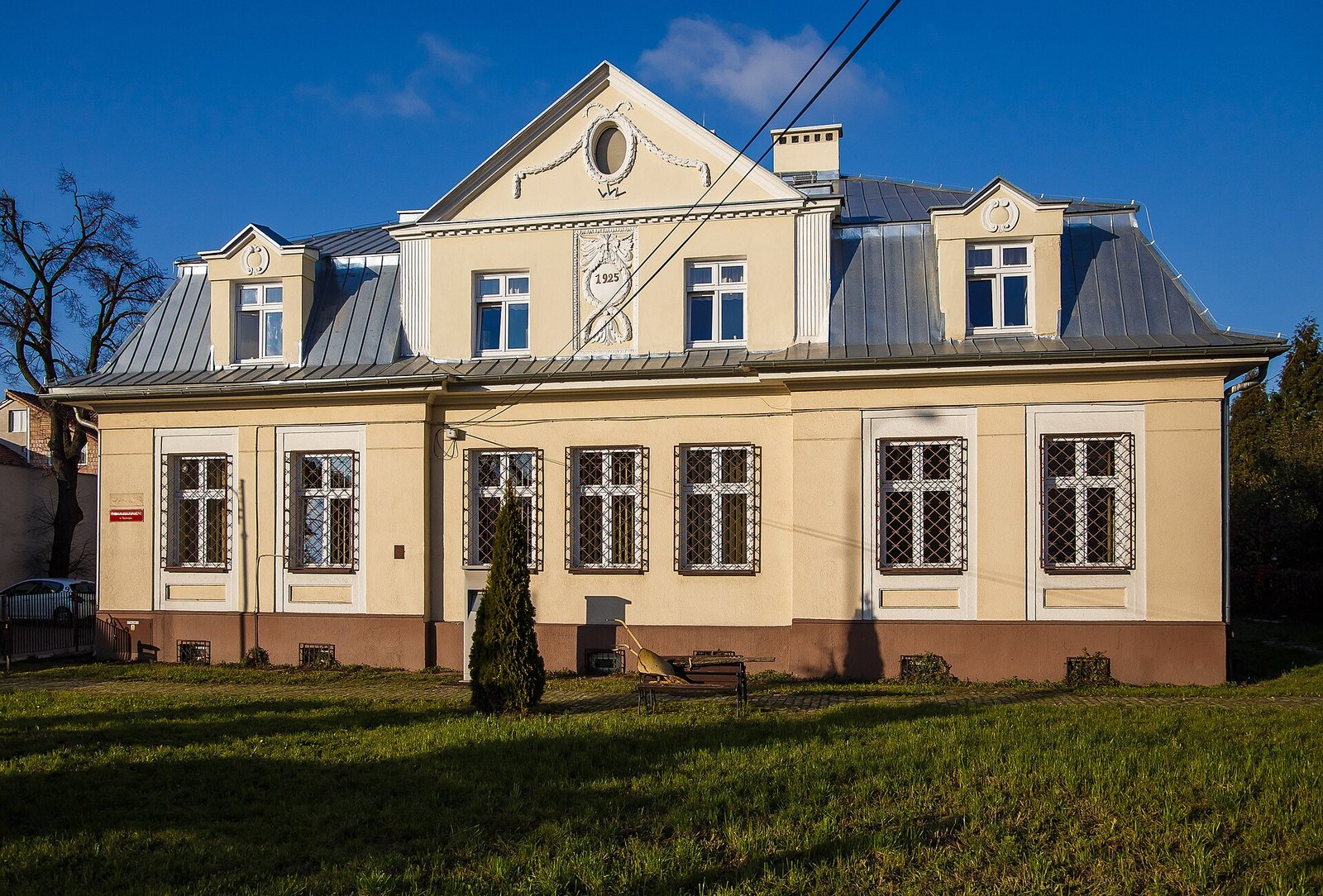
Under two hundred metres from the platform at Skawina station, on the upper floor of a 1925 manor house, the Skawina Regional Museum has filed one small town’s entire biography. Admission is free, to the permanent displays and to the temporary shows alike. A pedagogical library occupies the ground floor, so the museum is one floor and a handful of rooms - a short circuit, not a building you get lost in.
The permanent exhibition runs in six strands. Three of them follow the town itself: Skawina from prehistory to 1939, its industry, and the occupation with the post-war years. The other three cover its institutions and its material culture: the schools and the theatre, the volunteer fire brigade with the “Sokół” gymnastic society, and Skawina costume with the ethnographic collection. The strongest material is the material found or handed over locally: archaeological finds recovered when the market square was rebuilt, carved dowry chests, regional dress, and paintings by the local artist Ludwik Lipowczan.
The industrial strand is told with more precision than most regional museums manage. A steam brewery from 1895, an oil refinery that stood idle for two decades after it was built and then worked for barely ten years, a stoneware and chamotte factory, and finally the aluminium smelter. That is the story of a town which stopped living off crafts and farming inside a single generation.
In July 2026 the museum was given the complete fittings of Skawina’s first pharmacy, “Pod gwiazdą”, founded in 1906: mortars, pan scales, porcelain jars, prescriptions from 1948. At the time it was the only pharmacy on the whole line between Skawina and Kalwaria Zebrzydowska.
Best for anyone tracing a family or a workplace in the Kraków agglomeration, for residents of the area, and for a rail traveller with an hour between trains. It does not justify a trip out of Kraków on its own, unless you pair it with a walk around a town chartered in 1364. An hour is enough; read every label and you will stay for ninety minutes.
Tips
- Free admission. The museum’s visiting regulations state it plainly: “Wstęp na ekspozycję stałą jest nieodpłatny” - entry to the permanent exhibition is free of charge. Temporary shows are free too.
- Polish only. The museum publishes nothing in English - no English website, no stated foreign-language tours. Assume the labels are Polish, bring a translation app, and phone ahead if you need someone to walk you through it.
- These are office hours. Monday to Thursday until 16:30, Friday only until 14:00, closed at the weekend. In the summer period the museum works until 15:00, though it never publishes the dates that period covers.
- Friday closes at 14:00, not 16:00. The town hall page and the travel portals publish Friday hours until 16:00. The museum publishes 14:00, and that is the hour to trust. Turn up on a Friday afternoon and you stand in front of a locked door.
- There is no ticket desk. Before entering the exhibition rooms you report to a member of staff in the office. A person lets you in; there is no barrier and nothing to buy.
- Outside hours means phoning. Visits outside opening hours are arranged on +48 536 080 442. A group may not exceed 25 people, and any group over ten is taken round by a member of staff.
- Photos yes, tripod no. Photography is allowed for private use only, without flash and without a tripod; filming is forbidden, and staff may prohibit photography outright.
- Lift and platform lift on site. One entrance from Mickiewicza street, a lift and a stair platform, adapted toilets and marked disabled parking. No sign-language interpreter and no audio guidance for blind visitors.
- Ignore the third-party price lists. Travel portals quote a 10 PLN ticket and Saturday opening until 14:00. The museum confirms neither.
Getting there
By train from Kraków. The only sensible way. Skawina sits on line 94 from Kraków Płaszów to Oświęcim, where line 97 branches off towards Sucha Beskidzka and Żywiec, and since December 2017 it has been the terminus of the second metropolitan rail line (SKA). Check journey times and frequencies before you travel - they change with each timetable edition.
From the station to the door. Under 200 metres, two to three minutes on foot towards the market square. The museum is at Adama Mickiewicza 26, inside the old town. Note that the station ticket office and waiting room have been closed since 2012, so buy your ticket in advance or in an app.
By car. Skawina is about 15 km from Kraków. The museum has a single entrance from Mickiewicza street and marked parking bays for disabled visitors; otherwise you park under the town-centre rules.
From Skawina town centre. A few minutes on foot from the market square. The museum, the site of the old brewery around Mickiewicza, Browarna and Rzeczna streets, and the “Sokół” hall on its castle mound all fall inside one short walking loop.
Nearby
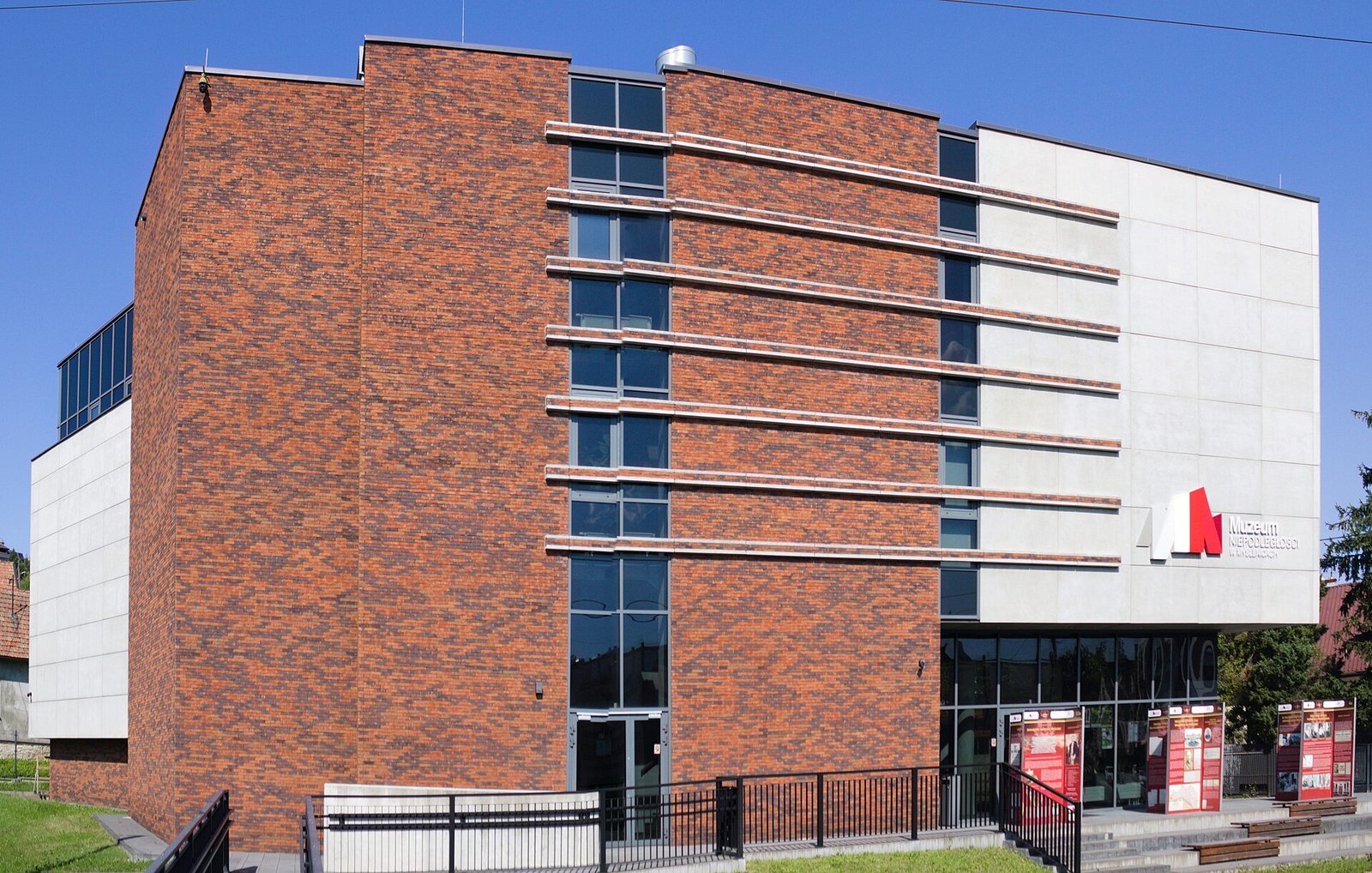
Twelve kilometres east, the Marcin Mikuła Museum of Locksmithing in Świątniki Górne does what Skawina does but through a single trade - with the difference that there you have to arrange a time in advance. If you need a regional museum that opens at the weekend, the Independence Museum in Myślenice is 25 km south, free to enter, and open on Sunday afternoons. The industrial thread at metropolitan scale continues at the Museum of Engineering and Technology in Kraków, which is where the same train takes you back.
Background
The museum was created by an agreement signed on 23 January 2008 between the Skawina municipality and Towarzystwo Przyjaciół Skawiny, the local heritage society. It was the society’s volunteers who assembled the core of the collection and built the permanent display of the town’s history. The partnership still runs: the museum organises historical walks around Skawina with the society, and times its exhibition openings to 22 May, the anniversary of the town’s charter.
The seat is the Ludwikowski manor, built in 1925. The family arrived with Piotr Ludwikowski, a knight of King John III Sobieski who chose not to go home after the relief of Vienna in 1683; later generations supplied the town with mayors. After the Second World War Ludwik Ludwikowski sold the house to the municipality. It then worked through the full repertoire of Polish institutional life: social insurance office, convalescent home for discharged hospital patients, health centre, communist party town committee, municipal culture centre. The museum is its seventh tenant and the first to tell the building’s own story.
Nearby museums
 Culture
Seweryn Udziela Ethnographic Museum
pl. Wolnica 1, Kraków
The Ethnographic Museum Krakow shows Polish folk culture in Kazimierz's old town hall. Hours Tue-Sun 10-18, tickets PLN 20/15, free on …
 Science
Museum of Engineering and Technology
ul. Świętego Wawrzyńca 15, 31-060 Kraków
Museum of Engineering and Technology Krakow in a historic tram depot. Hours Tue-Sun 10-18, tickets PLN 35/28, free on Tuesdays.
 History
Independence Museum in Myślenice
ul. Traugutta 11, 32-400 Myślenice
Independence Museum in Myślenice near Krakow: ethnographic collection and Polish independence history. Free admission, opening hours and how …