Auschwitz-Birkenau Memorial and Museum
Miejsce Pamięci i Muzeum Auschwitz-Birkenau
- Wheelchair: Yes
- Elevator: No
Location
What to expect
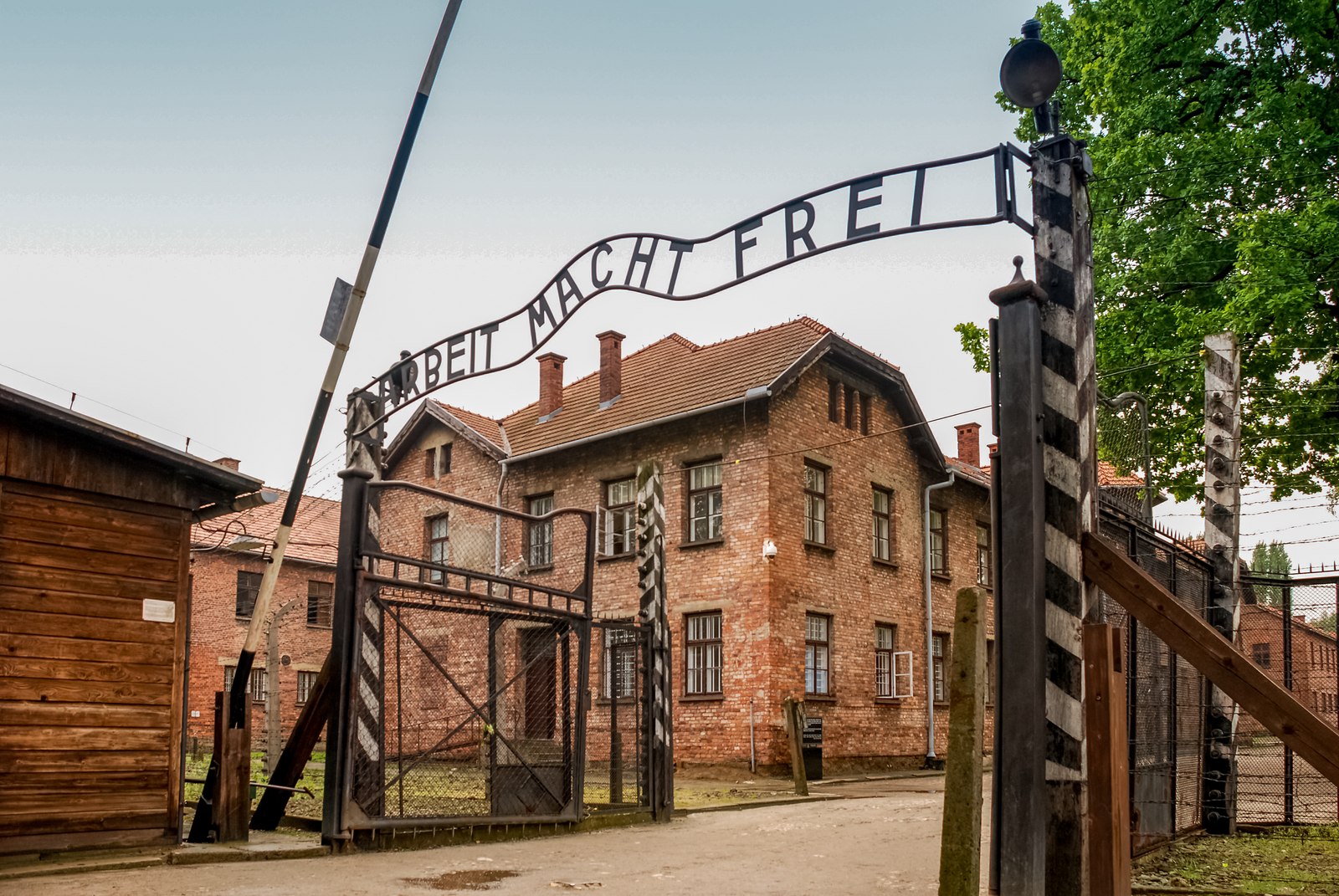
Two sites three and a half kilometres apart, one date in your calendar, and nothing else in that day: that is what a visit to Oświęcim actually costs you. The Memorial covers about 200 hectares of the authentic grounds of the German Nazi concentration and extermination camp. Around 1.1 million people were murdered here, the overwhelming majority of them Jews, alongside Poles, Roma and Soviet prisoners of war. The site has been on the UNESCO World Heritage List since 1979.
Auschwitz I is the former main camp: brick blocks holding the exhibitions, with documents, photographs, the possessions taken from people on arrival, and a dozen or so national exhibitions prepared by individual countries. The collection runs to more than one hundred thousand objects. Auschwitz II-Birkenau is open ground - the railway ramp, the remains of the wooden barracks, the ruins of the gas chambers and crematoria, flat space running to the horizon. Across both sites, over 150 buildings and about 300 ruins survive.
The two halves do different work. Auschwitz I explains how the camp functioned; Birkenau shows its scale. If you can only manage one, skipping Birkenau costs you more.
The standard educator-led tour covers both and runs about 3.5 hours. Add 30 minutes for the security check and three to four hours of travel from Krakow and back, and the day is gone. Nearly 1.95 million people came in 2025, and nine in ten of them chose a tour with an educator. The museum advises against visits by children under 14.
Check the museum’s notices before you travel: parts of the Birkenau grounds and individual national exhibitions close temporarily, and the whole site shuts for a few hours during state visits and ceremonies.
Tips
- Online booking only. Personalised entry passes come from visit.auschwitz.org and nowhere else. Since 1 March 2026 there is no on-site sale at all, so a coach trip sold to you without a named pass cannot get you through the gate.
- Book at least a week ahead. Free passes for a visit without an educator are issued only online, from 90 to 7 days before the planned date and only while places last; none are available at the museum. Individual passes are non-refundable and the date cannot be changed.
- An educator costs 100 PLN. The general 3.5-hour tour with a headset is 100 PLN in Polish and 110 PLN in another language. The concession rate - 90 PLN and 100 PLN - applies to pupils and students under 26, visitors over 75 and disabled visitors on production of a document; a carer accompanying a disabled visitor pays nothing. The price list has been in force since 2 January 2024.
- Educators work in 20 languages. Besides Polish and English, tours are scheduled in French, German, Spanish, Italian, Czech, Slovak, Russian and Ukrainian, though the choice thins outside the summer. Book months ahead for July and August; the booking system closes educator slots 5 days before the visit.
- First visit: take the tour. A self-guided pass rewards people who have read about the camp beforehand or are coming back. Without that preparation the Birkenau ruins say very little on their own, and there are far fewer captions there than in the blocks of Auschwitz I.
- Self-guided means late afternoon. Without an educator you may enter from 13:00 in December, 14:00 in January and November, 15:00 in February, 16:00 in March and October, and 17:00 from April to September. The earlier hours belong to educator-led groups, so a long summer opening does not mean a long self-guided visit.
- Arrive 30 minutes early, in proper shoes. There is a security check at the entrance and the time printed on your pass is binding. Bags and backpacks may not exceed 35 x 25 x 15 cm, so leave anything larger in the car or coach. Birkenau is kilometres of gravel and grass in the open, with no shelter and nowhere to sit.
- For a second visit. The six-hour study tour for individual visitors costs 140 PLN, or 150 PLN in a foreign language, and adds the national exhibitions and the area of the so-called Kanada. A shortened 2.5-hour tour exists but runs only in the last three opening hours.
Getting there
Oświęcim is about 60 kilometres west of Krakow, and the Memorial sits on the edge of town on regional road 933. The two nearest airports are Kraków-Balice and Katowice-Pyrzowice, both a few dozen kilometres away.
Coach: Lajkonik coaches run from Krakow directly to the museum car park, which makes them the simplest option - you step off at the entrance. PKS buses and minibuses from Krakow and Katowice stop nearby.
Train: Oświęcim station is about 1,500 m from the Memorial, roughly a 20-minute walk, and has a Park & Ride car park. The journey from Krakow usually takes between an hour and a half and two hours.
Car: the A4 motorway towards Katowice, then local roads; the museum recommends approaching along Więźniów Oświęcimia Street from Legionów Street. The car parks at both sites are paid, though the museum publishes no rate. The main car park and visitor entrance are at 55 Więźniów Oświęcimia Street.
Between Auschwitz I and Birkenau: a free shuttle bus runs every 10 to 15 minutes and takes about five minutes. You can walk the 3.5 km, but the route follows a road through an industrial area.
Nearby
If you are staying overnight in Oświęcim, the Castle Museum in Oświęcim in the town centre covers what the town was before 1940, including its Jewish community. Allow 90 minutes - and put it on the next day, not this one.
In Krakow itself, the occupation and the Holocaust are documented at Oskar Schindler’s Enamel Factory and the Eagle Pharmacy , both on the grounds of the former ghetto in Podgórze. The Galicia Jewish Museum in Kazimierz sets out pre-war Jewish life in the region. Seeing those three before you travel gives the visit an arc: the community, occupied Krakow, then the camp.
The other large camp memorial preserved on its original ground is the State Museum at Majdanek in Lublin, at the far end of the country - the usual second stop for anyone planning a longer memorial route in Poland.
Background
The State Museum was created on 2 July 1947 by an act of the Polish parliament, on the two surviving parts of the camp. It took in roughly 200 hectares: more than 150 buildings, about 300 ruins, the roads, the ramp and the fencing. The collection holds over one hundred thousand objects - suitcases, shoes, everyday possessions, prisoner clothing - together with the archive that survived the camp’s evacuation.
In 1979 the site was inscribed on the UNESCO World Heritage List as the representative site for all concentration and extermination camps. Piotr Cywiński has directed the museum since 2006.
Attendance shows how the pressure on the site has shifted: a record 2.32 million visitors in 2019, a collapse to 502,000 in 2020, and 1.95 million in 2025, up seven percent on the year before. Polish visitors made up 23 percent of the 2025 total; the next largest groups came from the United Kingdom, Italy, Spain, Germany and the United States. The museum employs 340 educators working in 20 languages.
Temporary exhibitions here
Yishai Jusidman. Prussian Blue
from 9 October 2025
Nearly 50 paintings by Yishai Jusidman rendered in Prussian blue, shown in Block 21 of the former Auschwitz I camp. A temporary exhibition on view since 9 October 2025.
Nearby museums
 History
Oskar Schindler's Enamel Factory
ul. Lipowa 4, 30-702 Kraków
Schindler's Factory in Krakow - the story of the city under occupation 1939-1945. Opening hours, tickets 60/45 PLN, free Mondays, book timed …
Eagle Pharmacy
plac Bohaterów Getta 18, 30-547 Kraków
Eagle Pharmacy in Krakow - museum of Tadeusz Pankiewicz's pharmacy in the Podgórze ghetto. Opening hours, tickets 22 PLN, free entry on …
 History
Galicia Jewish Museum
ul. Dajwór 18, 31-052 Kraków
Galicia Jewish Museum in Krakow's Kazimierz - Jewish Galicia told through photography. Open daily 10:00-18:00, tickets 35 PLN, how to get …