Africanist Museum in Olkusz
Muzeum Afrykanistyczne w Olkuszu
Location
What to expect
A camel-skin Tuareg tent, pitched in the annex of a former hospital in a Polish mining town, furnished inside with the household kit a Saharan family travelled with. That is the room visitors remember, and it sets the register for everything else here: objects that were used, not souvenirs bought for display.
Around it: Bambara ritual masks, Bakongo fetishes, more than twenty pipes carved from gourd, wood and animal bone, Fulani herdsmen’s hats, weapons, musical instruments, textiles and jewellery. A separate department, opened in 2007, holds the collection of Anna and Leon Kubarski - malachite carvings, ivory heads whose African hairstyles are worked in fine detail, and paintings made from butterfly wings and banana leaves.
This is a looking museum, and the case labels do the work. It rewards anyone with an interest in ethnography or non-European art, and children from about eight who respond to masks and weapons will last roughly half an hour. Anyone expecting touchscreens and hands-on stations should go elsewhere. Forty-five minutes covers it comfortably.
Tips
- Three museums at one address. Szpitalna 32 also houses the Władysław Wołkowski Museum and the Minerals of the Olkusz Land collection. The culture centre calls the Wołkowski rooms “the largest collection of works by this outstanding artist, called the Michelangelo of wickerwork”; the mineral rooms hold several thousand specimens, including ammonites close to half a metre across. Identical opening hours, so one trip covers all three in about two hours.
- Saturday is the only weekend day. Sunday and Monday are closed, and Saturday opens an hour later than weekdays. If you are basing yourself in Krakow, that fixes the day trip to a Saturday or a weekday.
- Last entry is 30 minutes before closing. Arrive by 17:00 at the latest, or you will rush the Kubarski rooms.
- No published label languages. The museum does not say whether captions are translated. Write to muzea@mok.olkusz.pl before you travel, or bring a phone camera translation app.
- Buy online. The culture centre sells timed entry to its museums through its own ticketing page; ask about a combined ticket for all three displays in the building.
- The town’s other museums shut at 16:00. The PTTK Regional Museum and the Firefighting Museum open Monday to Friday only, so a Saturday visit to Olkusz means this building and nothing else.
- No accessibility information is published. The display occupies the annex of a former hospital - call +48 32 706 52 44 and ask about stairs and a lift before you set out.
Getting there
By car: Olkusz is about 37 km north-west of Krakow on the DK94 towards Katowice, roughly an hour. The town sits on the Trail of the Eagles’ Nests, so the museum pairs easily with the ruined hilltop castles further north.
By train: Polregio runs from Krakow Główny to Olkusz several times a day, about 1 hour 15 minutes. The station is on Króla Kazimierza Wielkiego, on the far side of the centre from the museum - under 2 km on foot, or a few stops on the local ZKG “KM” bus.
On foot: From the market square it is about 400 metres south-west along Szpitalna, five to six minutes.
Parking: The museum has no car park of its own. The nearest spaces are on Mickiewicza and around the market square, a few minutes away.
Nearby
In Olkusz itself, the PTTK Regional Museum on the market square explains the silver and lead mining that built the town, and the Firefighting Museum of the Olkusz Land on Floriańska is five minutes away - both weekdays only. If you want the domestic counterpart to these African holdings, Krakow’s Ethnographic Museum applies the same method, the everyday object as evidence of a culture, to the Polish countryside.
Background
The museum grew out of a 1971 donation by dr Bogdan Szczygieł, an Olkusz physician and writer, and Bożena Szczygieł-Gruszyńska. Szczygieł spent well over a decade in Africa, mostly around the Sahara, and brought back working objects rather than curios.
Its first home was Szpitalna 11, a former coffee-grinder factory owned by the donor’s father. In 1984 the whole collection moved to the annex of the old Olkusz hospital at number 32, where it remains. The display was rearranged into renovated rooms in 2005, and in February 2007 a separate department opened for the collection of professor Anna Kubarska and the pilot Leon Kubarski. Later donors kept adding to it, and the Olkusz holdings now count among the largest African collections in any Polish museum.
Nearby museums
 Culture
Seweryn Udziela Ethnographic Museum
pl. Wolnica 1, Kraków
The Ethnographic Museum Krakow shows Polish folk culture in Kazimierz's old town hall. Hours Tue-Sun 10-18, tickets PLN 20/15, free on …
 History
Archaeological Museum of Krakow
ul. Senacka 3, 31-002 Kraków
Archaeological Museum Krakow: during the rebuild only the prehistory of Małopolska is open. Tue-Sat 9-17, Sun 11-16, tickets PLN 15/10, free …
 Culture
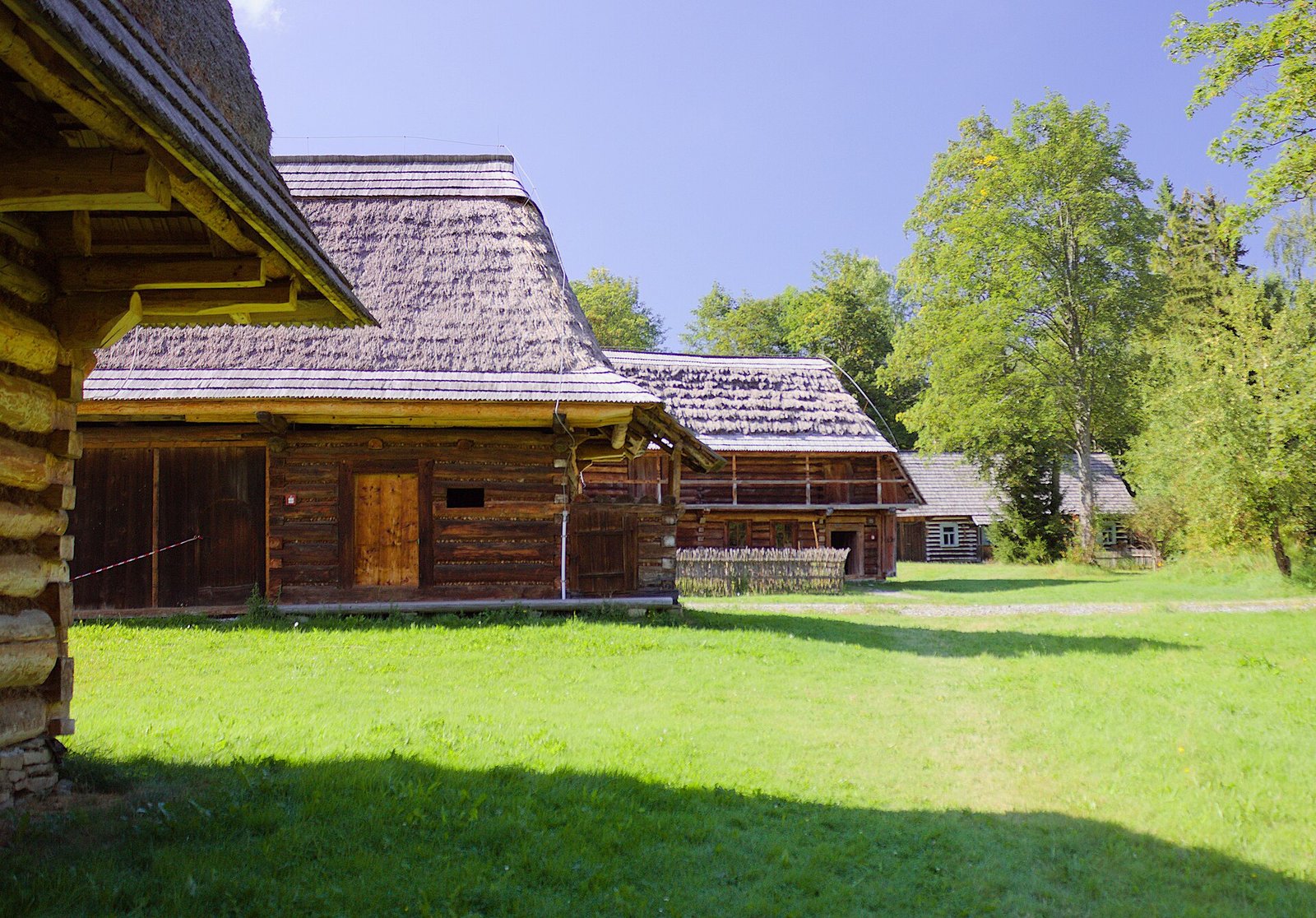
Orava Ethnographic Park in Zubrzyca Górna
34-484 Zubrzyca Górna, gmina Jabłonka
Orava Ethnographic Park in Zubrzyca Górna - open-air skansen near Kraków, Małopolska. Hours, tickets 25/15 PLN, free Mondays, historic …