Longin Kowalczyk Museum of the Łuków Land in Łuków
Muzeum Ziemi Łukowskiej im. Longina Kowalczyka w Łukowie
- Wheelchair: Yes
Location
What to expect
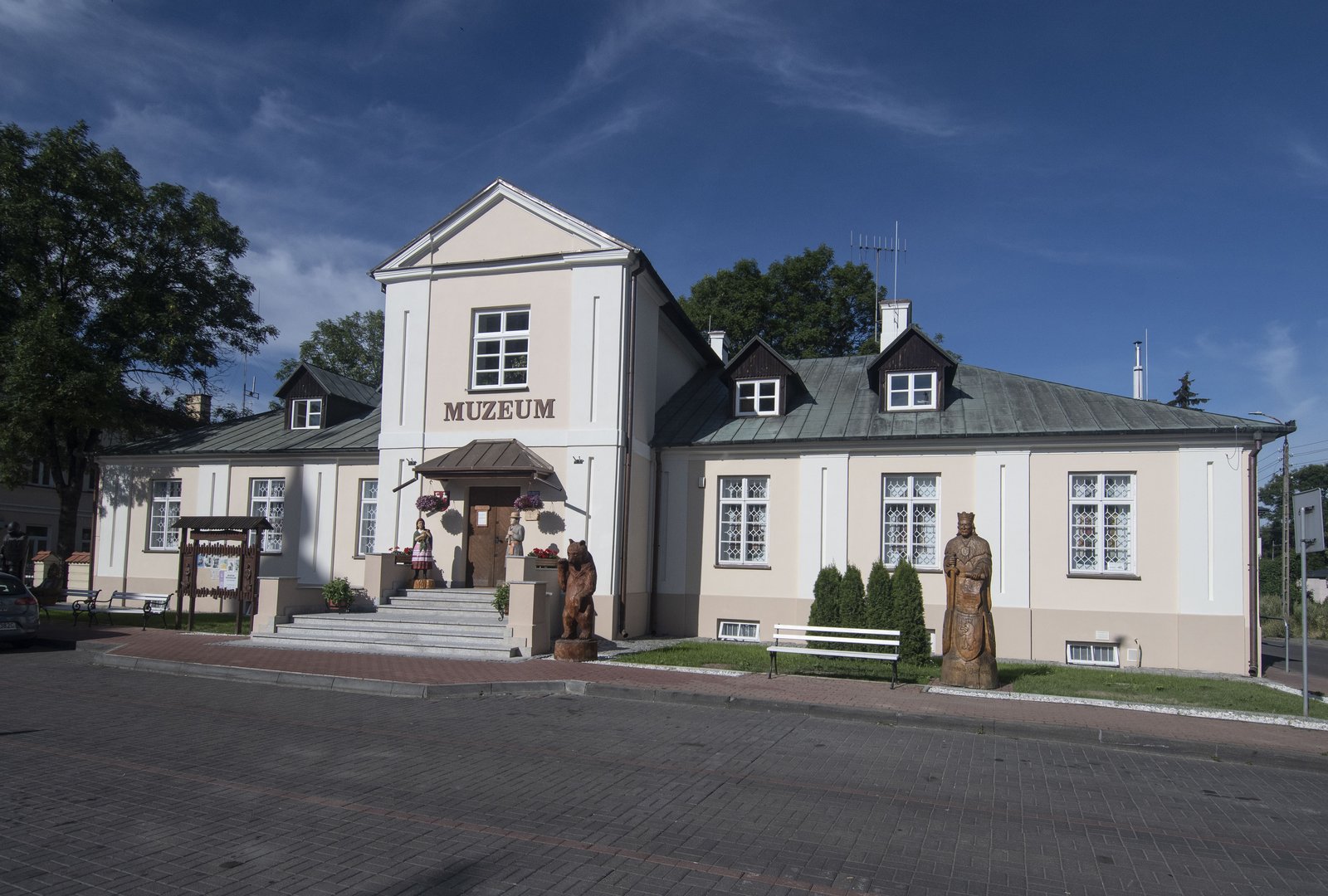
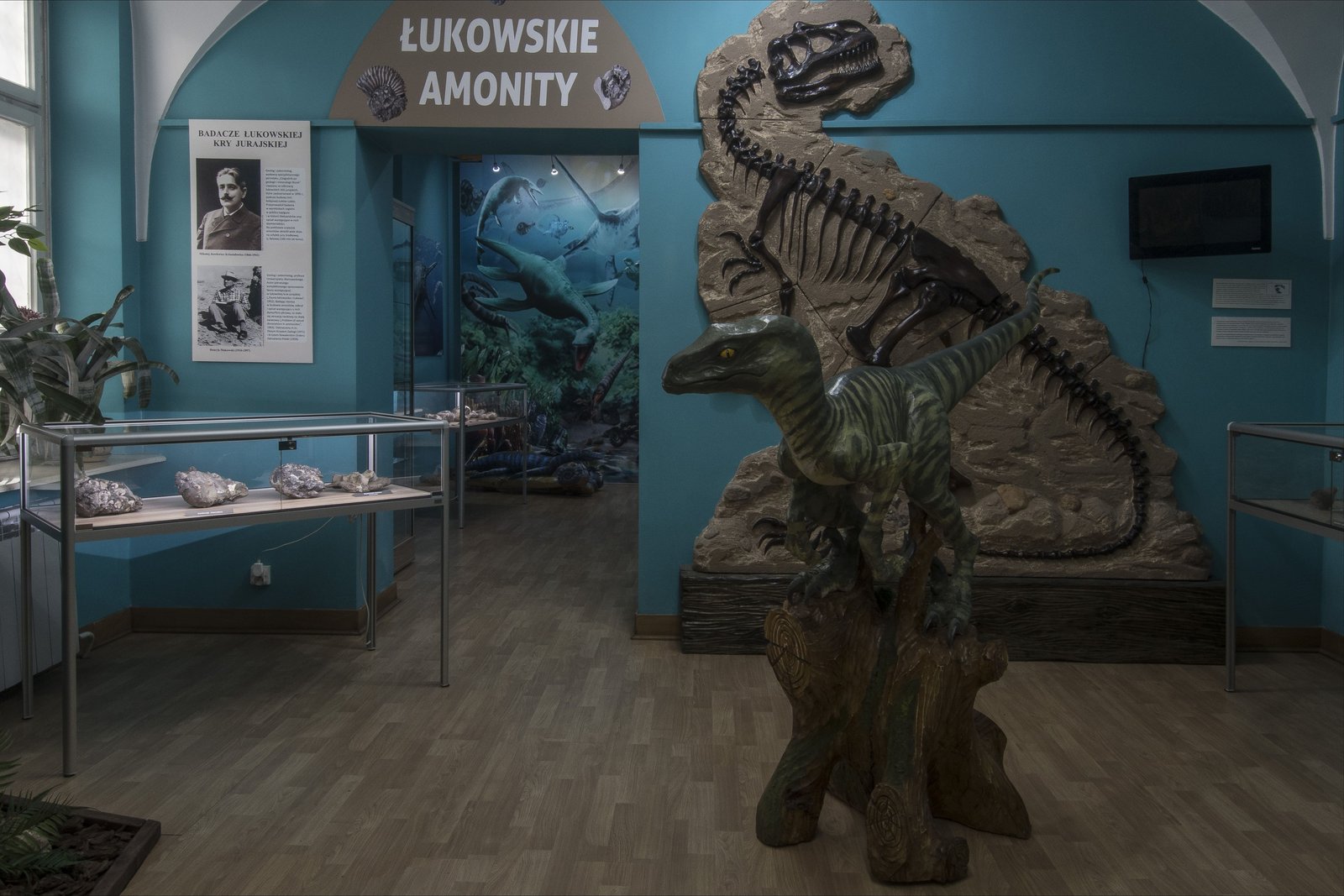
One display decides whether the Łuków ammonite museum is worth your detour, and it is the fossil room. The other seven rooms cover farming, beekeeping, town history and folk carving, all of it strictly county-level; the fossils are what makes the trip worth planning around rather than fitting into a spare hour between trains.
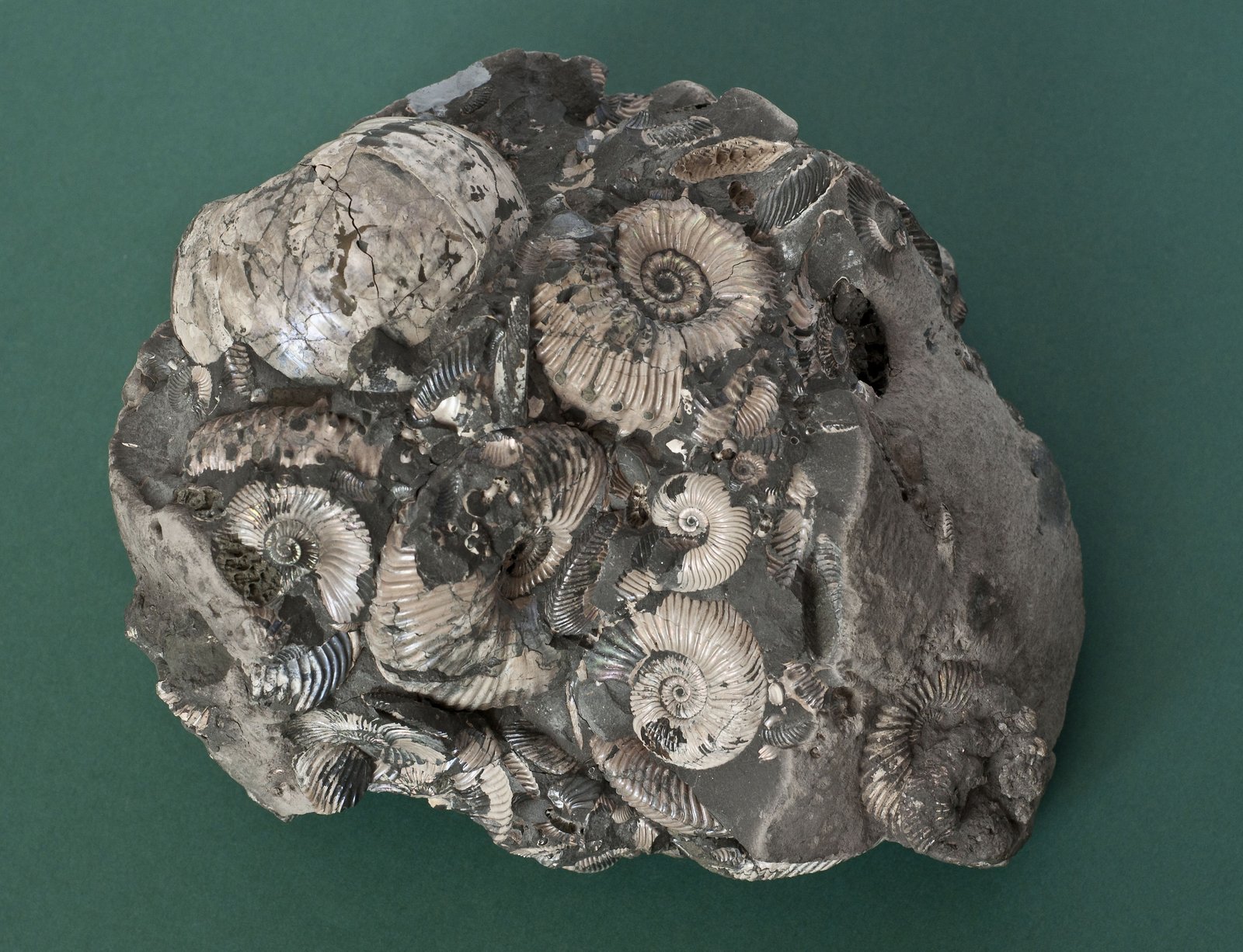
They are unusual for a specific reason. The shells sit inside round and pear-shaped concretions whose iron-rich interiors have made them iridescent, and they survived in unusually complete condition - rarely more than 20 centimetres across. They are roughly 165 to 160 million years old and they did not form here: the Scandinavian ice sheet dragged a whole Jurassic raft of rock down from the area of present-day Klaipėda in Lithuania. Belemnites, bivalves, gastropods, brachiopods, bryozoans, foraminifera and crinoids came with them.
The second reason to come is the Łuków Folk Sculpture Centre room. The carving tradition here is not inherited - the museum invented it, starting in 1965 with a single carver, Marian Adamski. The results are plain, strongly coloured and blunt, and they have travelled to Italy, Germany, Canada and the United States; an anniversary show for the centre’s sixtieth year opened in March 2026.
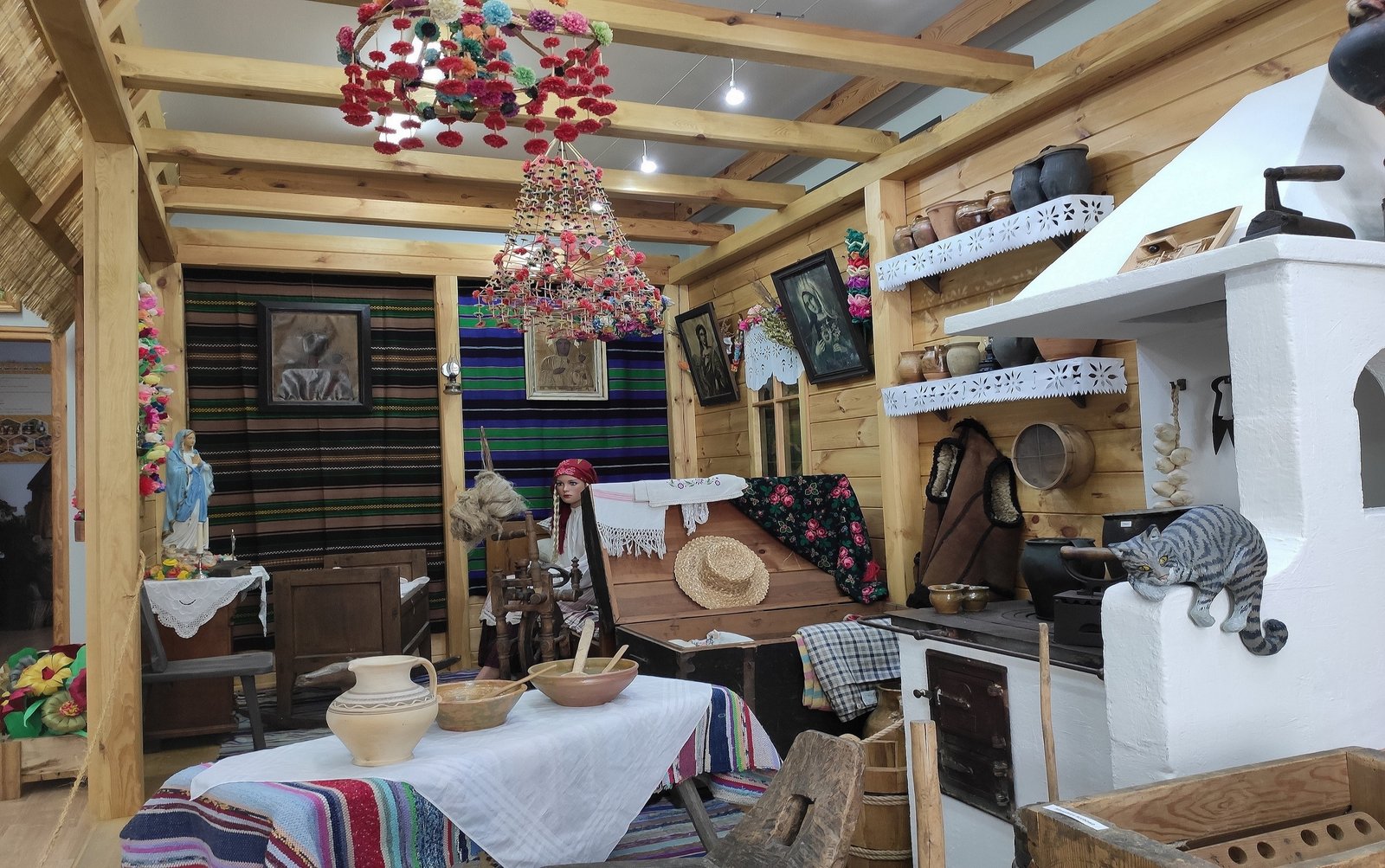
The rest is what a Polish county museum usually is. “In the Field and the Farmyard” holds farm tools, costume and household equipment from around 1900, and “Not Only Honey” traces local beekeeping. One room covers the town’s history, including the section “We Lived Here” on its Jewish community, and a model of the medieval stronghold.
Best for anyone with an interest in palaeontology, and for anyone curious about how an institution can manufacture a local art movement from nothing. Not for you if you need screens, English text or an interactive floor - this is cases, captions and quiet, and all of it in Polish. Allow 45 to 60 minutes, about 20 of them in the fossil room.
Tips
- Labels are Polish only - the museum publishes nothing about English signage, and the free audio guides exist in Polish alone. Bring a phone with a camera translation app; the fossil room survives the language barrier better than the ethnography does.
- Weekday mornings - the doors open at 8:00, earlier than anything else in town. If you are changing trains at Łuków, this fits a morning gap better than any other stop here.
- Free on Sundays, but short - entry costs nothing from 11:00 to 15:00. Sunday is also the one day the museum sometimes shuts entirely: a few times a year it takes an outdoor display to a harvest festival or a honey fair. Check the news page on the museum’s site before you travel.
- Closed Saturdays and holidays - Saturdays and Polish public holidays are out. A visit on any other day can be arranged by phone, by post or in person.
- Tickets at the door only - 10 PLN full, 7 PLN concession, 30 PLN family for up to six people. There is no online sale and none is needed; note that third-party listings still quote an outdated 8 PLN, so budget from the museum’s own price list. Group sessions are priced separately: 8 PLN a head for a museum lesson or workshop, 10 PLN for a field workshop and 15 PLN for selected folk-craft workshops, all arranged in advance.
- Load the audio before arriving - five permanent exhibitions have free guides, but they stream from the museum’s website to your own phone. There are no players on site, so download the files and bring headphones.
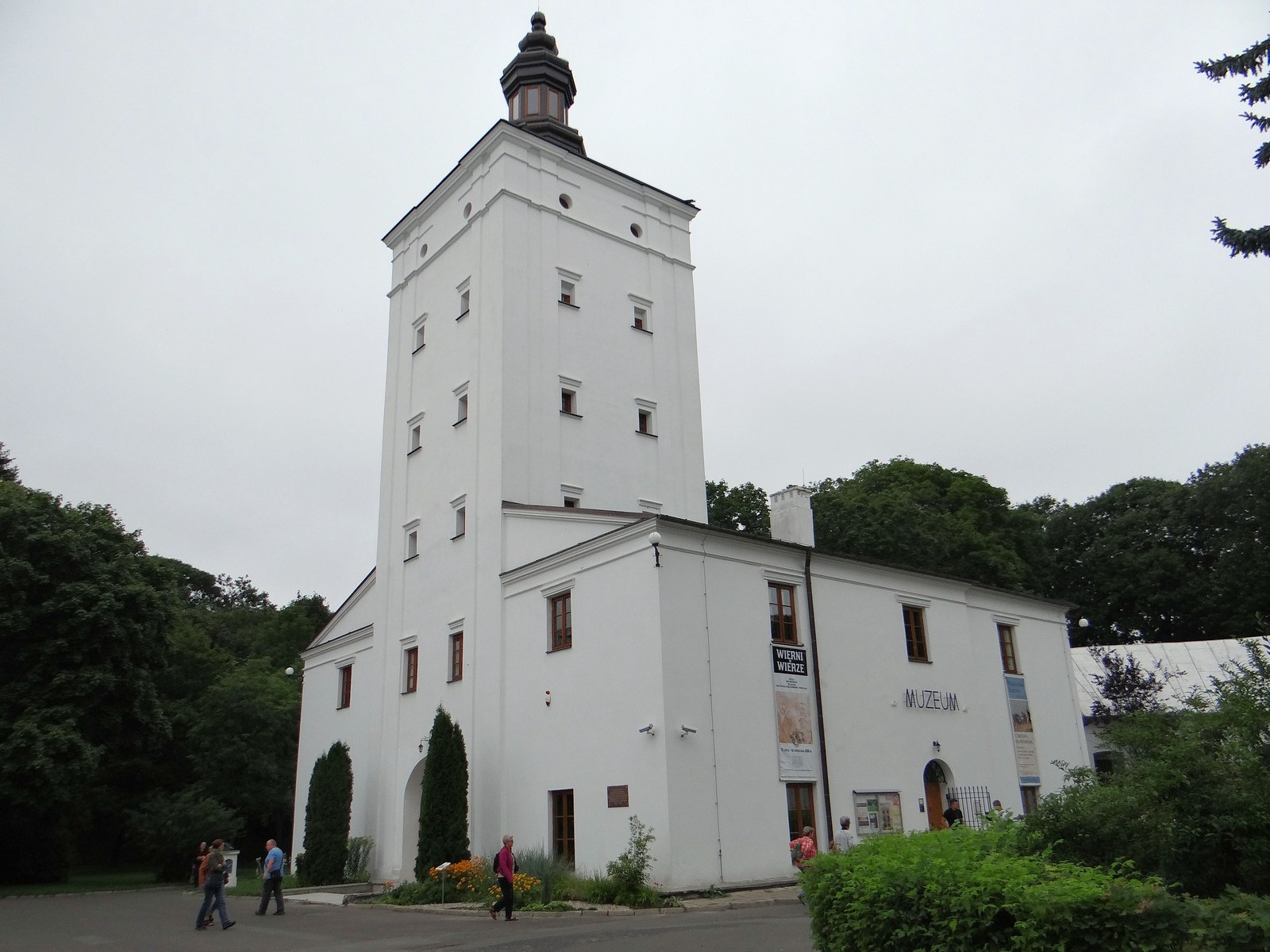
- Wheelchairs use the courtyard - a stair platform has served the courtyard entrance since 1 January 2022. The building dates from 1732 and its structure is unchanged, so the museum promises nothing beyond that - call ahead.
- Pair it with the landscape - the fossils come from ground you can stand on. The Gołaszyn site outside town and the Amonit forest recreation area at Klimki make the exhibition mean more if you have a car and an hour to spare.
Getting there
By train. Łuków is a junction of four lines: the Warszawa Zachodnia - Terespol main line, plus branches to Skierniewice, Radom and Lublin Północny. From the station at ul. Dworcowa 1 the museum is about 2 kilometres, roughly a 25-minute walk south-west.
From Lublin. About ten direct trains a day. The fastest InterCity services take just under an hour and a half, regional trains 1 hour 45 minutes to 2 hours, which makes Łuków a feasible day trip from Lublin with no overnight stay.
From Warsaw. Trains on the Terespol line run through Łuków, so the town works as a stop on the way east towards Biała Podlaska and the Belarusian border rather than as a destination in itself.
By car and on arrival. Just under 100 kilometres north of Lublin, roughly halfway to Warsaw. The address is ul. Piłsudskiego 19, close to the town centre; the museum has its own courtyard but publishes nothing about parking or local buses, so ring the contact number if that matters to you.
Nearby
Łuków has no second museum, so its neighbours lie across the north of the Lublin region. The museum in Biała Podlaska has a similar regional remit but a far larger art department - the obvious comparison if you are picking one stop rather than two.
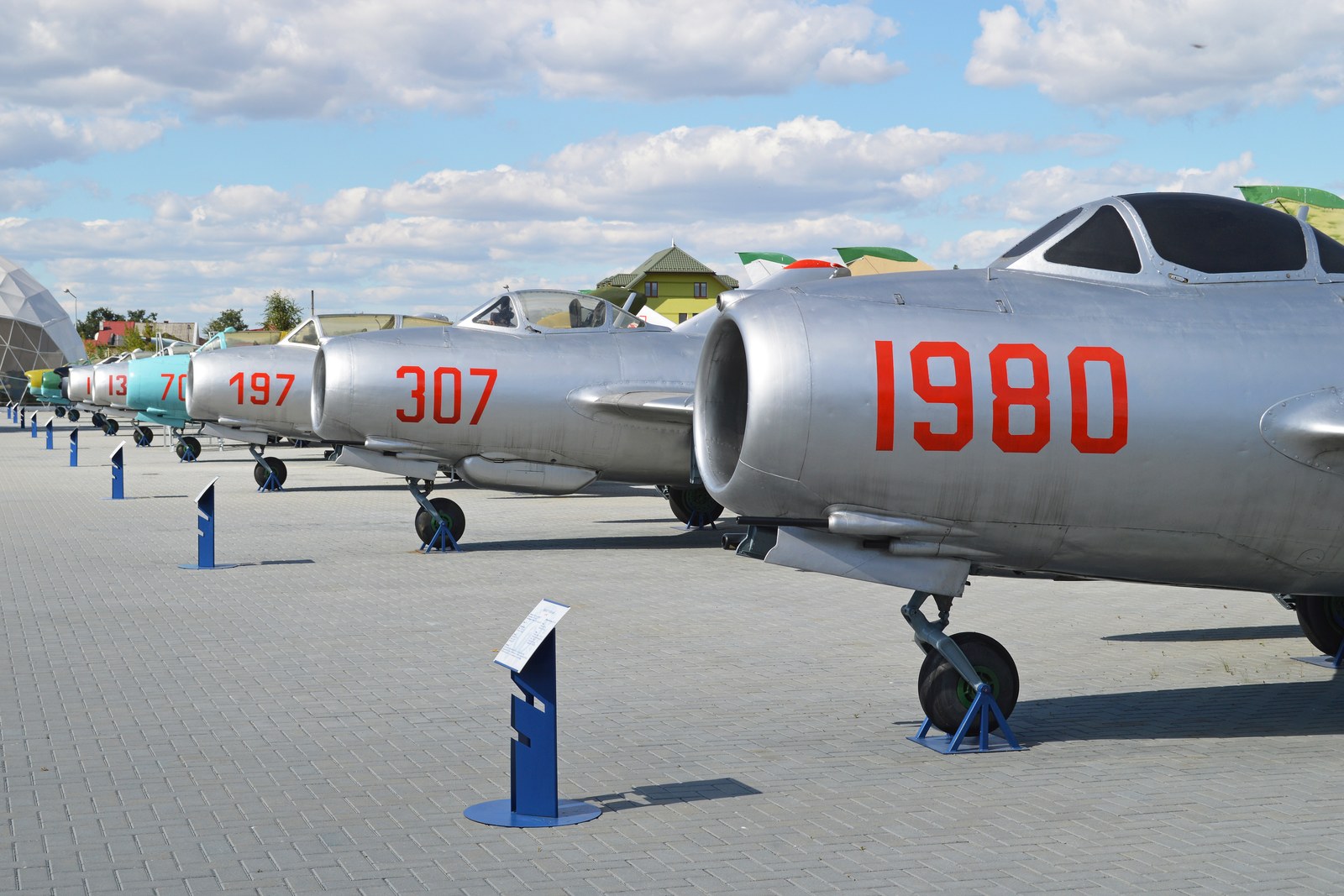
The August Zamoyski sculpture museum in Jabłoń is the sharpest counterpoint to the Łuków carvers: a trained modernist against self-taught villagers. West along the same railway, the Polish Air Force museum in Dęblin is the answer for children who will not last eight rooms of ethnography.
Background
The building went up between 1731 and 1733, paid for by Konstanty Felicjan Szaniawski, bishop of Kraków, as a boarding house for ten boys of his family attending school in Łuków. It later served as a courthouse, among other uses. It is listed in the heritage register under the number A/661 and its shape has not changed.
Townspeople first proposed a museum in 1920, but the institution was founded only on 1 January 1960, after years of pressure from the Friends of the Łuków Land Society. Collecting began in July 1960 with help from the museum in Lublin, the building was handed over in 1964, and the first exhibitions in it opened on 7 March 1967.
The museum is named after Longin Kowalczyk, its first member of staff, who travelled the county gathering objects. Between 1966 and 1975 it also ran the Henryk Sienkiewicz museum at Wola Okrzejska; since renovation ended in 1998 it has had eight rooms totalling 558 square metres.
Nearby museums
 History
Museum of Southern Podlasie in Biała Podlaska
ul. Warszawska 12, 21-500 Biała Podlaska
Museum in Biala Podlaska set in the Radziwill palace complex: nearly 1700 icons, permanent exhibitions, ticket prices, opening hours and how …
August Zamoyski Museum in Jabłoń
ul. Augusta Zamoyskiego 9A, 21-205 Jabłoń
The only museum in Poland devoted to the sculptor August Zamoyski, housed in a restored estate cottage in Jabłoń. Open Tuesday to Sunday, …
 Science
Museum of the Polish Air Force in Dęblin
ul. Lotników Polskich 1, 08-530 Dęblin
Polish Air Force Museum in Dęblin: over 80 aircraft in the open-air park, the wartime standard of the Polish Air Force in the West, adult …