Museum and Memorial Site in Bełżec
Muzeum i Miejsce Pamięci w Bełżcu
115.7 km from the Old Town Market Square in Lublin See museums near the Old Town Market Square in Lublin
- Wheelchair: Yes
Location
What to expect

Bełżec is a village in the far south-eastern corner of the Lublin region, on the road that runs from Warsaw to the Ukrainian border. The museum here, a branch of the State Museum at Majdanek, stands on the grounds of one of the largest burial sites of the Second World War. The German Nazi extermination camp operated from March to December 1942 as one of the three main killing centres built under Aktion Reinhardt. The museum records that at least 434,508 people were murdered here: mostly Polish Jews from the Lublin, Galicia and Kraków districts of the General Government, together with up to 30,000 Jews from Slovakia, Bohemia, Germany and Austria, who had first been moved to transit ghettos such as Izbica and Piaski. The overwhelming majority of the victims remain anonymous, and restoring their identity is the work the institution defines as its mission.
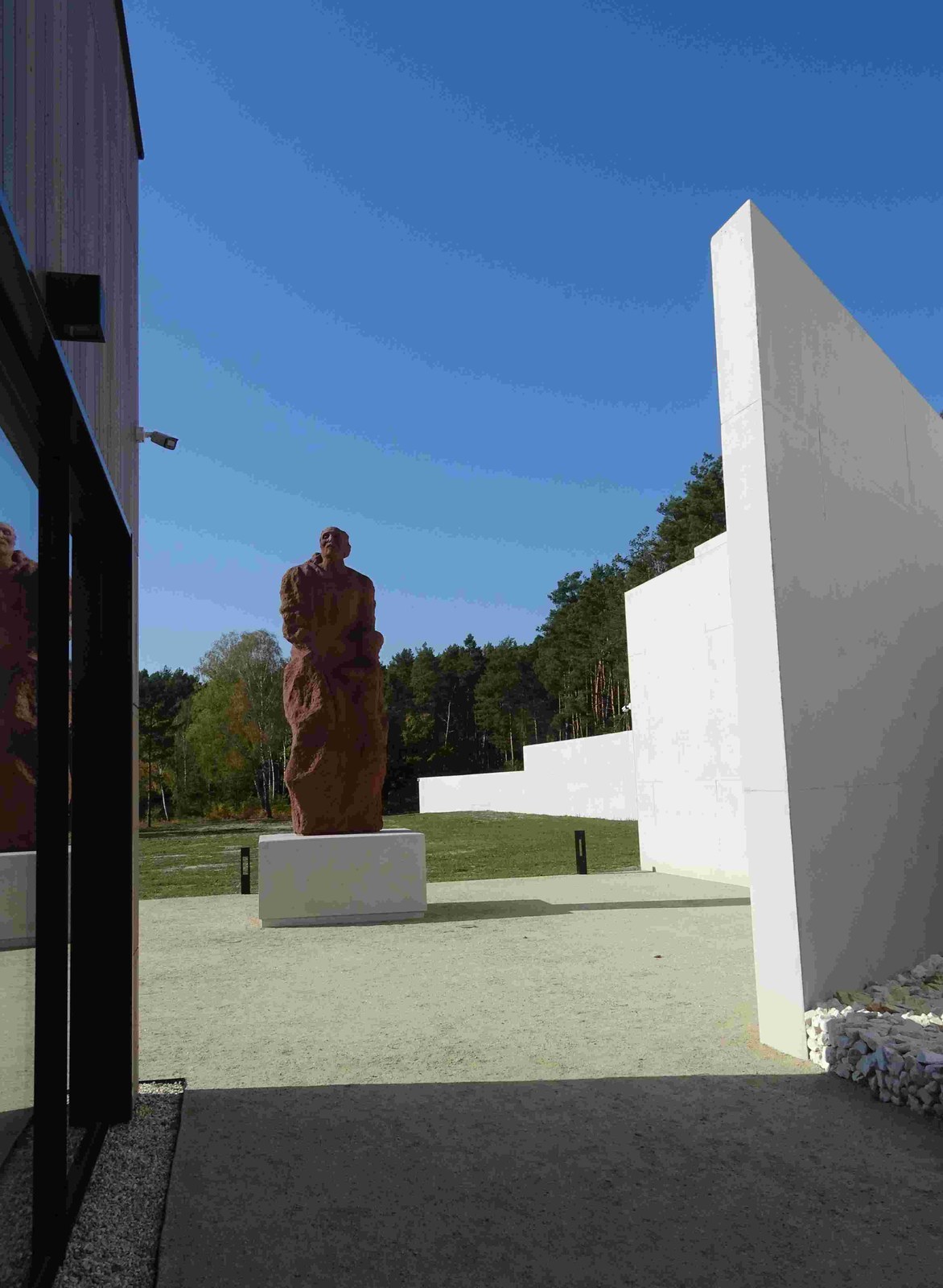
The whole site of the former camp is treated as a mass grave and a cemetery, and the museum building forms an integral part of the memorial and burial complex. The permanent exhibition, Bełżec - Extermination Camp, opened on 1 June 2004 to a script written by Michael Berenbaum, Jerzy Halbersztadt, Robert Kuwałek and Jacek Nowakowski. It leads through five thematic zones, titled in Polish, English and Hebrew: Life, Hatred, Deportations, Extermination Camp and Memory. On display are personal belongings of the victims recovered during archaeological work on the site, the few surviving elements of camp infrastructure, a model of the gas chamber, and the original sign from the undressing barrack instructing new arrivals to hand over clothing and valuables before the so-called bath.
The design works through light and colour, moving from pale tones in the Life zone to almost black in Memory, in steel, glass and concrete, with all decorative effect deliberately stripped away. The exhibition ends in the Chamber of Contemplation, a vast, dark and empty hall. Outside stand the Stone Wall, a sculpture made of railway sleepers, and the Ohel Niche, whose polished concrete surfaces carry first names standing for the murdered; slabs around the Cemetery-Grave name the towns from which the transports were sent.
Tips
Admission to the museum and to all its exhibitions is free, and individual visitors need neither a ticket nor a booking. Only the guide service is paid: 100 PLN for a group of up to 10 people in Polish and 200 PLN in a foreign language, 250 PLN for a group of up to 30 in Polish and 400 PLN in a foreign language. Guides work in Polish, English and German; book no later than a week before your visit, by telephone or at rezerwacje@belzec.eu. Because of the nature of the place, the museum does not recommend a visit for anyone under 14, and guided tours are provided for that age group upwards only.
Begin at the Museum Information Point, which also houses the bookshop and sells a plan of the grounds; a free mobile application adds witness accounts, archival photographs and documents. There is no cloakroom or luggage storage, and much of the visit is spent outdoors, so dress for changeable weather. Visitors are asked to behave and dress in keeping with a cemetery; smoking is banned, and animals other than assistance dogs may not be brought in. Flowers and candles may be left in the Ohel Niche. The exhibition building has no thresholds, an accessible toilet and an induction loop at the information point, the car park has a designated bay, and an orthopaedic wheelchair can be borrowed free of charge; the path around the Ohel Niche and the area surrounding the Cemetery-Grave, reached by steep steps, are not accessible to visitors with limited mobility.
Getting there
The museum is at ul. Ofiar Obozu Zagłady 4, 22-670 Bełżec, on the south-eastern edge of the village and directly on national road 17, the international route from Warsaw to the border crossing at Hrebenne; from the direction of Kraków, Rzeszów and Jarosław the approach is by regional road 865. You may drive onto the museum grounds, where there is a large car park, for a one-off entry and parking fee of 5 PLN for cars, 15 PLN for minibuses, 40 PLN for coaches and 5 PLN for motorcycles; bicycle racks are free. Without a car, minibus services run Lublin - Tomaszów Lubelski and Warsaw - Tomaszów Lubelski, local services from Tomaszów Lubelski to Lubycza Królewska stop in Bełżec, and there is a direct train from Lublin.
Nearby
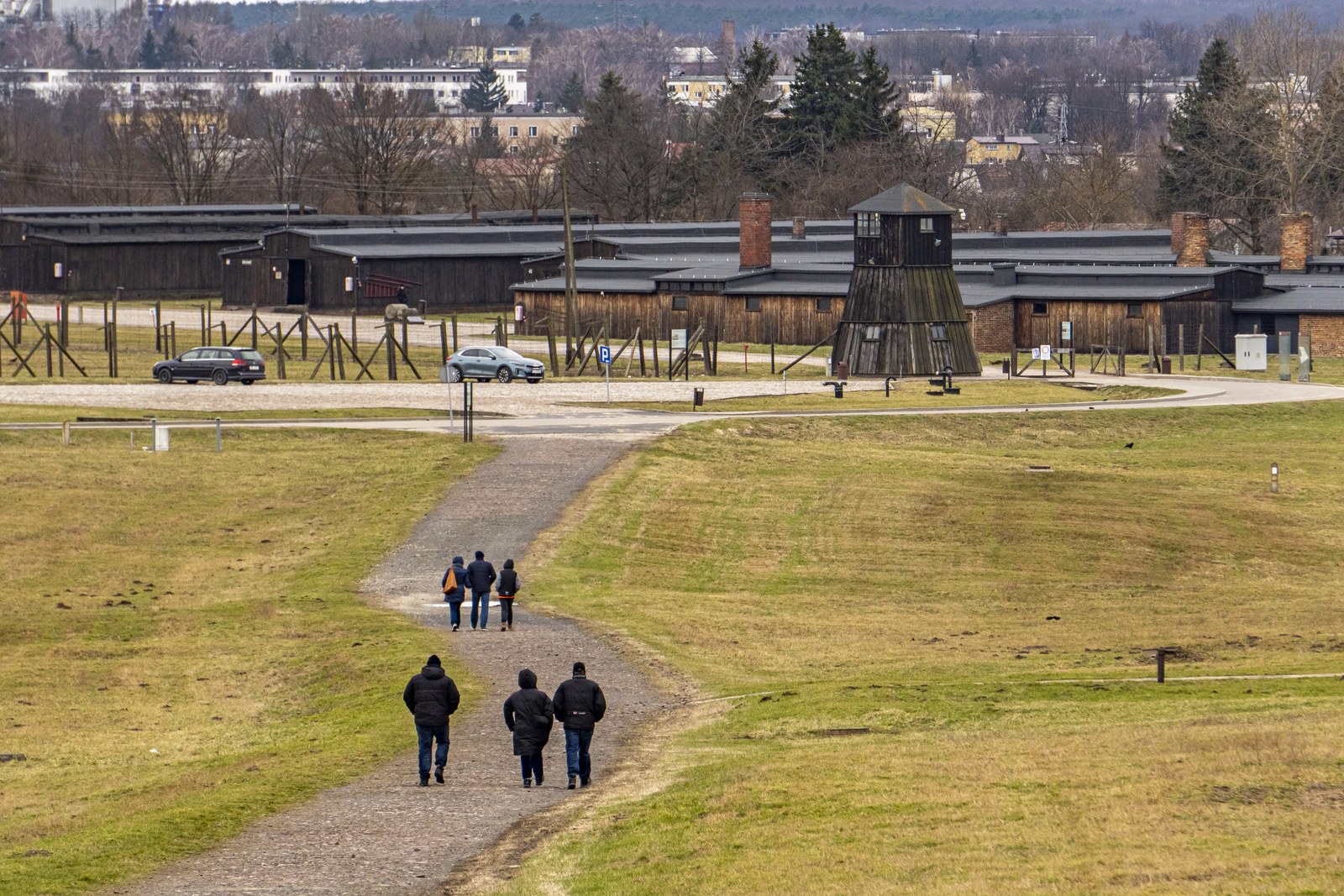
About ten kilometres north, the Janusz Peter Regional Museum in Tomaszów Lubelski covers the history of the Roztocze hills and the surrounding district, and gives the region a context beyond the camp. The story of Aktion Reinhardt continues at the Museum and Memorial Site in Sobibór, the second commemorated killing centre in the Lublin region, while the parent institution of both is the State Museum at Majdanek in Lublin.
Nearby museums
 History
Janusz Peter Regional Museum in Tomaszów Lubelski
ul. Wyspiańskiego 8a, 22-600 Tomaszów Lubelski
Janusz Peter Regional Museum in Tomaszów Lubelski: some 15,000 objects, exhibitions on the 1939 battles and the Czermno stronghold. Tickets …
 History
Museum and Memorial Site in Sobibór
Żłobek 101, 22-200 Włodawa
Memorial on the site of the German Nazi extermination camp of 1942-1943 in eastern Poland. Permanent exhibition, over 700 victims' objects. …
 History
State Museum at Majdanek
ul. Droga Męczenników Majdanka 67, 20-325 Lublin
The grounds of a German Nazi concentration camp in Lublin, with 70 surviving buildings. Admission is free and a full visit takes about three …