Regional Museum in Krasnystaw
Muzeum Regionalne w Krasnymstawie
Location
What to expect
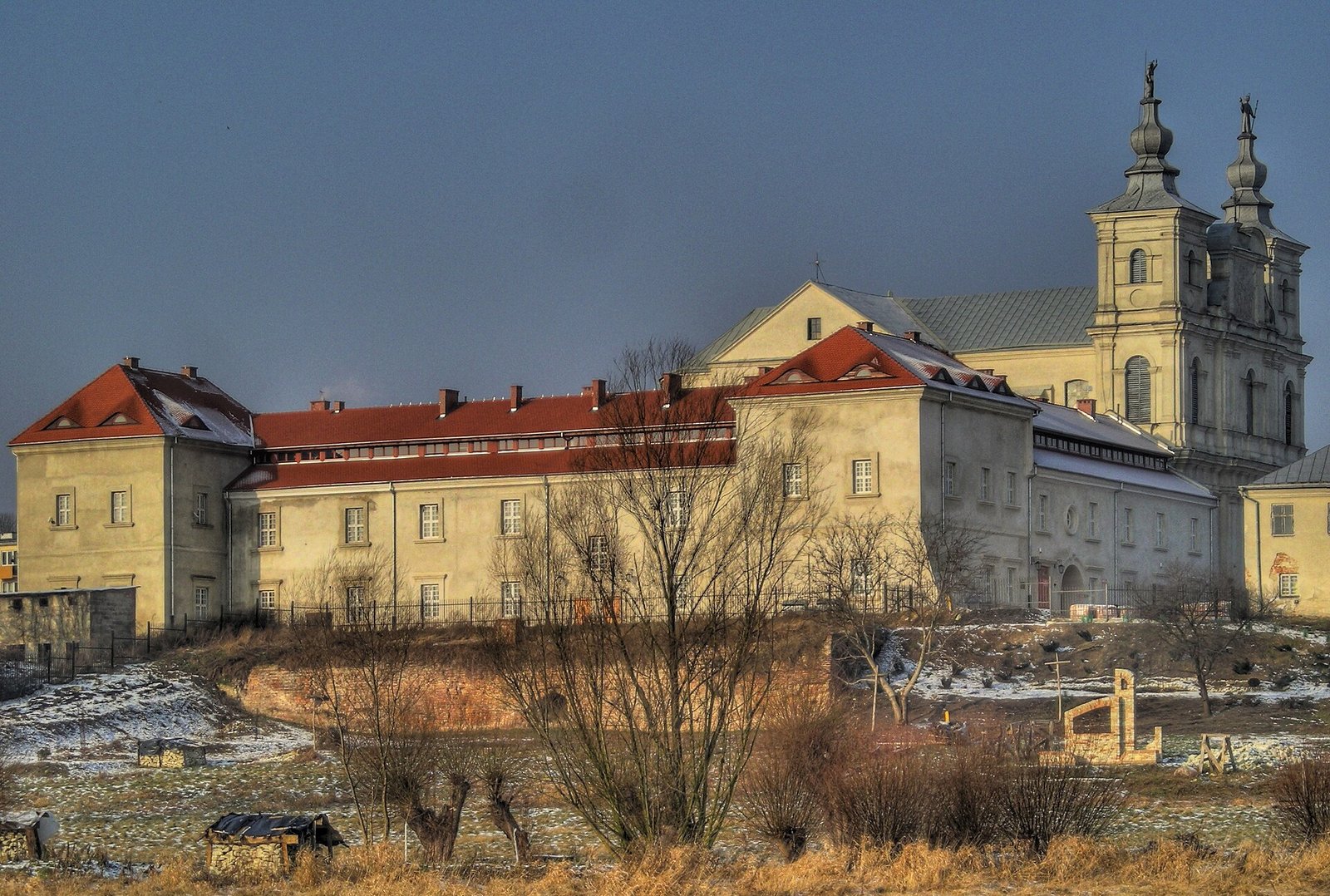
The Regional Museum in Krasnystaw is a county museum that was handed a building several sizes too big, and has filled it. Twenty-three rooms and more than 2,000 square metres of a baroque Jesuit college, built between 1695 and about 1740 beside the church of St Francis Xavier, now hold roughly 10,000 objects.
The building is easy to find. Driving the Lublin to Zamość road, you can see the college from the car: its front faces the town from a walled forecourt.
Eleven permanent displays run from the late Palaeolithic, around 9,000 BC, to 1989. Archaeology comes first, including a separate room of 335 finds dug up inside the town itself. Then close to five hundred documents, seal matrices, maps, banners, medals and weapons carry the town from its 1394 charter forward.
After that the pace changes: Sarmatian portraits of the Potocki family, who paid for the Jesuits here, and carved stonework from the castle at Krupe, built between 1604 and 1608. Next come reconstructed interiors of a smithy, a village room and a manor kitchen, then paintings Antoni Teslar made in the town in 1941. Rococo frescoes from the early eighteenth century survive in the former refectory.
One collection sits outside that route. The museum has held hops and brewing since 1976 - tankards, vessels and memorabilia of Chmielaki Krasnostawskie, the national hop-growers’ festival held here since 1971. The official site does not list it among the visitor rooms, so treat it as a bonus rather than a guaranteed stop.
Worth the detour if you like regional history told through objects. It is a poor fit if you need interactive screens, and a risk if you read no Polish: the museum publishes nothing about the languages of its labels. Visitors rate it 4.8 out of 5 across 116 reviews; what they mention is the space and the upkeep, never the crowds.
Tips
- Thursday is free. Admission costs nothing for everyone, on every display. It is also a weekday, so the doors open at 8:00. No source describes how busy the rooms get, but an early start is a reasonable bet.
- Allow 45 minutes, budget two hours. That is the split visitors themselves report: twenty-three rooms can be walked or read. The museum publishes no suggested length.
- The weekend window is narrow. Saturday and Sunday run only 10:00 to 15:00, against 8:00 to 16:00 Tuesday to Friday. Closed Mondays and public holidays.
- Call before a long weekend. Extra closing days - 1 to 3 May 2026, for instance - appear as a single line added next to the opening hours, easy to scroll past. Around public holidays, call first: +48 82 576 36 63.
- No online tickets, no booking. You pay at the door: 14 PLN standard, 8 PLN reduced, 30 PLN family (up to two adults and five children under 18), free under seven. Nothing can be reserved in advance, and nothing needs to be. The site says nothing about card payment, so carry some cash.
- Do not skip the refectory or the Krupe stonework. The frescoes and the castle carvings are the two things no neighbouring county museum can show you. If time is short, move faster through the archaeology rooms - they are the most conventional part.
- Labels are the open question. Assume Polish and download an offline translation app before you arrive; the website exists in English and Ukrainian, but that says nothing about the captions in the rooms.
- Ask about the stairs if you have a pushchair. The museum’s accessibility declaration records “no information” under architectural access, and the exhibition spreads over several floors of a historic building. The museum publishes no accessibility information - call before visiting.
Getting there
By car: national road 17, the main Lublin to Zamość route, passes through Krasnystaw and the college is visible from it. Lublin is 55 km away, Chełm 27 km. The museum publishes no parking information, so plan to leave the car in the town.
By train: line 69 stops at Krasnystaw Miasto on ul. Lwowska, some 900 m from the museum, a quarter of an hour on foot. The town’s second station, Krasnystaw Fabryczny, is further out and not worth using for this visit.
By bus: buses from Lublin take about 45 minutes and set down at ul. Mostowa, a walk of some fifteen minutes.
On foot: the college stands a few minutes south-west of the market square, its facades turned east onto a forecourt behind cast-iron railings, beside the church of St Francis Xavier and the old bishop’s house. The address is ul. Marszałka J. Piłsudskiego 5A.
Nearby
Krasnystaw works as a stop rather than a destination, and it sits halfway along the route most visitors take. The Museum of the Chełm Land , 27 km away, covers the same borderland at a scale that eats a whole afternoon, where Krasnystaw is done in an hour. The Zamość Museum is the obvious next stop south, in the UNESCO-listed renaissance town the Zamoyski family built. The National Museum in Lublin at Lublin Castle shows the same centuries from the regional capital, if you are heading back north.
Background
The museum started with a newspaper. In 1930 Józef Nikodem Kłosowski tried to build a regional collection out of whatever his readers carried down from their attics; the Second World War scattered it. The effort resumed in 1957 around Zygmunt Tokarzewski, an art teacher, local historian and Home Army veteran, who gathered a few dozen objects with help from other enthusiasts.
The first exhibition opened on 30 April 1958 in the county house of culture, and only later did the museum move into the former Jesuit college. A renovation completed in 2008 gave it the floor space it has now. Six collection departments - history, archaeology, numismatics, early and sacred art, ethnography, and hops and brewing - are backed by a specialist library of some 6,000 volumes.
Temporary exhibitions here
A History Written in Hops
15 July 2026 - 30 September 2026
Drawing on collector Grzegorz Brzyszko's collection, this exhibition traces nearly two centuries of Polish brewing tradition at the Regional Museum in Krasnystaw.
Nearby museums
 History
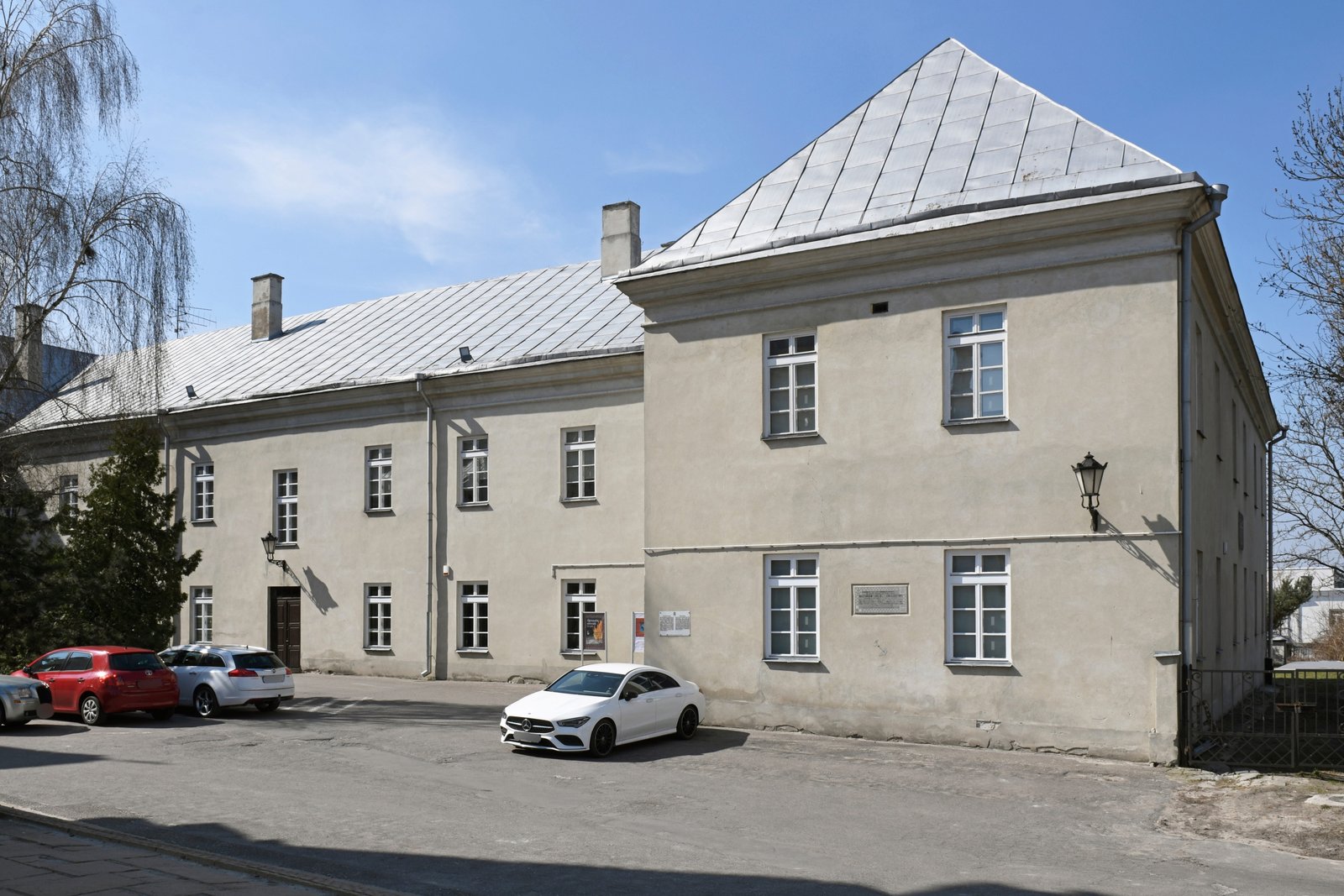
Wiktor Ambroziewicz Museum of the Chełm Land
ul. Lubelska 55, 22-100 Chełm
The regional museum of Chełm in eastern Poland fills four historic buildings with archaeology, ethnography and art. A pass costs 40 zl and …
 History
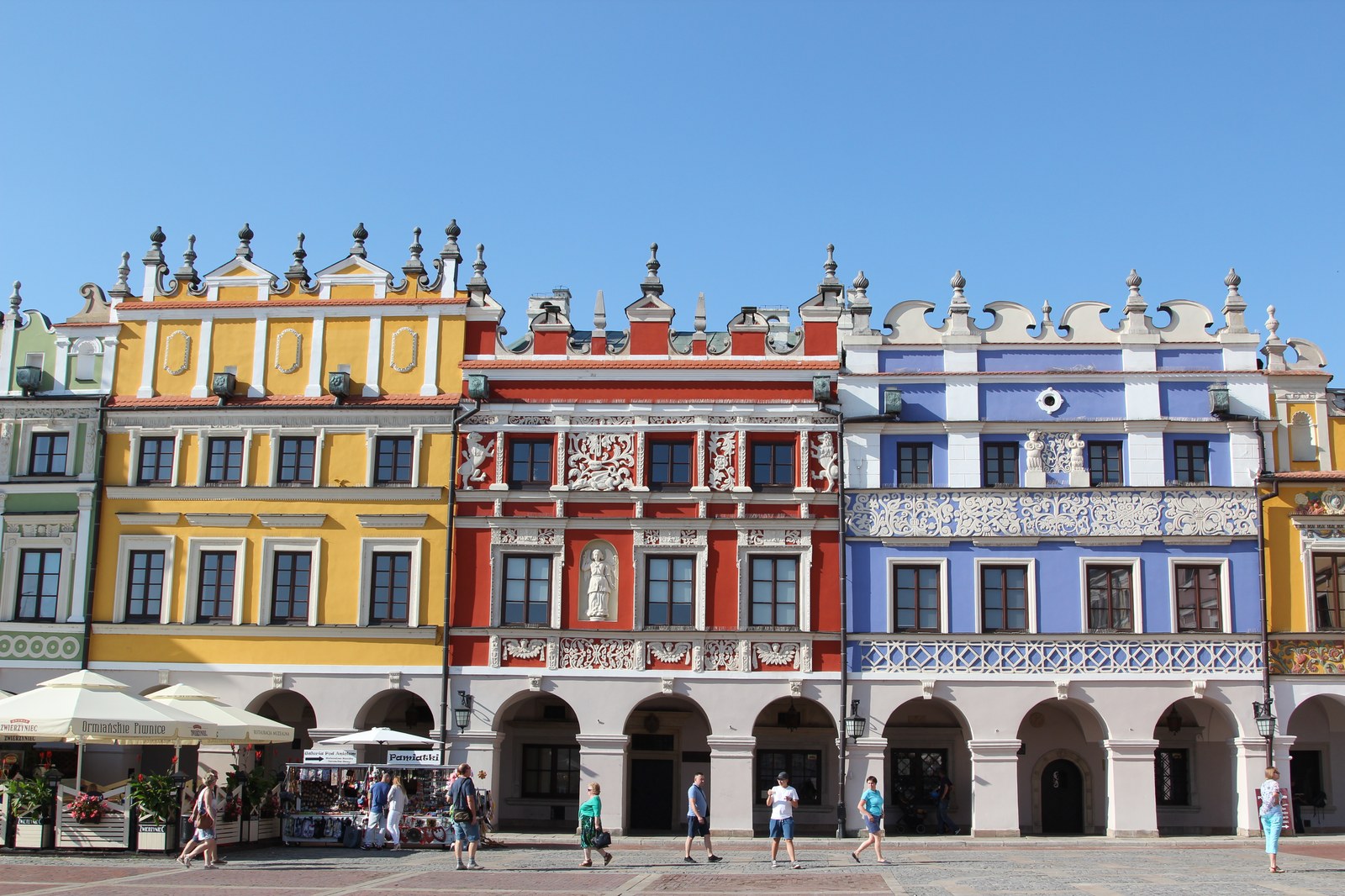
Zamość Museum
ul. Ormiańska 30, 22-400 Zamość
The museum in Zamosc fills 17th-century Armenian merchant houses on the UNESCO-listed Great Market Square. Four permanent displays, tickets …
 History
National Museum in Lublin (Lublin Castle)
ul. Zamkowa 9, 20-117 Lublin
The National Museum in Lublin fills the castle hill: a Gothic chapel frescoed in 1418, a 13th-century keep with a viewing terrace and nine …