Stanisław Wyspiański Museum
Muzeum Stanisława Wyspiańskiego
586 m from Rynek Główny in Krakow See museums near Rynek Główny in Krakow
- Wheelchair: Yes
- Elevator: Yes
Location
What to expect

Start with the name, because most visitors arrive without it. Stanisław Wyspiański (1869-1907) is to Krakow roughly what Klimt is to Vienna: the artist the city argues about, quotes and puts on its posters. Painter, playwright, poet, theatre reformer, designer of stained glass, furniture and typefaces - all of it inside 38 years. This branch of the National Museum, in an 18th-century granary just outside the Planty park ring, is the only place that shows the whole range under one roof.
It is a small museum and says so. Around 200 works are out at a time from a collection of more than 1,100, because most of them are pastel on paper and light destroys pastel. The display is rebuilt once a year; the 2026 version is the fifth since the museum opened in December 2021. The museum’s own words, translated: “the Stanisław Wyspiański Museum is a small museum in which we present only a fragment of Stanisław Wyspiański’s work”.
Three floors, lift or stairs. The ground floor is portraits: himself, his wife, his children, his friends and patrons, plus Krakow street scenes and views of the Kościuszko Mound painted late in his life. The first floor splits into three themes - the elements, Wawel as a drama of kings, Apollo and Christ. Two objects dominate it: the model of “Akropolis”, the scheme by which Wyspiański and Władysław Ekielski would have rebuilt Wawel Hill, and the full-size cartoon for the “Bóg Ojciec - Stań się!” window.
The basement is the part people skip and should not. His personal library sits there, with his handwritten notes in the margins and first editions of his plays, next to a room of theatre posters and filmed stagings.
Best for anyone with an interest in Art Nouveau, the Vienna Secession or European modernism around 1900, and for anyone following a Young Poland trail through the city. On a first two-day visit to Krakow it is a second-tier stop, after Wawel and the Main Square museums. It is not a children’s museum: the only thing that reliably holds them is a 9-minute VR film, with one headset on the first floor and two in the basement. Allow 60 to 75 minutes.
Tips
- Check the hours on mnk.pl, not on the museum’s web shop. The National Museum publishes two conflicting tables for this branch. The current one, on the branch page and on the “Opening hours” page, is Tuesday and Thursday-Friday 10:00-16:00, Saturday-Sunday 11:00-16:00, closed Monday and Wednesday. The shop subdomain still shows a timetable from several years ago.
- Weekends open at 11:00 and the last entry is 15:20. Saturday and Sunday start an hour later than weekdays, and the last visitors are admitted 40 minutes before closing. That leaves a real weekend window of just over four hours.
- Free Tuesdays cover the permanent exhibition only. The temporary show - in 2026, In the Paris Atelier of Stanisław Wyspiański and Józef Mehoffer - is charged on Tuesdays like any other day.
- Your Sukiennice ticket does not work here. Tickets to Sukiennice, the Main Building and the Czartoryski Museum each include seven other National Museum branches; this one is on none of the three lists. The 12-month pass (300 PLN, reduced 200 PLN) does include it.
- Pupils and students under 26 pay 1 PLN. They show a valid school or student ID; under-sevens are free. Standard admission is 18 PLN, reduced 14 PLN, family 36 PLN for up to four people including at least one child under 16.
- English on site: audio guide yes, labels unstated. The audio guide costs 10 PLN and comes in Polish and English, free for visitors with disabilities and their carers. The museum does not publish what languages the wall labels use, so treat the audio guide as your guaranteed English.
- Do not travel for one specific work. With most of the paper works swapped each year, the picture you saw reproduced may be in storage. The ticket desk answers on +48 12 433 57 64.
- The building is cramped and sound carries. A Krakow guide writing after the opening called the granary too small for the collection. She also noted that the ticket desk sits close enough to the biographical room for every conversation to carry. A school group on the first floor can occupy the whole level.
Getting there
On foot: under ten minutes from the Main Market Square. Cross the Planty at plac Szczepański and continue along ul. Krupnicza. This is the sensible way; nothing else is faster.
Tram: lines 2, 4, 8, 13, 14, 18, 20 and 24 circle the Planty. The closest stops are Teatr Bagatela and Filharmonia, a few minutes’ walk each.
Bus: 124, 134, 144, 152, 164, 169, 173, 179, 194, 304, 424, 502 and 503.
By car: the museum lists no parking among its facilities and publishes no advice for drivers. Leave the car outside the Planty ring and walk.
Nearby
- Mehoffer House - three minutes north on ul. Krupnicza, and the pairing that makes most sense. Wyspiański and Mehoffer trained under the same master, shared studios in Paris and designed the St Mary’s Basilica windows together. The National Museum sells its own two-branch route and budgets 2.5 to 3 hours for both.
- National Museum in Krakow - Main Building - five minutes down al. 3 Maja, the parent institution, with the 20th-century galleries that show what Polish art did after Wyspiański’s generation.
- Sukiennice Gallery of 19th-Century Polish Art - eight minutes to the Main Market Square, for the huge canvases of Jan Matejko. Wyspiański trained under him and worked with him on the St Mary’s polychrome.
One more stop that is not a museum. The design for the “Bóg Ojciec - Stań się!” window hangs here; the finished window is in the Franciscan church on plac Wszystkich Świętych, about fifteen minutes away. Seeing the two in one afternoon is the single best thing you can do with this museum.
Background
Krakow spent 90 years trying to give Wyspiański a museum. A pantheon of his stained-glass cartoons was sketched into plans for a new National Museum building in the 1930s; after the war the idea moved to the flats where he had lived. The branch finally opened on 28 November 1983 - the 76th anniversary of his death - in a townhouse at ul. Kanonicza 9, stayed there 21 years, then moved to the Szołayski House on plac Szczepański.
The present building predates all of that by two and a half centuries. The granary went up in the 18th century outside the city walls and served in turn as a factory, a shop and the seat of the Polish architects’ association. The National Museum took it over after 1945 and used it for decades as an art store, then as the Europeum European Culture Centre from 2013 to 2021. The Stanisław Wyspiański Museum opened in it on 2 December 2021.
Temporary exhibitions here
In the Paris Atelier of Stanisław Wyspiański and Józef Mehoffer
26 June 2026 - 31 December 2026
Wyspiański and Mehoffer drawing each other in 1890s Paris, plus a pastel of their studio: a small display at the Wyspiański Museum, 18 PLN, until 31 Dec 2026.
Nearby museums
 Art
ArtNational Museum in Krakow - Main Building
al. 3 Maja 1, 30-062 Kraków
National Museum in Krakow, Main Building - 20th-century Polish art, design and major temporary shows. Tue-Sun 10:00-18:00, tickets 45/35 …
 Science
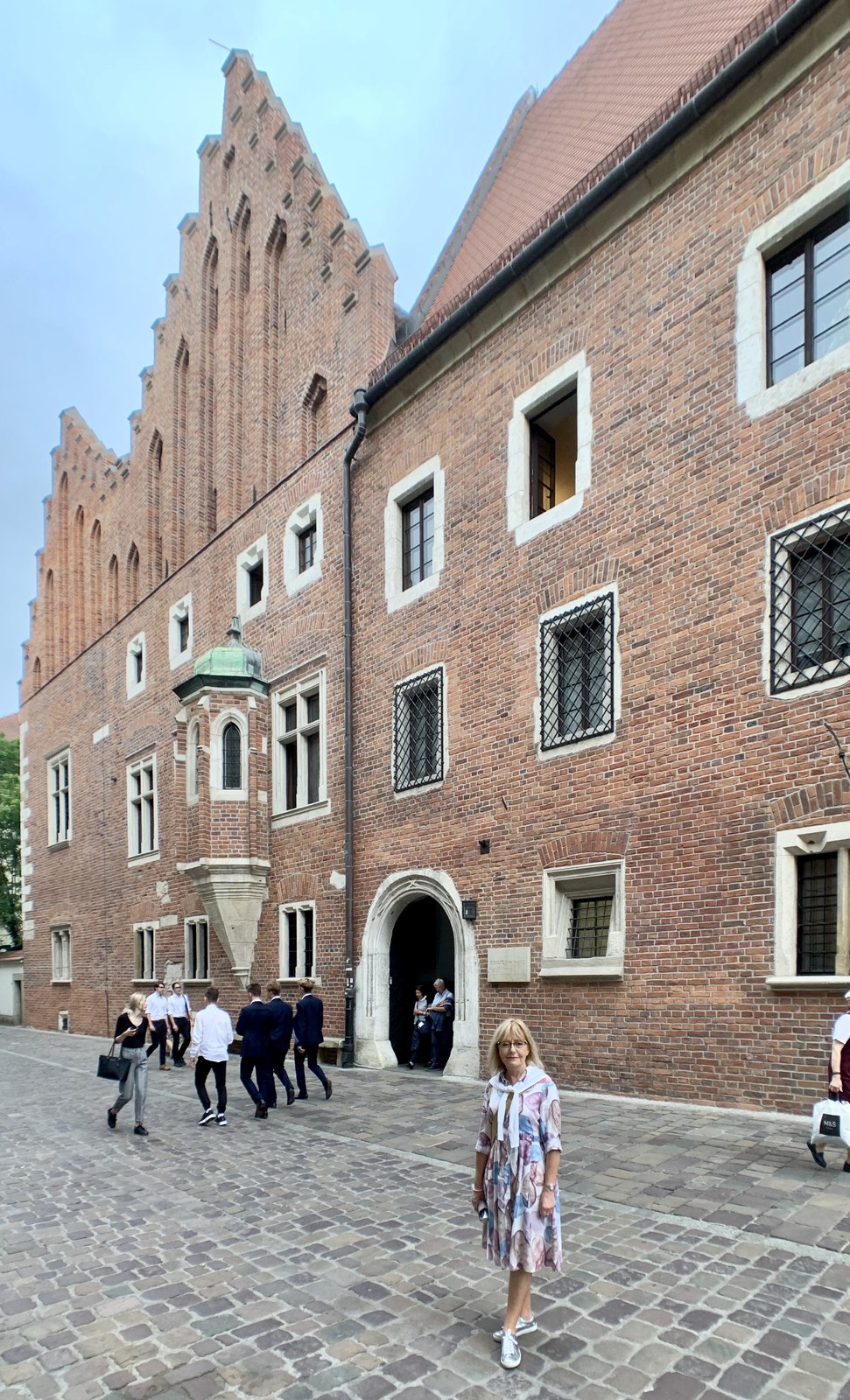
Jagiellonian University Museum Collegium Maius
ul. Jagiellońska 15, 31-010 Kraków
Collegium Maius Krakow - the Jagiellonian University's oldest building. Opening hours, tickets 17/10 PLN, free Wednesdays, guided tours in …
 Art
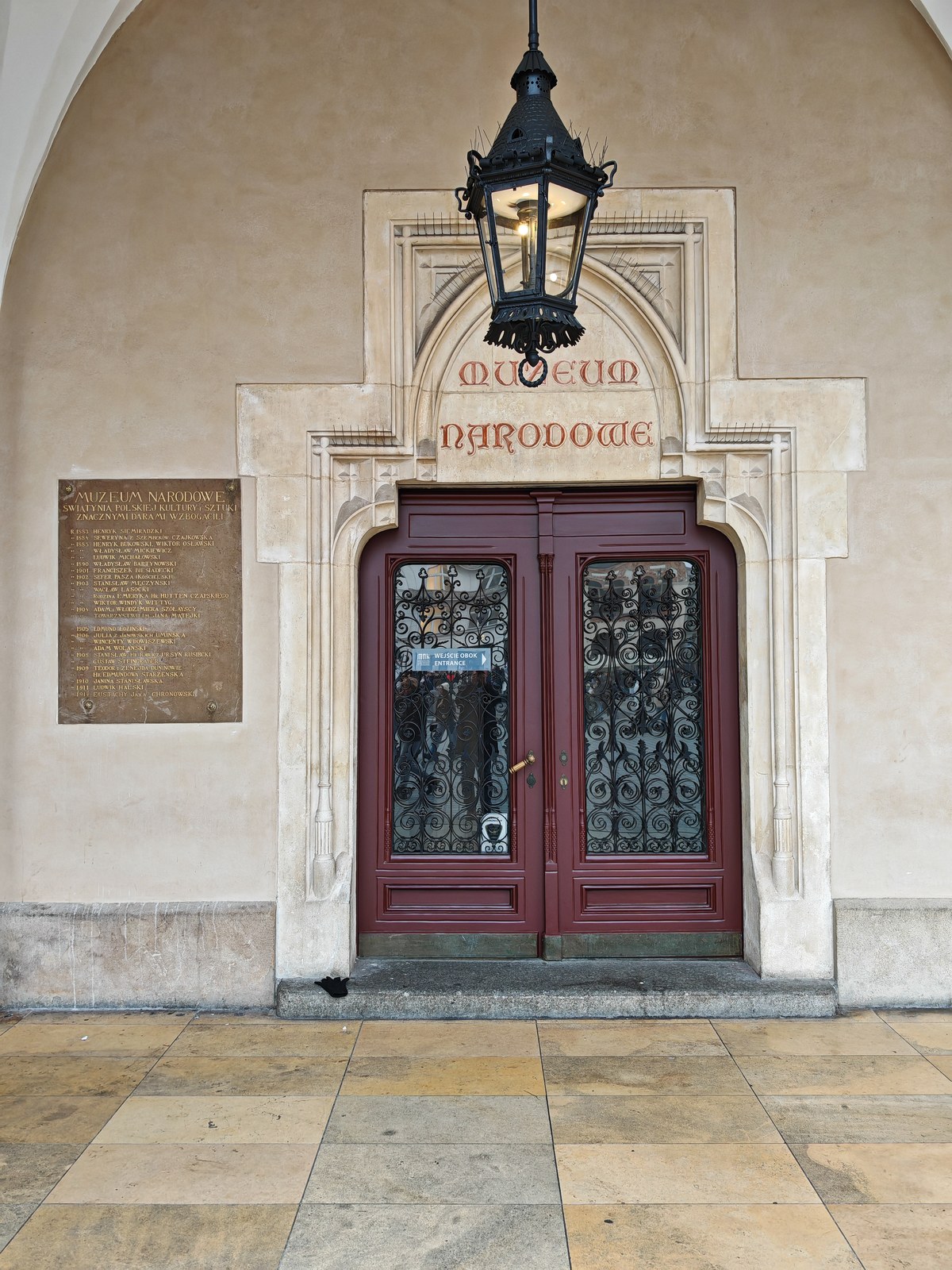
ArtSukiennice - Gallery of 19th-Century Polish Art
Rynek Główny 3, 31-042 Kraków
Sukiennice Gallery of 19th-century Polish art above Krakow's Cloth Hall. Open Tue-Sun 10:00-18:00, tickets 35/25 PLN, free on Tuesdays.