Sukiennice - Gallery of 19th-Century Polish Art
Galeria Sztuki Polskiej XIX wieku w Sukiennicach
At Rynek Główny in Krakow See museums near Rynek Główny in Krakow
- Wheelchair: Yes
- Elevator: Yes
Location
What to expect
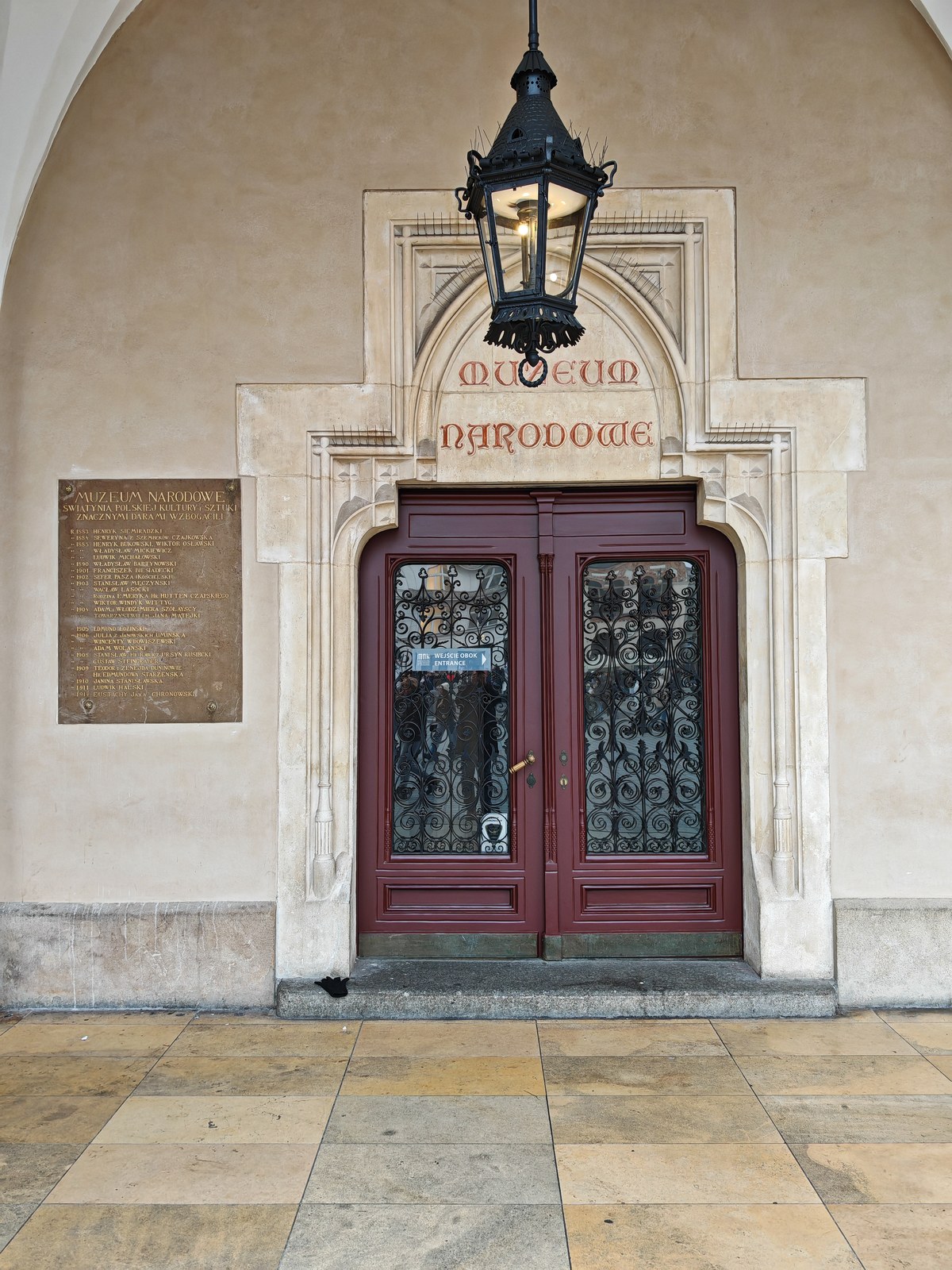
You are standing on the Main Market Square wondering which of the dozen doors around you is worth an hour. This one is, if you want to understand why Poles paint their history the way they do. Four rooms on the upper floor of the Cloth Hall hold the country’s largest permanent display of 19th-century Polish painting and sculpture, run as a branch of the National Museum in Krakow .
The rooms run in sequence. The Bacciarelli Room covers the Enlightenment, the Michałowski Room the Romantics and their battle scenes, including Somosierra. The Siemiradzki Room is the loud one: Nero’s Torches of 1876, Jan Matejko’s Kościuszko at Racławice and his Wernyhora of 1884. The Chełmoński Room closes with Realism and Polish Impressionism - Four-in-Hand, Jacek Malczewski’s Death of Ellenai of 1883, Anna Bilińska-Bohdanowicz’s Self-Portrait with a Palette of 1887.
An honest measure: four rooms, not a labyrinth. Allow 60 to 75 minutes, which is enough to read the wall texts instead of walking past the big canvases. Much of what hangs here is history painting about events a foreign visitor has not been taught, so the texts do the heavy lifting. If you want a survey of all Polish art, or touchscreens, this is the wrong door - it is a classic picture gallery in a historic interior.
One thing the museum does not advertise: from the gallery level a few steps take you out onto the terrace above the square, looking straight at St Mary’s towers. The terrace stays open until 23:30, long after the gallery closes, and there is a cafe up there.
Tips
- Pupils and students pay 1 PLN. The rate covers anyone in education until their 26th birthday who shows a valid school or student ID, so a family with a teenager at school pays almost nothing. Standard 35 PLN, reduced 25 PLN, family ticket 70 PLN.
- Tuesday is free and therefore the busiest day. For quiet rooms come on another day right after 10:00 or after 16:00 - the square and the Cloth Hall peak between 11:00 and 16:00, daily in summer.
- Last admission is 20 minutes before closing. The gallery shuts at 18:00, so the ticket desk stops selling around 17:40. Closed on Mondays.
- No booking needed. Buy at the desk or at bilety.mnk.pl; there are no timed slots, unlike the Rynek Underground directly below the same square.
- Audio guide 12 PLN, in Polish, English, Russian, German, French. Worth it here if you want the historical background spoken rather than read - the museum does not publish which languages the wall labels use.
- Coming for one specific painting? Call first. Matejko’s Prussian Homage has hung in the Cloth Hall for decades, but MNK publishes no list of what is currently on the walls. The ticket office answers on +48 12 433 54 03.
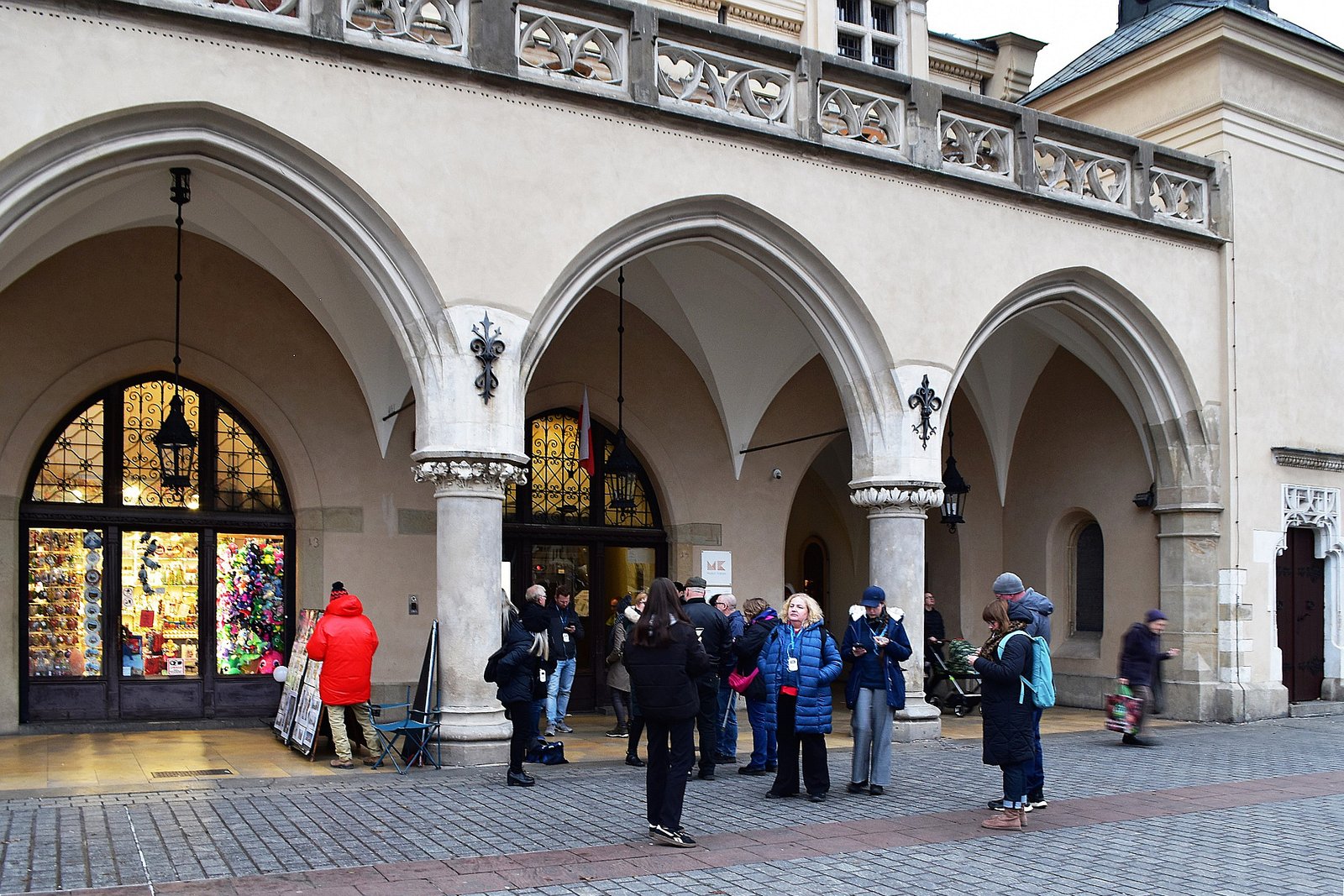
- The entrance is upstairs, not in the arcade. Look for the National Museum sign above a door among the souvenir stalls; stairs and a lift go up, and the lift reaches the terraces too, wheelchairs included.
Getting there
The Cloth Hall stands in the middle of the Main Market Square, inside the pedestrian zone, so no taxi will drop you at the door.
- On foot: 10 minutes from Kraków Główny station down Floriańska, 10 minutes from Wawel up Grodzka, about 20 minutes from Kazimierz.
- Tram: the nearest stops ring the Planty park - Teatr Słowackiego, Plac Wszystkich Świętych, Filharmonia - each 4 to 6 minutes’ walk from the square.
- Entrance: the door under the National Museum lettering in the arcade, then stairs or the lift to the first floor.
Nearby
- Rynek Underground - literally beneath your feet, the archaeological route under the square. It does need a timed ticket; allow at least three hours for the pair.
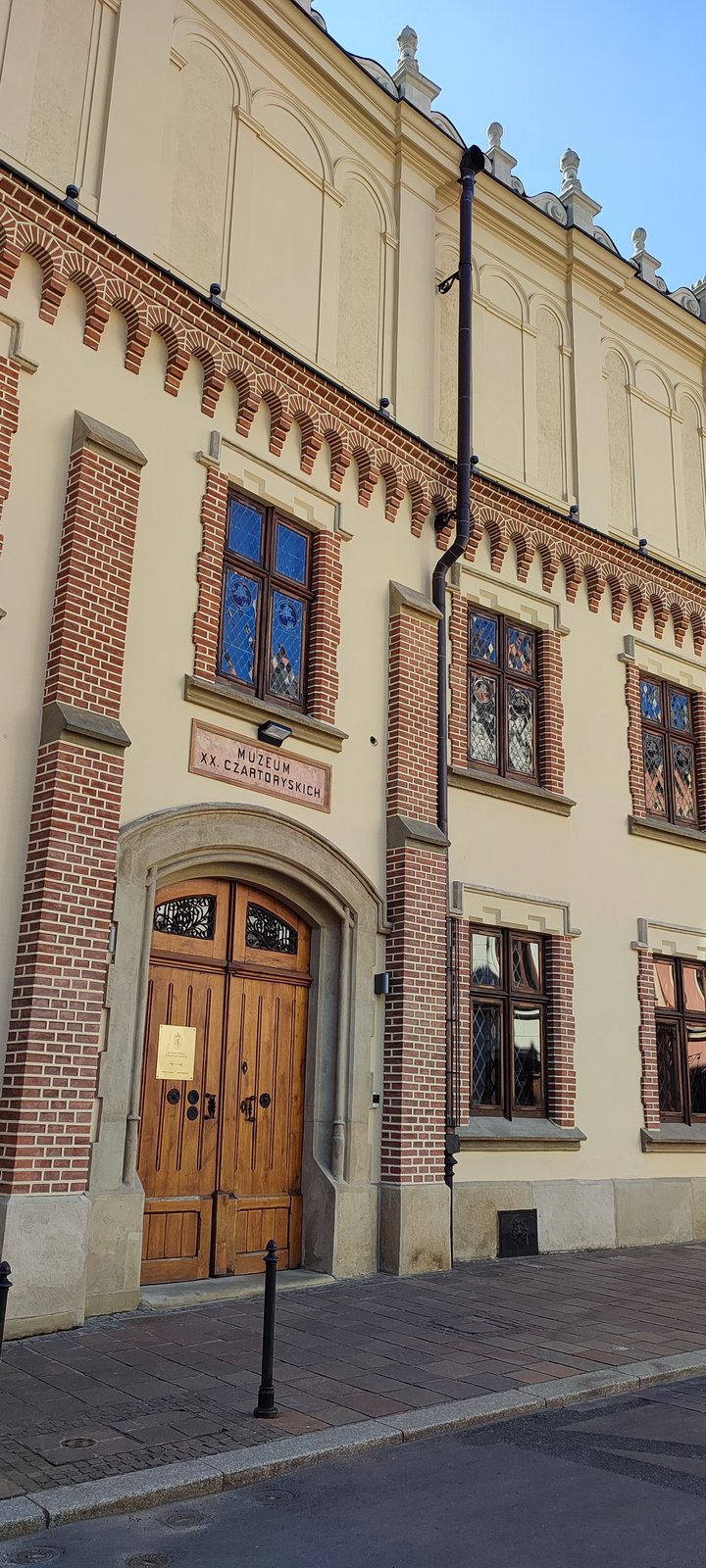
- Czartoryski Museum - five minutes away, the other National Museum branch in this corner of the Old Town. The choice is clean: one Leonardo there, the whole Polish 19th century here.
- National Museum - Main Building - the sequel, 20th and 21st-century Polish art, about 20 minutes on foot west of the square. For anyone who leaves the Chełmoński Room wanting to know what came next.
Background
The National Museum in Krakow was founded by a Kraków City Council resolution of 7 October 1879 and has occupied these rooms since day one, which makes it the oldest national museum in Poland. Four days earlier, at a ball on 3 October, Henryk Siemiradzki gave the city his Nero’s Torches; that gift is treated as the founding work of the collection.
The building is half a millennium older. The Gothic cloth hall of 1358 burned in 1555, and the rebuilding from 1559 gave it the Renaissance parapet with its carved masks. The neo-Gothic arcades and the upper rooms date from the 1875-1879 remodelling under mayor Mikołaj Zyblikiewicz.
The gallery closed in October 2006 for a full restoration, with the collection shown at Niepołomice Castle in the meantime. It reopened in 2010 with new technical facilities and the thematic room-by-room layout you walk through today.
Temporary exhibitions here
Roots and Sky. The Polish Chapter in the Collection of the Kyiv National Art Gallery
26 June 2026 - 18 October 2026
Nine Polish painters of the 19th and early 20th century from the Kyiv National Art Gallery - first shown in Poland, in the Malarnia Hall at the Sukiennice.
Nearby museums
 History
Rynek Underground
Rynek Główny 1, 31-042 Kraków
Rynek Underground Krakow - archaeological route beneath the Main Square. Opening hours, tickets 45/35 PLN, free Tuesdays, booking advice.
 History
Krzysztofory Palace - Museum of Krakow
Rynek Główny 35, 31-011 Kraków
Krzysztofory Palace on the Main Square - main seat of the Museum of Krakow and its city-history exhibition. Hours, tickets 34 PLN, free on …
 Art
ArtCzartoryski Museum
ul. Pijarska 15, 31-015 Kraków
Czartoryski Museum in Krakow - Leonardo's Lady with an Ermine. Open Tue-Sun 10:00-18:00, tickets 65/50 PLN, free entry on Tuesdays.