Pharmacy Museum of the Jagiellonian University
Muzeum Farmacji Uniwersytetu Jagiellońskiego
278 m from Rynek Główny in Krakow See museums near Rynek Główny in Krakow
- Wheelchair: No
- Elevator: No
Location
What to expect
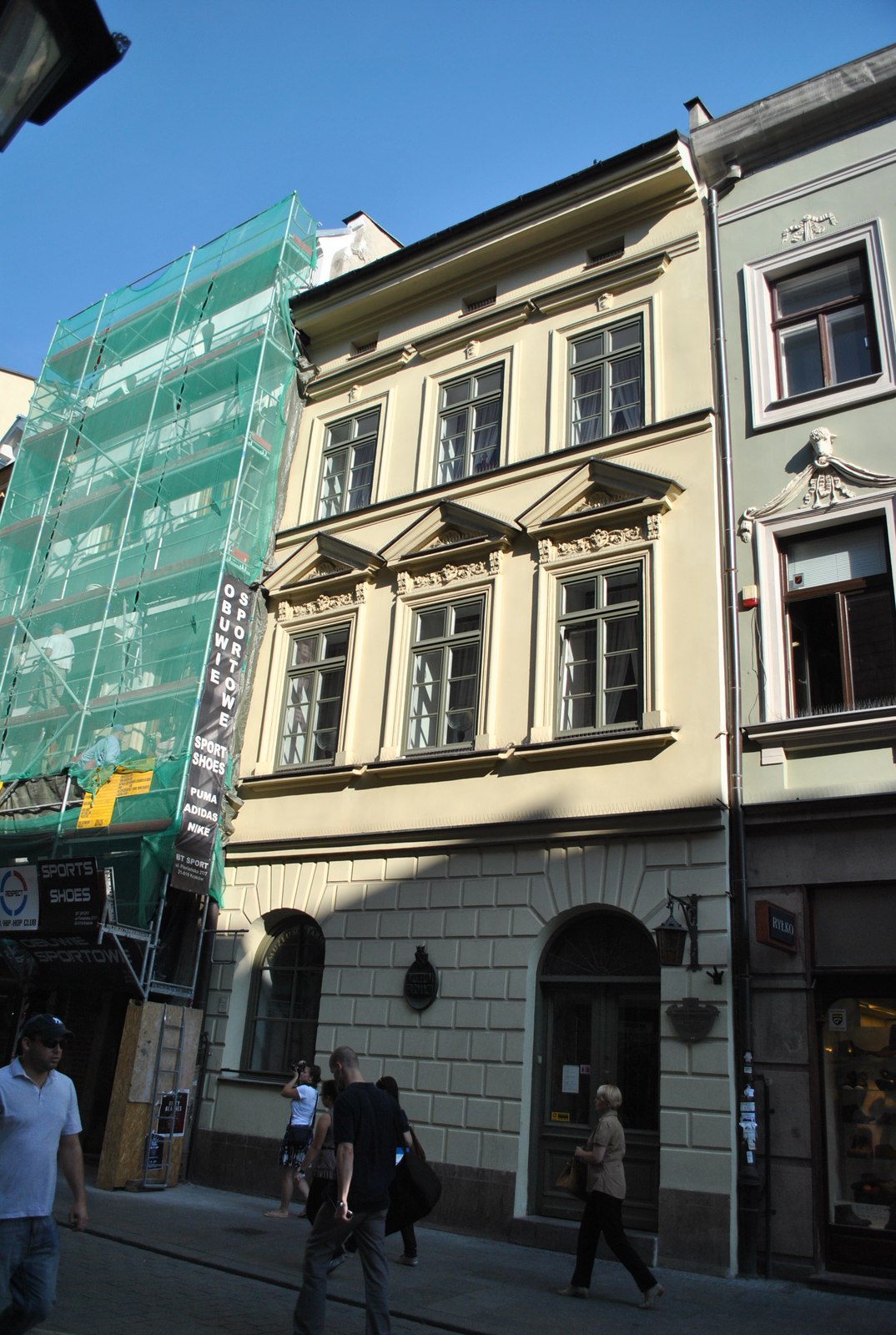
You are on Floriańska, 200 metres from the Main Market Square, on the street every visitor to Krakow walks at least twice a day - and almost nobody turns in at number 25. The Pharmacy Museum Krakow keeps behind that door takes up the whole of a Gothic townhouse and arranges twelve rooms the way the house was actually used: an alchemist’s workshop and a wine store in the cellar, apothecary interiors on the ground and upper floors, a herb-drying loft at the top. Cellar to attic on the third floor is five levels and about ninety minutes of stairs.
The set pieces are individual objects rather than whole rooms. On the first floor, Ignacy Łukasiewicz - the pharmacist who invented the kerosene lamp - is represented by a lamp prototype and jars whose labels he wrote by hand. On the second floor, a room for Tadeusz Pankiewicz, who ran the pharmacy inside the Kraków ghetto. Elsewhere: European majolica, mortars, presses, capsules for gilding pills, Marian Zahradnik’s pharmacy weights of under a gram, old pharmacopoeias and herbals. And then the cabinet of curiosities - powdered Egyptian mummy, dried venomous reptiles, leeches, Spanish fly and a narwhal tusk sold for centuries as unicorn horn.
Labels are short but they exist in seven languages - Polish, English, French, German, Spanish, Italian and Russian - posted at the entrance to each room. You will not need a guide or a translation app.
Best for adults and teenagers who like the history of science, medicine or craft, and for anyone who wants to see the inside of a genuine Old Town house rather than its facade. Think twice with small children: visitors writing about the museum single out the cellar, with its taxidermy and preserved specimens, as stronger material than they expected. If you want touchscreens and experiments, the Cogiteon science centre out in Czyżyny is the place, not this one.
Tips
- Tuesday is the only afternoon. Tuesday runs 12:00-18:30 (12 PM to 6:30 PM); Wednesday to Saturday it is 9:30-15:00 only, and Sunday and Monday are closed. Last entry is 45 minutes before closing, so Saturday’s cut-off is 14:15.
- Allow 90 minutes and expect stairs. That is the museum’s own figure and it matches what visitors report. There is no lift and no other accessibility provision - the museum says so plainly, and it applies to pushchairs as much as to wheelchairs.
- Walk in, no booking. Individual visitors buy at the door; only groups must reserve by phone or e-mail. Coach parties do not come here, so the queue that plagues the rest of Floriańska does not exist at number 25.
- The Krakow Tourist Card is not accepted. Tickets are 16 PLN full, 10 PLN concession, 35 PLN family (up to two adults with children under 16). A guided group tour is 22 PLN per person, 14 PLN concession.
- Preview it before you pay. The museum has a panoramic virtual walk-through of every room . Ten minutes there tells you whether five floors of a 14th-century house are worth 16 PLN to you - and it is the only way to see the interior if the stairs rule you out.
- Do not stop before the attic. The herb loft, with medicinal plants from around the world in their original packaging, is the room visitors name most often as their favourite, and it comes last on the route.
- Pair it with the Eagle Pharmacy, not with the Main Square. The Pankiewicz room on the second floor is the prologue; his actual pharmacy is across the river in Podgórze.
- Check the details the website omits. The museum publishes nothing about payment methods, photography or bag storage, and there is no standing free-entry day. If any of that matters, call +48 12 421 92 79 before you set out.
Getting there
On foot: from the Main Market Square walk up Floriańska towards St Florian’s Gate - three minutes, number 25 on the right. From the gate itself it is under 100 metres the other way. From Kraków Główny railway station allow ten minutes through the Galeria Krakowska mall and the Planty park.
Tram: the nearest stops are Teatr Słowackiego and Basztowa LOT, both about 400 metres away. Inside the Planty ring, walking almost always beats waiting.
By car: Floriańska is pedestrianised, so there is no driving to the door, and the whole district is a paid parking zone. The closest underground car parks are at Galeria Krakowska and plac Na Groblach, and from either you walk anyway.
Nearby
A hundred and fifty metres further up the same street, at number 41, stands the Jan Matejko House - the other small house-museum on Floriańska, also an interior rather than a gallery. Two of them make a complete morning without leaving one street.
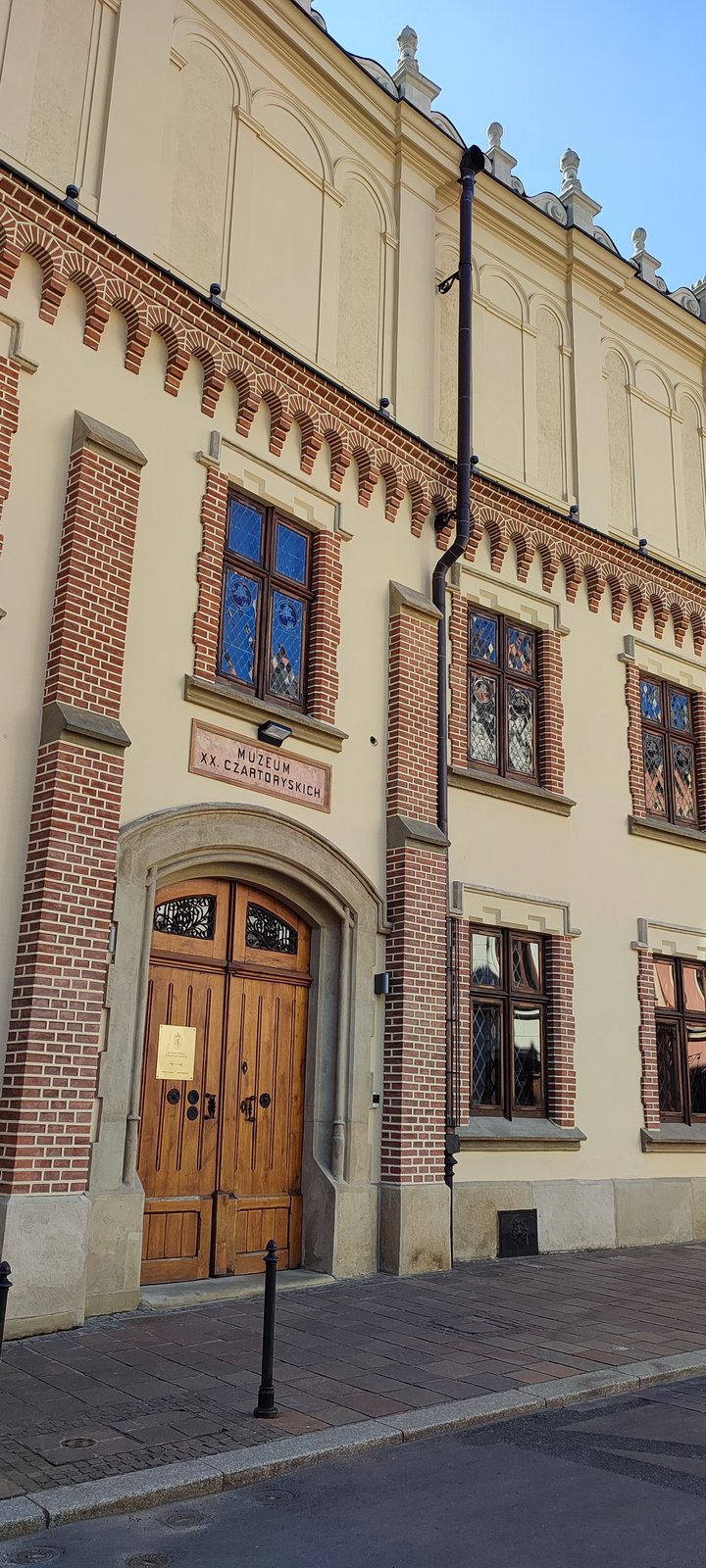
Around the corner on ul. Pijarska, the Czartoryski Museum is a different order of thing entirely - Leonardo’s Lady with an Ermine, and a half-day of its own. Treat it as a separate outing, not as a follow-up.
Across the Vistula in Podgórze, the Eagle Pharmacy on plac Bohaterów Getta is where Tadeusz Pankiewicz actually worked through the ghetto years. Here you meet the pharmacist; there you stand in his shop.
Background
The museum was founded in 1946 at the Regional Chamber of Pharmacists in Kraków, on the initiative of Stanisław Proń, the Chamber’s legal counsel and administrative director, who also ran the collection first. It sat at ul. Basztowa 3 until the end of the 1980s.
The move to Floriańska 25 turned the building into part of the exhibit. The house, known as Kamienica Pod Świętą Teklą, has Gothic cellars and a medieval core, and it let the collection be laid out along the old logic of a pharmacy: cool cellars for medicinal wines, an airy loft for herbs. The museum is now run by Collegium Medicum of the Jagiellonian University.
Wikipedia and the Association of University Museums both call it the largest and oldest museum of pharmacy in Poland and one of the largest anywhere. The scale is not obvious on arrival - the house is narrow and the rooms are small. It becomes obvious ninety minutes in, when you realise you are still not at the end.
Nearby museums
 Art
ArtJan Matejko House
ul. Floriańska 41, 31-019 Kraków
Jan Matejko House Krakow - the painter's home and studio on Floriańska. Hours (Tue-Sun), tickets 18/14 PLN, free on Tuesdays.
 Art
ArtCzartoryski Museum
ul. Pijarska 15, 31-015 Kraków
Czartoryski Museum in Krakow - Leonardo's Lady with an Ermine. Open Tue-Sun 10:00-18:00, tickets 65/50 PLN, free entry on Tuesdays.
 History
Rynek Underground
Rynek Główny 1, 31-042 Kraków
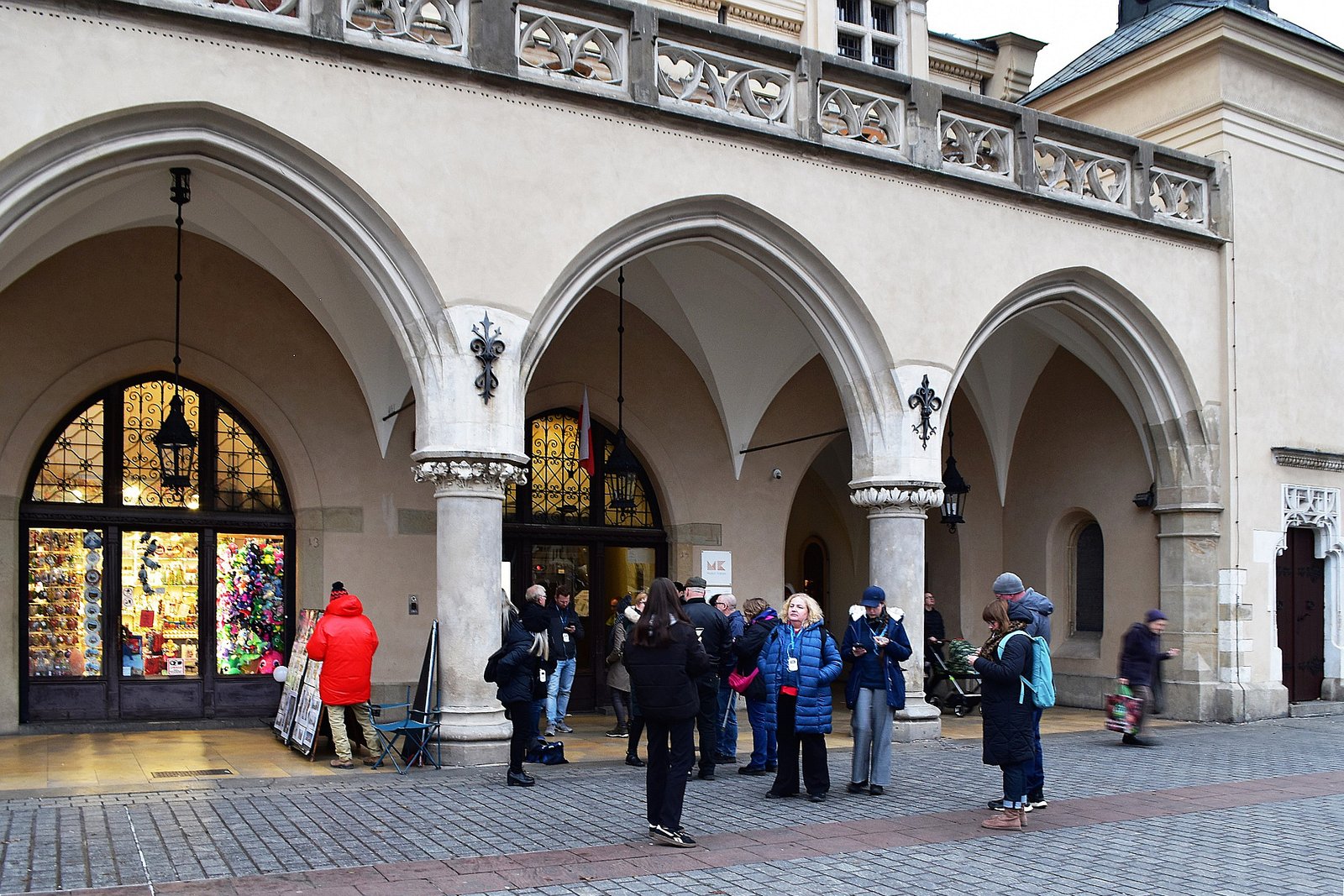
Rynek Underground Krakow - archaeological route beneath the Main Square. Opening hours, tickets 45/35 PLN, free Tuesdays, booking advice.