Museum of Military Affairs
Muzeum Spraw Wojskowych
8.3 km from Rynek Główny in Krakow See museums near Rynek Główny in Krakow
Location
What to expect
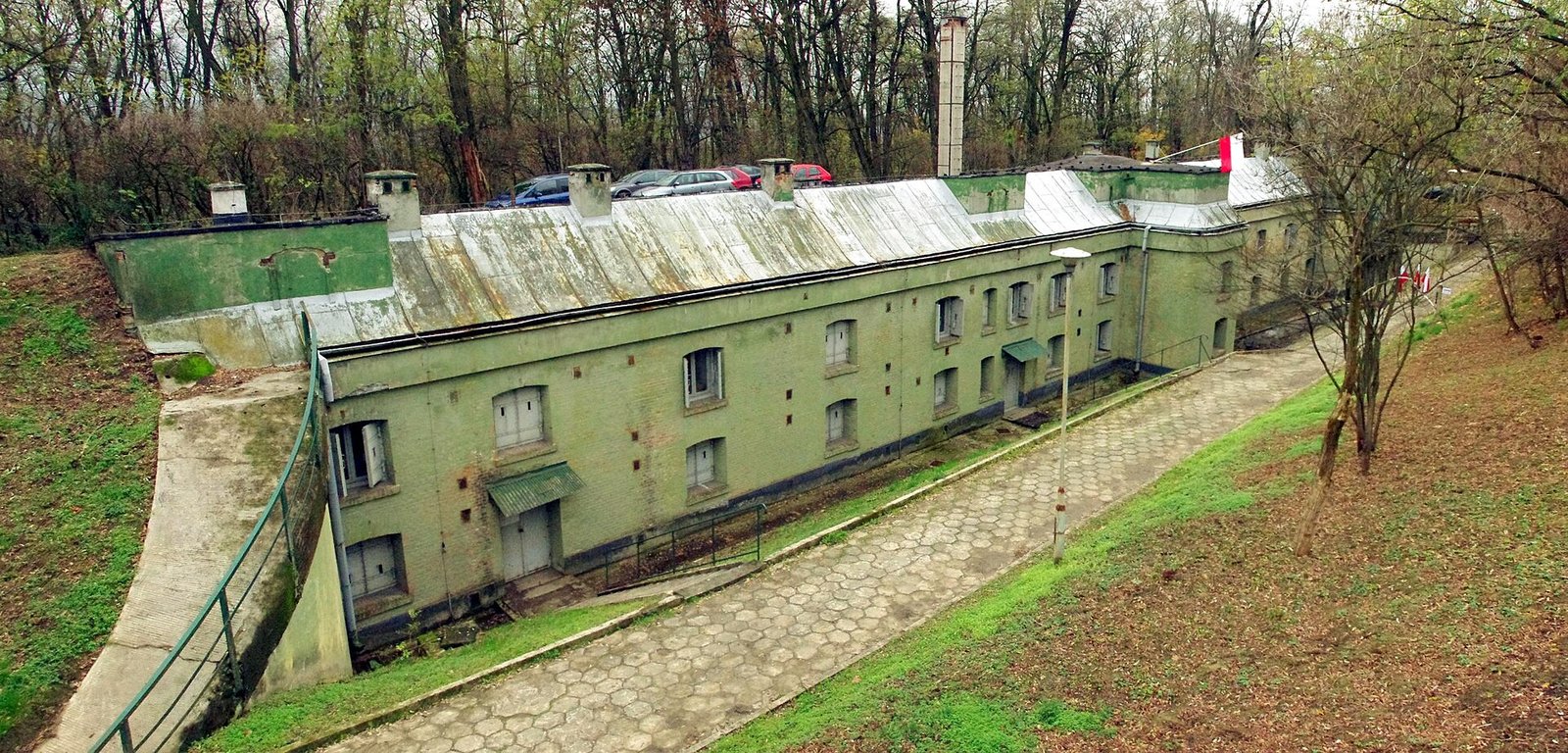
Unless your stay includes a Sunday, the Museum of Military Affairs Krakow is not an option: it opens on Sundays only, 11:00 to 17:00, according to its website. It sits inside an Austro-Hungarian armoured fort on the southern edge of the city, 8.3 km from the Main Square as the crow flies. For anyone curious about the army that ringed Krakow with forts before 1914, that detour is the point.
The fort is the first exhibit. Its garrison in 1914 was 130 men, and four 8 cm guns sat in armoured turrets on the roof. The turrets were scrapped after 1940, so today you see the barracks block rather than the guns. Inside, a barrack room for 36 soldiers has been rebuilt from the fortress’s surviving documentation, and its exhibition section holds cases of more recent acquisitions.
As the museum and its visitors described it in 2017-2022, the First World War collection is made up of many small things: soldiers’ pipes, medals, uniforms, shell fuses and field telephones. Alongside them stand larger pieces of Austro-Hungarian kit, including a field forge and an artillery observation post with its rangefinder. A separate section moves on to the Polish Army between the wars, in three dioramas with life-size mannequins: an anti-aircraft machine-gun crew, a field exercise built around a supply wagon, and a field hospital mid-operation. The museum has also announced two permanent exhibitions: Traces of Death: Soldiers’ Graves 1914-1918 in Western Galicia (2020), with objects from Austrian war cemeteries, and The Polish Legions (2022).
Handling things is part of the visit. In the museum’s own words, you can “pick up a rifle, put on an army helmet or go on a practice march with a pack”. A travel blogger who admits militaria are not her subject called the First World War field-hospital (lazaret) room, with its artificial amputated leg and bloodied dressings, the highlight of the place.
Best for First World War enthusiasts, re-enactors, fortress hunters and school-age children who would rather hold a helmet than read a caption. Skip it on a first one- or two-day visit if military history leaves you cold: the round trip takes longer than the museum itself. Assume Polish only. The website has no English version and says nothing about English labels or tours.
Tips
- Sundays only, 11:00-17:00. No holiday closures are published. All Saints’ Day, 1 November 2026, falls on a Sunday, and so does Easter 2027 (28 March), so ring +48 797 851 822 before setting out on either.
- Check Facebook the day before. Nothing has been posted on the website since February 2025, and the renovation closure of March 2024, announced for a few weeks, lasted eleven months. The museum itself sends visitors to facebook.com/mswojsk for current news.
- Bring a translation app. A local reviewer found the descriptions basic even in Polish back in 2013 - fine for enthusiasts, thin for everyone else - though staff were happy to explain. The museum does not say whether the captions were expanded during the renovation.
- Carry some cash. The museum publishes neither prices nor payment methods, so have some złoty on you in case there is no card terminal.
- One hour inside, half a day overall. An hour covers the barrack room, the First World War cases and the dioramas (our estimate). With the tram and a bus that runs about every 40 minutes on Sundays, aim to arrive by 15:30.
- Preview the hospital room with young children. The helmets and rifles are the draw for kids, but the field-hospital room is graphic enough that a parent should look first.
- Pair it with a second fort. The scouting museum in Fort Jugowice opens at 10:00 on Sundays, and buses 214 and 254 run from its Kąpielowa stop to Fort Swoszowice in 7-9 minutes. Do one fort in the morning and the other after lunch.
- Accessibility: call ahead. The museum publishes no accessibility information - call before visiting.
Getting there
Tram and bus: from the Old Town, take tram 8 from Plac Wszystkich Świętych (about 20 minutes) or tram 22 from Poczta Główna (about 25 minutes). Tram 50 also runs to the same Borek Fałęcki terminus. There, change to bus 214 or 254 for the Fort Swoszowice stop, a 10-13 minute ride.
Sunday buses: the two lines together give you a bus roughly every 40 minutes, so check the MPK timetable before you leave. The stop is about 250 m from the fort as the crow flies.
Getting back: after the museum closes, Sunday buses towards Borek Fałęcki leave Fort Swoszowice at 17:23 (line 214) and 18:06 (line 254), on the MPK timetable valid from 21 September 2026.
Train: ride to Kraków Swoszowice, then take bus 254 from the Swoszowice SKA P+R stop, seven minutes to Fort Swoszowice.
By car: the museum publishes no parking information; set your navigation to ul. Sawiczewskich 46.
On foot: a sulphur-mining heritage trail links the museum with the small spa park in Swoszowice, which makes a good walk before or after the visit.
Door to door from the Main Square, count on anything from 45 minutes to over an hour each way, depending on the connection.
Nearby
About 3 km west as the crow flies, in Fort Jugowice on the same southern ring, is the Museum of the Scouting Movement . It is a branch of the Museum of Krakow, open on weekdays too, with its own display on the history of its fort. Seeing both is a useful comparison of two ways to bring an old fort back to life.
Heading back to the centre, the Podgórze Museum explains the right-bank town that was a separate city until it joined Krakow in 1915. For the next chapter of Polish military history, the Home Army Museum covers the wartime underground state, fittingly housed in an Austrian fortress storehouse of 1911.
Background
The fort went up in 1897-1898 as Fort 51 1/2 “Wróblowice”, an armoured close-defence work in the outer ring of the Krakow Fortress. Its job was to back up the older Fort 51 “Rajsko”, less than a kilometre to the east as the crow flies. It saw no action in either world war.
Later it was used by the civil defence service and then by the voivodeship office, which kept its archive here. For two years after 1989 it also stored the Lenin statue removed from Nowa Huta. The fort entered the monuments register in November 2012, and in 2013 the Gloria Fortibus foundation leased it and opened the museum on 11 November of that year.
Restoration under the city conservator’s supervision ran for almost a decade, with the heaviest work - facade, roof and caponier - in 2018-2019. A further stage closed the museum in March 2024, and it reopened to visitors on 2 February 2025.
Nearby museums
Museum of the Scouting Movement
ul. Forteczna 28, 30-437 Kraków
Museum of the Scouting Movement in Krakow's Fort Jugowice - a Museum of Krakow branch on Polish scouting. Opening hours, tickets 20 PLN, …
Podgórze Museum
ul. Bolesława Limanowskiego 51, 30-551 Kraków
Podgórze Museum in Krakow - a Museum of Krakow branch in a former inn, on the story of the right-bank city. Tickets 22 PLN, free entry on …
 History
Home Army Museum
ul. Wita Stwosza 12, 31-511 Kraków
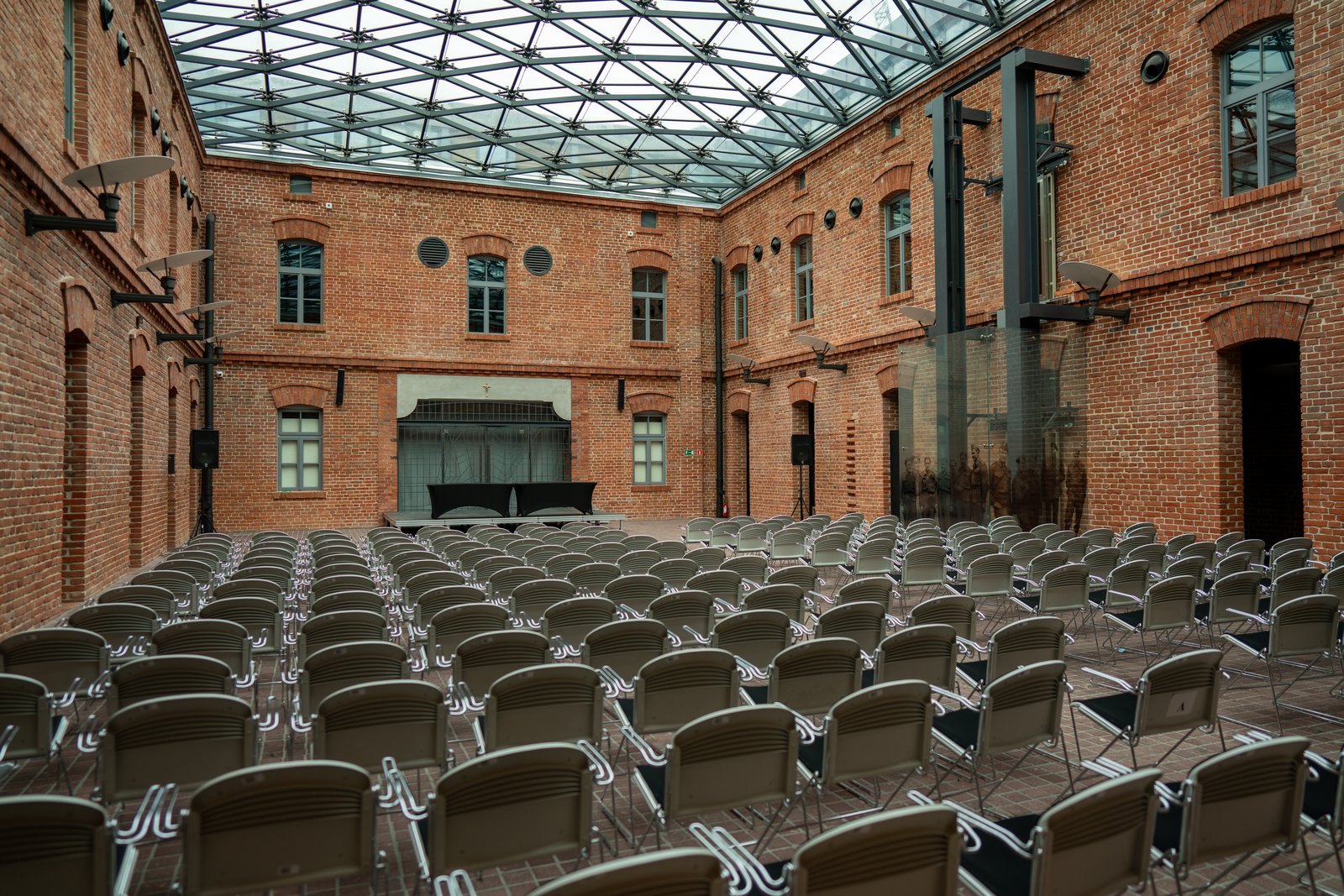
Home Army Museum Krakow - Poland's WWII underground state. Hours Tue-Sun 10:00-17:00, tickets 25/15 PLN, free on Sundays.