Museum and Archive of Blessed Maria Angela Truszkowska
Muzeum i Archiwum bł. Marii Angeli Truszkowskiej
315 m from Rynek Główny in Krakow See museums near Rynek Główny in Krakow
Location
What to expect
The Maria Angela Truszkowska Museum in Krakow is a single-biography museum run by the Felician Sisters inside their own working convent. This is a religious house, not a ticketed institution: it publishes no price list and no way to book a visit. The display occupies a handful of rooms in the house at Mikołajska 18, where the founder of the congregation lived between 1866 and 1870.
The route starts in a family room built around a copy of the Częstochowa icon, known here as “Fundatorka”. The congregation was formed in front of that icon on 21 November 1855. Next comes the founder’s own room, hung with the oldest portrait of her, painted in 1924 by a Jagiellonian University professor.
Then a hall of the congregation’s history, with the beatification panels and parts of her habit. The last room holds liturgical objects: the altar from the first general house, monstrances, vessels and chasubles she embroidered herself. The habit shows where strips were cut out of it as relics after her death in 1899. That detail comes from North American Felician Sisters who came here on pilgrimage in 2019, not from the museum’s own pages.
One thread is about the house rather than the woman. The staircase, called the “macloch”, carries the building’s architectural history from the 14th century onward. It also holds a copy of the will by which Pelagia Russanowska handed the house to the sisters in 1860, and photographs of the probes made during the 1995 renovation. Paintings of scenes from her life run up the stairs to the second floor.
The other half of the institution is an archive and a library. It holds manuscripts from the founder’s lifetime, her correspondence with the Capuchin fathers and the files of her beatification process. The library adds books printed before 1900, early prints and several editions of the Jakub Wujek Bible. The reading room is open to researchers by arrangement and is not part of an ordinary visit.
Who it is for: readers of 19th-century religious and charitable history, Felician families, and pilgrims following the beatification route. If you are a first-time visitor to Krakow with a free hour, expect a handful of rooms of documents and portraits presented for people who already know the story. Skip it unless that story is why you came.
The museum’s Polish website has a full English version. Nothing on the site states the language of the captions in the rooms, so assume you may need Polish, or a member of staff to walk you through.
Tips
- The week is lopsided. Tuesday afternoons only (14:00-17:00), Wednesday to Friday mornings only (10:00-14:00), closed Sunday and Monday. One Saturday a month adds 15:00-17:00, with no fixed date announced.
- Phone before you go. The number is +48 12 426 47 40. Two reasons: the monthly Saturday has no published date, and Polish tourist directories list different Tuesday hours from the museum’s own contact page. The museum’s news page has not been updated since September 2024.
- Church holidays close it too. Not only the public holidays a foreign visitor can look up, but Catholic feast days as well - a real risk around Corpus Christi, Assumption and Epiphany.
- Groups must announce themselves. The museum requires advance notice for any larger group. Individuals are not obliged to call, but this is a convent rather than a ticketed institution, so a call is the courteous and safer option.
- Allow 30 to 45 minutes. The exhibition is small and that is enough to see it properly. The archive reading room is a separate, pre-arranged visit.
- Decide in five minutes whether to bother. The official site links a short introductory film and a virtual walk of the pre-2016 layout. Watching them before you set out is worth more here than at a large museum.
- The free entry shown above is not confirmed by the museum. Its own pages name neither an admission charge nor free entry, and the city tourist portal shows no admission information either. Ask at the door, or on the phone, whether an offering is expected.
- Accessibility and stairs. The museum publishes no accessibility information - call before visiting. What the display description does make clear is that part of the exhibition runs up a staircase to the second floor.
Getting there
On foot: from St Mary’s Basilica walk east along Mikołajska street, about 200 metres, three minutes. The entrance is in the corner house where Mikołajska meets św. Krzyża.
Tram: the nearest stops are on the ring around the Old Town - Poczta Główna (the main post office) and the stops on Starowiślna street; five to seven minutes on foot from either.
Bus: services calling at Poczta Główna and Westerplatte leave you with the same short walk as the trams.
By car: the Old Town restricted traffic zone rules out driving to the door. Paid parking starts outside the Planty ring, and the underground car parks at plac Na Groblach or on Karmelicka add fifteen minutes of walking.
Nearby
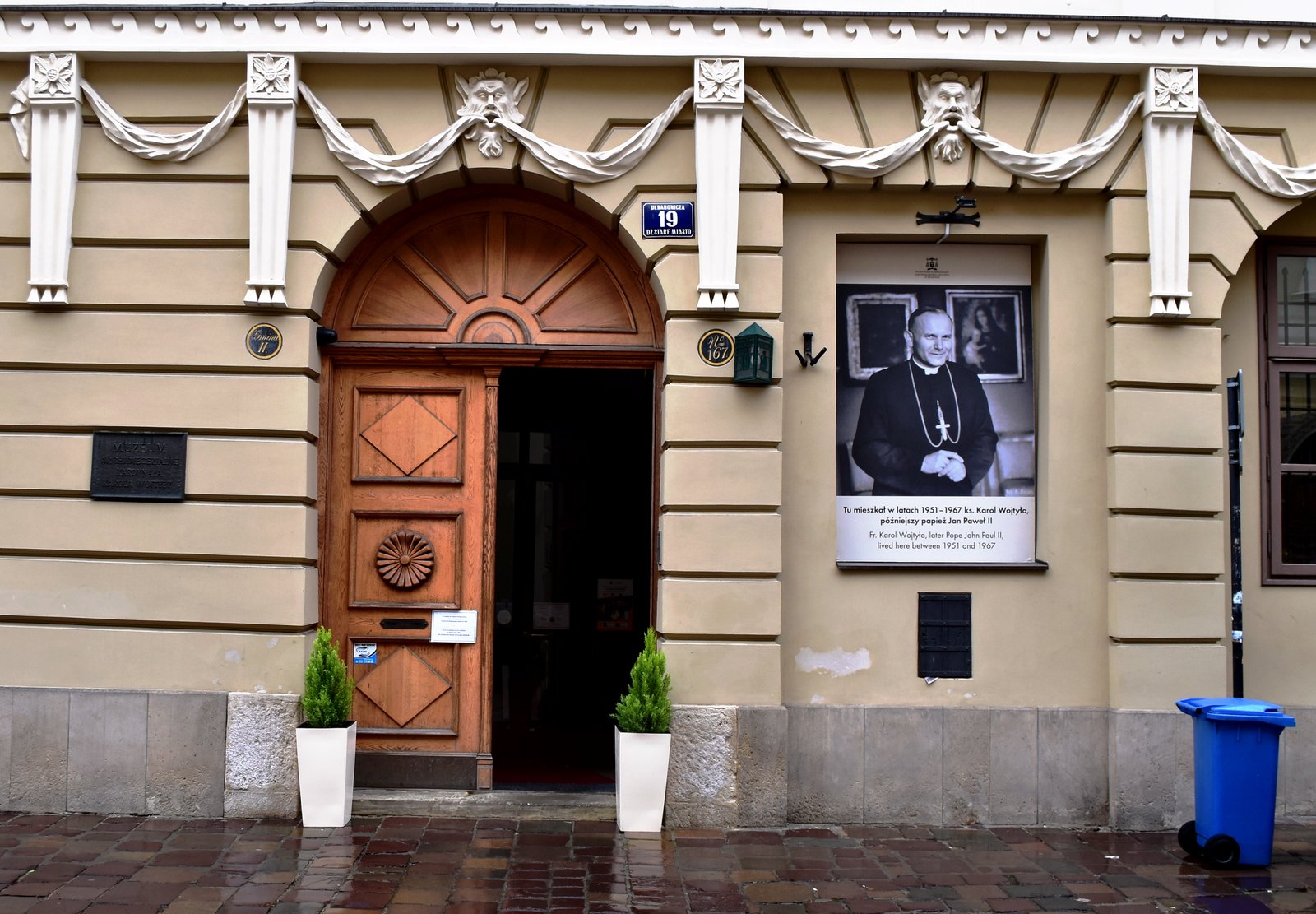
The Archdiocesan Museum on Kanonicza 19-21 shows the archdiocese’s sacred art on a scale this museum cannot match - ticketed, on the far side of the Old Town, a fifteen-minute walk away.
The Dominican Museum also sits inside a working religious house, but with online booking, fixed opening days and treasury-grade objects; the comparison is the quickest way to understand what the Truszkowska museum is not.
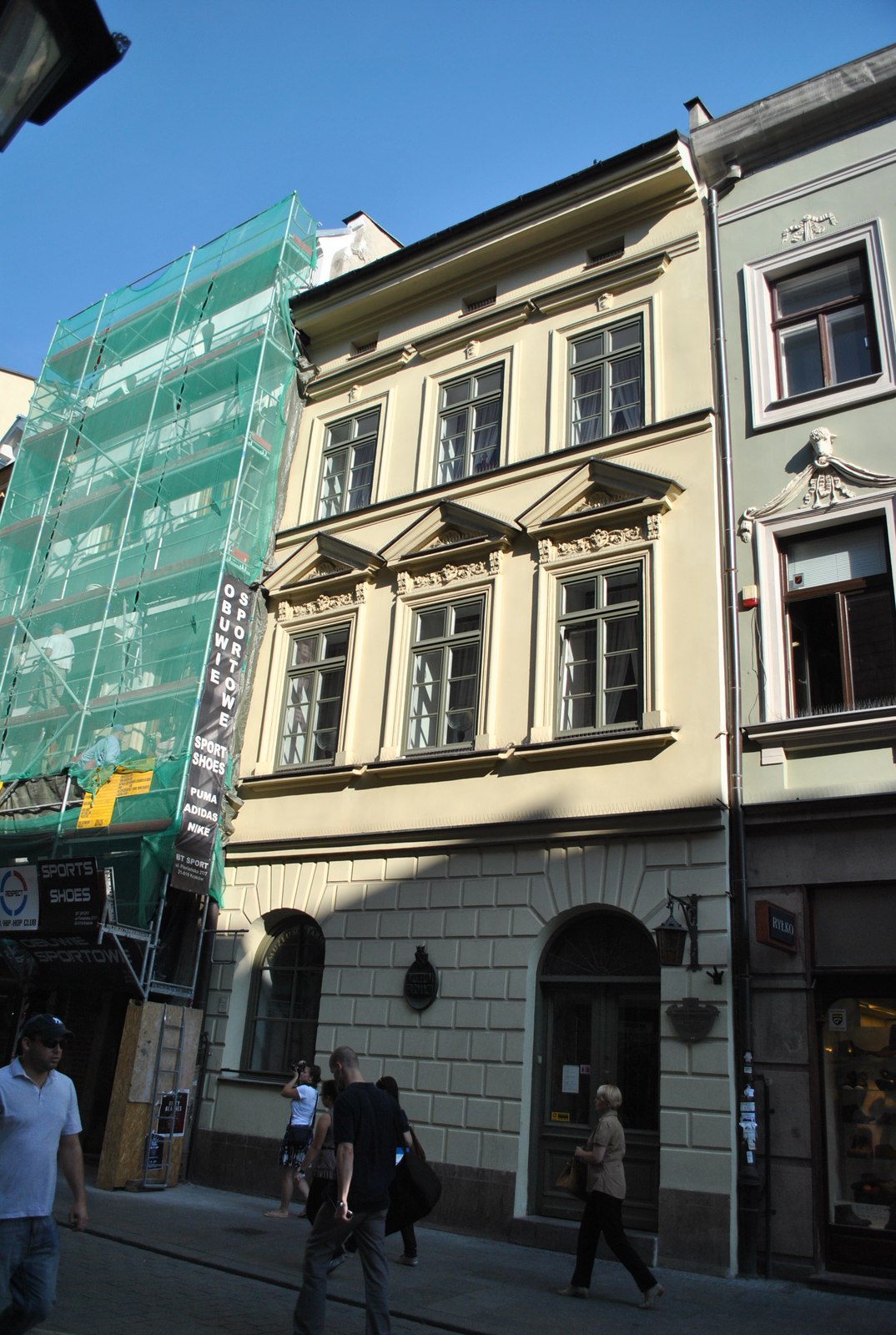
The Pharmacy Museum on Floriańska 25, 400 metres away, is the obvious second stop of the same morning - three floors, twelve rooms and a completely different pace.
One address that is not a museum belongs on the same route: the Felician convent at Smoleńsk 6, a 20-minute walk west, where the founder spent the last thirty years of her life and where her relics rest. The museum makes far more sense as half of that pair.
Background
The Felician Sisters came into the Mikołajska house in 1860, when Pelagia Russanowska made it over to them so that poor children could be cared for there. Krakow burghers had owned it for the five hundred years before that. The building is a listed monument, entered in the register as A-65 on 19 February 1968.
Zofia Kamila Truszkowska was born on 16 May 1825 in Kalisz and built the congregation out of a shelter for street children she ran in Warsaw from 1854. After the January Uprising, a tsarist decree of December 1864 dissolved the congregation in the Russian partition. The community was re-founded in Austrian Galicia in 1865, and in spring 1866 she moved into Mikołajska 18.
She died in Krakow on 10 October 1899 and was beatified by John Paul II on 18 April 1993.
The museum opened on 11 October 1999, the centenary of her death, and the sisters marked its 25th anniversary in September 2024.
Nearby museums
 History
Archdiocesan Museum in Krakow
ul. Kanonicza 19-21, 31-002 Kraków
Archdiocesan Museum Krakow on Kanonicza Street - sacred art and Karol Wojtyla's former home. Tickets 10/6 PLN, Tue-Sun 10:00-17:00.
 Culture
Dominican Museum in Krakow
ul. Stolarska 12, 31-043 Kraków
Dominican Museum in Krakow - 800 years of the Dominican Order: Poland's oldest stained glass and monastery treasures. Free entry, book …
 Science
Pharmacy Museum of the Jagiellonian University
ul. Floriańska 25, 31-019 Kraków
Pharmacy Museum Krakow at Floriańska 25 - historic apothecary interiors on 3 floors. Hours (Tue-Sat), tickets 16/10 PLN.