Manggha Museum of Japanese Art and Technology
Muzeum Sztuki i Techniki Japońskiej Manggha
1.3 km from Rynek Główny in Krakow See museums near Rynek Główny in Krakow
- Wheelchair: Yes
- Elevator: No
Location
What to expect

The Manggha Museum in Krakow faces Wawel Castle from the far bank of the Vistula, and its wave-shaped roof is half the reason to cross the river. It opened on 30 November 1994, built by Krzysztof Ingarden and Jacek Ewý to a concept that Arata Isozaki donated.
The film director Andrzej Wajda gave his entire Kyoto Prize to set up the Kyoto-Krakow Foundation, whose purpose was to build the centre. The foundation then raised the construction money from donors across Japan, the East Japan Railway Workers’ Union and the Polish government.
Is the detour from Wawel worth it? The walk over the Grunwaldzki Bridge is short, so the real cost is time: kawawkrakowie.pl allows 60-90 minutes for the exhibitions, and krakow.com budgets 1.5 to 2 hours for a comfortable visit. The answer depends on the week you come, because the museum runs no permanent display. Its website offers current, upcoming and archived exhibitions and nothing else.
In autumn 2026 the theme is Japanese warriors, in two shows running until 11 November. Akitsushima. The Island of Dragonflies brings samurai armour from the collection of Wiktoria and Adam Jurgilewicz, with the dragonfly as its recurring emblem. Warrior Women: Japanese Herstories is the one to see for the prints: Edo-period ukiyo-e of women who fought, some from the museum’s own holdings and some from private collections.
Architecture fans are the safest bet at any date. The building made the list of the 20 most interesting in Poland since 1989 in the 2006 “Polska. Ikony architektury” competition. Visitors who pictured a permanent room of Hokusai prints are the ones who leave disappointed, and TripAdvisor review titles run all the way from “Boring Manggha” to “Go for the Exhibition, Stay for the Cafe”.
That second title doubles as the plan B. Café Manggha serves guests without a museum ticket during opening hours, and krakow.com calls the view of Wawel from this building “possibly the finest vantage point in the city”, recommending a window seat facing the castle.
Our verdict: look at the programme before you leave your hotel, and go if either show pulls you in; if neither does, go for the coffee and the view. If you depend on English, read the label tip below first.
Tips
- ISIC and Karta Polaka mean free entry. The price list lets ISIC card holders and Karta Polaka holders in free on any day, along with children under 7. On Tuesdays everyone gets in free.
- Otherwise, ask which ticket is cheapest. A family ticket costs 50 PLN for up to four people with at least one child under 18, and a group ticket 120 PLN for up to 20. The museum’s English page still shows the older terms, 45 PLN for a family and up to 30 per group. The Polish Large Family Card (Karta Dużej Rodziny) and Karta N are also honoured.
- Check the English before you commit. The museum’s website runs in Polish, English and Japanese, but it says nothing about the language of the object labels or about an audioguide. If a single show is the reason for your trip, email recepcja@manggha.pl and ask first.
- Bring a small bag, or use the cloakroom. The visiting rules keep large backpacks and bags, umbrellas, tripods and bulky coats out of the galleries, and staff may ask you to check them. The cloakroom is free.
- Photos are fine, flash and tripods are not. Under the museum’s visiting rules you may use a camera or video camera for private use only, with no flash or other lighting and no tripod.
- Arrive by 17:30. The ticket desk closes at 17:30 and last entry is half an hour before closing. In 2026 the museum is closed on 1 November and 25 December and opens only 10:00-14:00 on 24 and 31 December. krakow.com says tour groups come mid-morning and suggests a weekday afternoon, ideally Thursday.
- Guided tours need 10 days’ notice. Individual visitors need no booking, but tours go through the education department at least 10 days ahead. Online tickets for a given month only go on sale in the last week of the month before.
- No lift in the main building. A stair lift operated by a trained staff member links its two floors, while the Europe - Far East Gallery next door has a lift to every floor. The museum recommends the ul. Konopnickiej entrance for wheelchair users and lends one wheelchair, booked through its accessibility coordinator.
Getting there
From the Old Town on foot: the Main Market Square is about 1.7 km away, roughly 20 minutes. Head down past Wawel to the river, cross the Grunwaldzki Bridge, and turn right at Rondo Grunwaldzkie into ul. Konopnickiej. From the foot of Wawel it is about 1 km.
From Kraków Główny station: about 2.6 km on foot, some 30 minutes. For public transport, the museum’s practical-information page links to jakdojade.pl, which gives the current connection to Rondo Grunwaldzkie.
By tram or bus: both stops are called Rondo Grunwaldzkie - the tram stop on ul. Monte Cassino, the bus stop on ul. Konopnickiej. The museum publishes one combined list of lines for the two: 18, 22, 52, 62, 71, 124, 144, 164, 169, 173, 179, 194, 300, 301, 424, 494, 503, 513 and 608.
By bike or scooter: leave it outside; the visiting rules do not allow bikes or scooters into the exhibition areas.
By car: avoid it if you can. The museum warns that its car park has very few spaces, and the entry from ul. Sandomierska cannot take coaches.
Nearby
Wawel Royal Castle is the view from the windows and about 1 km back across the Grunwaldzki Bridge, so the two fit into one half-day on foot.
The museum’s 2015 annexe at the same address is the Europe - Far East Gallery . Its programme until 25 October 2026 is “Tokyo Story” by the duo Studio 2 and Karolina Breguła’s “Teraz wszystko będzie inaczej” (“Now Everything Will Be Different”). Both are on the museum’s list of current exhibitions, and the price list says a ticket covers all current exhibitions.
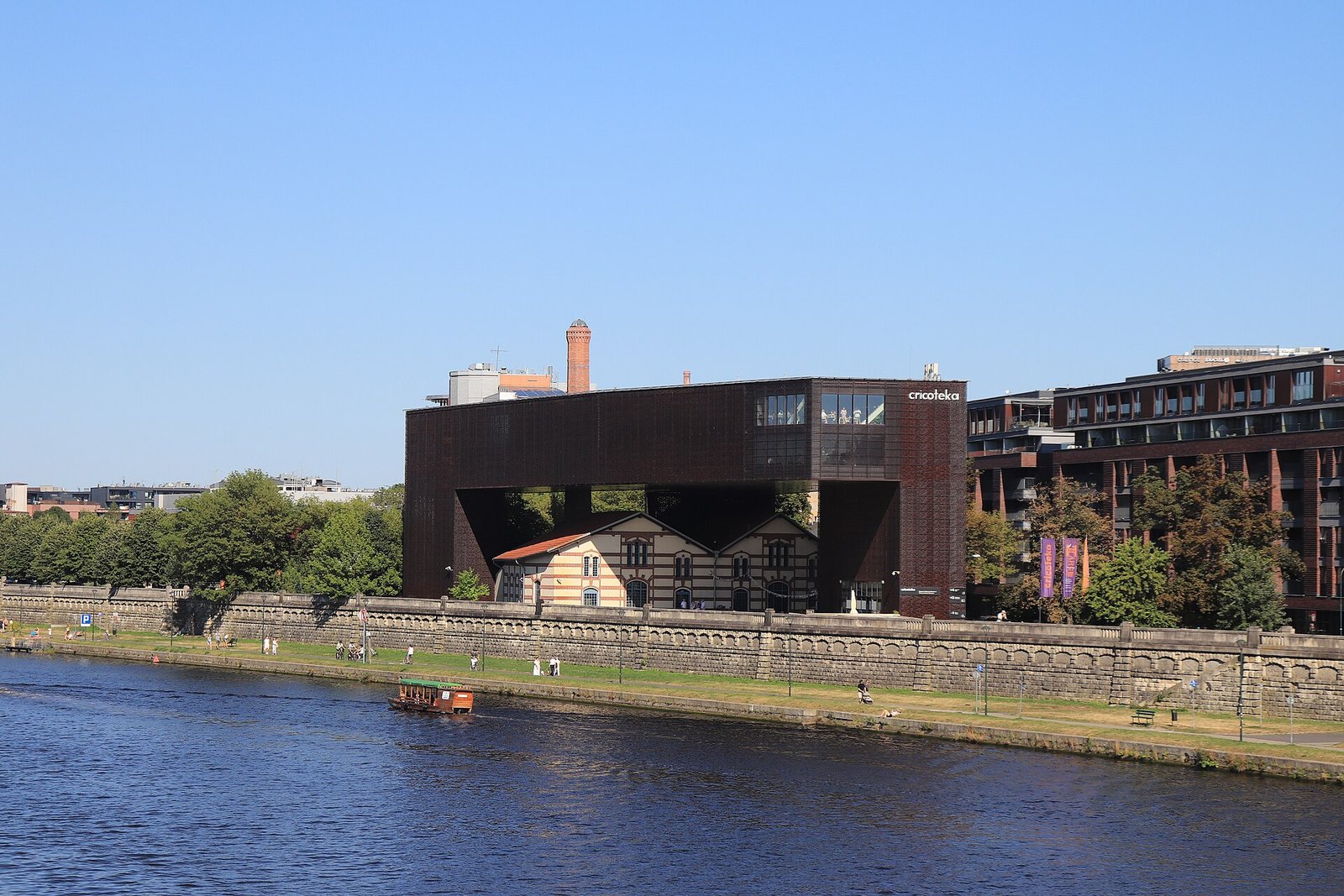
About 2 km downstream on the same bank is Cricoteka , the centre devoted to the theatre artist Tadeusz Kantor - another building where the architecture is half the visit.
Background
The name belongs to a collector. Feliks Jasieński, a critic who took the pseudonym “Manggha” from the title of Hokusai’s sketchbooks, gave the National Museum in Krakow more than 15,000 objects in 1920, several thousand of them Japanese.
Wajda’s part in the story starts in occupied Krakow in 1944, when some of Jasieński’s prints went on show for the first time, in the Cloth Hall gallery, and he saw them at nineteen. Forty-three years later he and his wife, Krystyna Zachwatowicz, put the Kyoto Prize into a foundation meant to give those prints a home. Because Isozaki donated his design, every dollar the foundation raised could go into construction.
Manggha started life in 1994 as a branch of the National Museum, gained independence as a state cultural institution in 2005 and has been a museum since 2007. The National Museum’s Far Eastern collection was finally deposited with it in 2009.
Temporary exhibitions here
Now Everything Will Be Different: Karolina Breguła
18 September 2026 - 25 October 2026
Karolina Breguła's films and photographs from Taiwan on demolished homes and a changing coastline, at Manggha's Europe - Far East Gallery until 25 October.
Tokyo Story
18 September 2026 - 25 October 2026
A Krakow painter found a mural in Tokyo that looked like his own and went looking for its author. Studio 2's search, at the Manggha Museum until 25 October.
Akitsushima. The Island of Dragonflies
19 July 2026 - 11 November 2026
The dragonfly in Japanese culture - from the country's oldest name to samurai symbolism - told through a collection of Japanese armour at the Manggha Museum.
Warrior Women: Japanese Herstories
19 July 2026 - 11 November 2026
Onna bugeisha - women trained in martial arts - in Japanese ukiyo-e prints. An exhibition at the Manggha Museum on strength, strategy and collective memory.
Nearby museums
 History
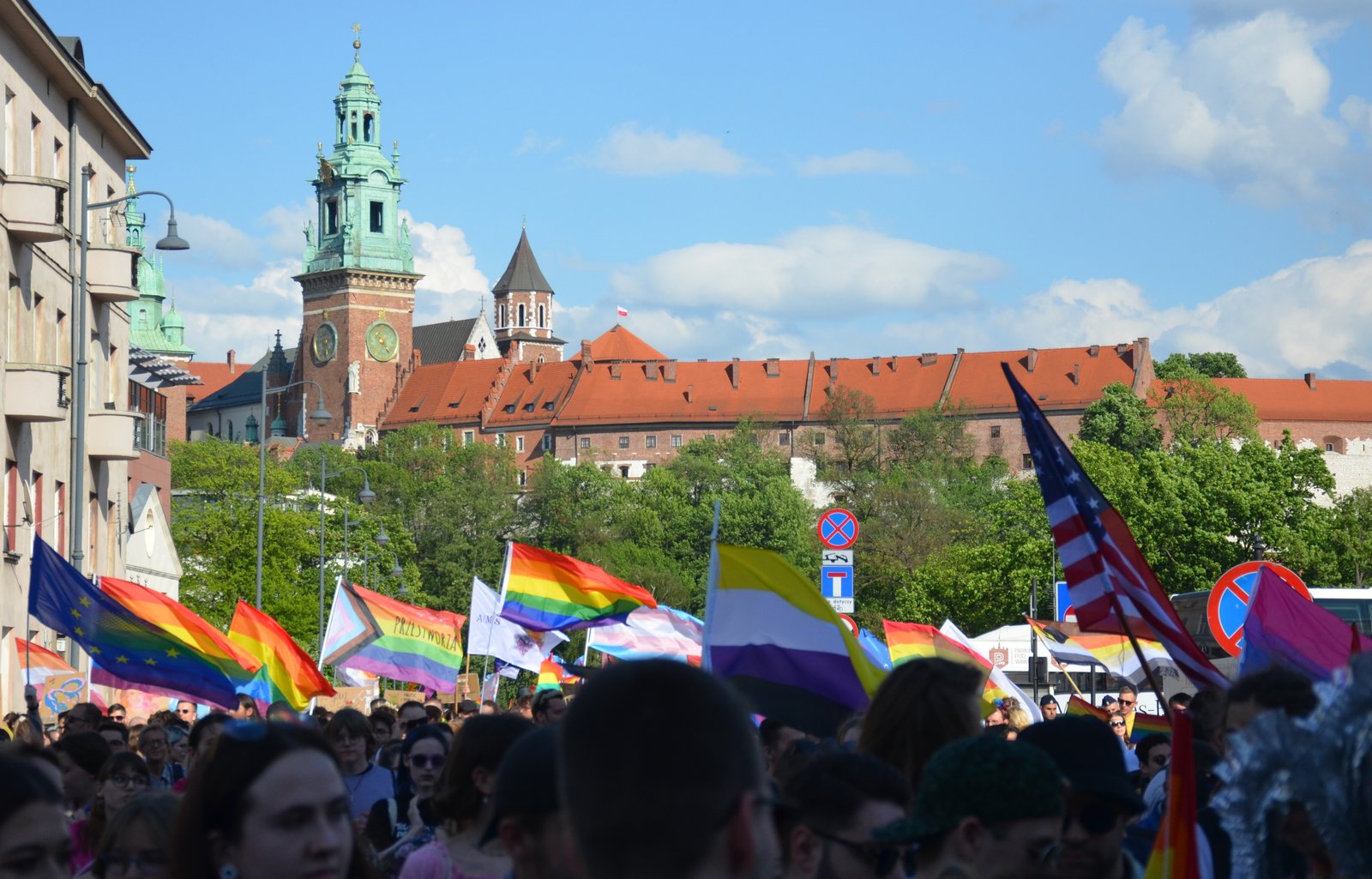
Wawel Royal Castle
Wawel 5, 31-001 Kraków
Wawel Royal Castle - State Rooms, Crown Treasury and Armoury. Ticket prices per route, free Mondays, opening hours and how to get there.
 Culture
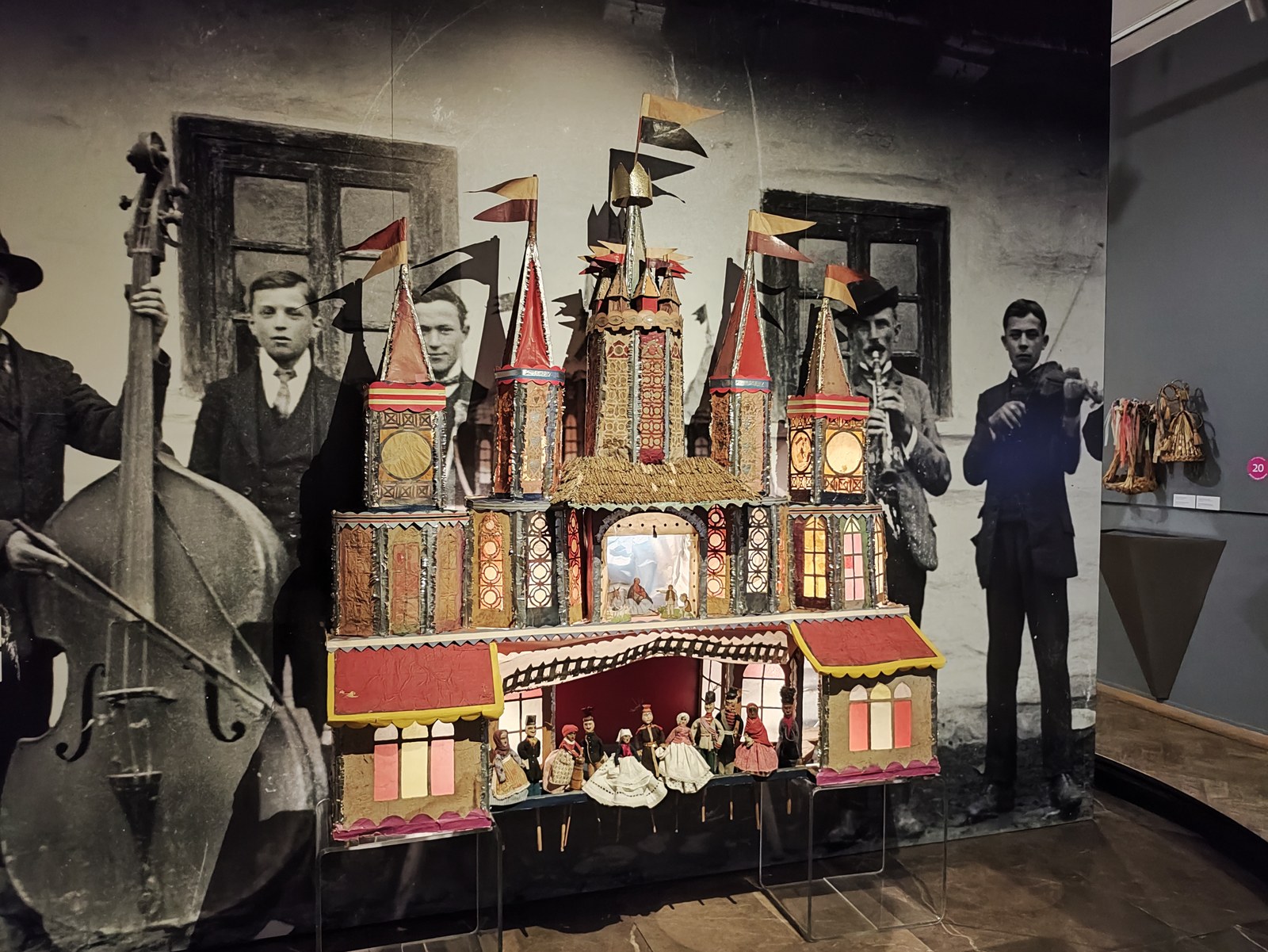
Seweryn Udziela Ethnographic Museum
pl. Wolnica 1, Kraków
The Ethnographic Museum Krakow shows Polish folk culture in Kazimierz's old town hall. Hours Tue-Sun 10-18, tickets PLN 20/15, free on …
 Art
ArtCricoteka - Centre for the Documentation of the Art of Tadeusz Kantor
ul. Nadwiślańska 2-4, 30-527 Kraków
Cricoteka Krakow: Tadeusz Kantor's stage machines and archive on the Vistula in Podgórze. Hours Tue-Sun 11-19, tickets PLN 25/15, free …