Galicia Jewish Museum
Żydowskie Muzeum Galicja
1.5 km from Rynek Główny in Krakow See museums near Rynek Główny in Krakow
- Wheelchair: Yes
- Elevator: No
Location
What to expect

This museum does not show you the world that was destroyed. It shows you what stands in its place now: an overgrown cemetery, a synagogue converted into a warehouse, an empty meadow where a market square used to be. The walls carry large colour photographs taken across southern Poland, each with a long caption, and visitors read far more slowly here than they expect to.
The main exhibition, “Traces of Memory”, runs in five sections and follows one rule worth knowing before you walk in: in the first four, not a single human being appears in any photograph. The absence is deliberate. Only the fifth section, about the revival of Jewish life, reverses it and shows nothing but people. That section is the point of the whole display, and it is where visitors stand longest.
The other permanent exhibitions change the pace. “Ten Polish Towns - Ten Jewish Stories”, in the Taube Family Gallery, follows ten people born in the first decades of the 20th century. Seven of their home towns are in today’s Poland, three are in Ukraine. “Unfinished Memory” moves the subject east, into former Eastern Galicia - western Ukraine now. “KEF is Fun!” is a separate children’s space built around the basics of Judaism and Jewish life in Krakow today. Two temporary shows run alongside them; currently one on the void left by Poland’s great synagogues and one on the papercuts of Anna Wencel.
If you came to Kazimierz for Judaica, historic interiors or a dated timeline, this is the wrong door - the Old Synagogue 200 metres away is the right one. Galicia works best as the stop after Schindler’s Factory or the Eagle Pharmacy . Those two tell you about the Holocaust. This one tells you what has happened to the memory of it in the eighty years since. Allow an hour for the photographs, ninety minutes with a temporary show.
Tips
- There is no free day here, and that is useful to know. Adult 35 PLN, student and senior 25 PLN, family 55 PLN, children aged 6 and under free. Spend your free-entry days on the neighbours instead and pay to get in here. Free days nearby: Monday at the Old Synagogue and Schindler’s Factory, Tuesday at the Ethnographic Museum and the Museum of Engineering, Wednesday at the Eagle Pharmacy.
- Monday afternoon is the best slot in Kazimierz. On Mondays the Old Synagogue and Schindler’s Factory close at 15:00, and the Ethnographic Museum and the Museum of Engineering do not open at all. This one runs to 18:00 every day of the week, so of the four nearest museums it is the last one standing.
- English on site: yes, and you need it. Captions and wall texts are in Polish and English, written by the anthropologist Jonathan Webber. Skip them and you are looking at pleasant landscapes. Guided tours are offered in several languages, but the museum does not list which - ask at reception.
- An hour to ninety minutes, no more. Four exhibition halls in just under 1,000 square metres. Arriving after 17:00 gets you round the photographs but not through the texts.
- Cards that are actually honoured. ICOM, the Krakow Tourist Card and Hop On Hop Off. Tickets are sold at reception or online through the museum’s website.
- Survivor meetings must be arranged in advance. Conversations with Holocaust survivors and with Polish Righteous Among the Nations are not part of a walk-in ticket. They are booked through the form on the museum site, at visit@galiciajewishmuseum.org or on +48 607 097 373.
- You can bring the dog in. The museum describes itself as pet-friendly and puts out a bowl of cold water in hot weather - genuinely unusual in a Krakow museum.
- Step-free throughout. No stairs anywhere in the building, wide entrances and passages, an accessible toilet, yellow tape marking doorways for partially sighted visitors, a changing table, and a glass-walled children’s corner beside reception. The museum’s accessibility declaration page is still empty, so phone for anything more specific.
Getting there
Tram: the Miodowa stop on ul. Starowiślna (lines 3, 9, 19, 24 and 50), then about three minutes down ul. Dajwór. This is the simplest route from the main railway station and from the Old Town.
On foot: about 20 minutes from the Main Market Square along Starowiślna, or two to three minutes from ul. Szeroka and the Old Synagogue - the museum is just around the corner, though you cannot see it from Szeroka.
Bus: services along Starowiślna use the same stops as the trams.
By car: all of Kazimierz is a paid parking zone and ul. Dajwór is narrow and fully parked up. Leave the car in Zabłocie and cross the Bernatek footbridge, roughly ten minutes on foot.
Nearby
Two hundred metres away on ul. Szeroka, the Old Synagogue is the oldest surviving synagogue in Poland and the exact opposite of this museum: a building and its objects rather than photographs of what is gone. On plac Wolnica, the Ethnographic Museum Krakow covers the same decades from the village side. Five minutes west on ul. Świętego Wawrzyńca, the Museum of Engineering and Technology occupies a former tram depot and makes a deliberate change of subject after a heavy one, especially with children.
Background
The museum was founded in 2004 by the British photojournalist Chris Schwarz. He first came to Poland in 1981 to photograph Solidarność and returned after 1989 for something else entirely: the traces of Jewish life in the towns around Krakow. He worked on them for eleven years with Jonathan Webber, then an Oxford anthropologist and later UNESCO Chair of Jewish and Interfaith Studies.
In February 2004 Schwarz drove to ul. Dajwór with a car full of equipment and began converting an old industrial building into a gallery. The museum opened seven weeks later, officially on 27 June 2004. Schwarz died in 2007, aged 59.
The permanent exhibition did not freeze with him. In 2012 the board approved an update, and the American photographer Jason Francisco spent two and a half years revisiting the same towns Schwarz had photographed two decades earlier. More than 60 of his frames were woven into the display, which grew from 104 to nearly 150 photographs, and the closing section was renamed from “People Making Memory” to “The Revival of Jewish Life”. The museum now receives more than 30,000 visitors a year and employs over 20 people.
Temporary exhibitions here
Intersections. Papercuts by Anna Wencel
2 July 2026 - 31 December 2026
Dozens of contemporary papercuts by Anna Wencel, mixing Jewish, Polish and Ukrainian traditions. Galicia Jewish Museum, Kazimierz, until 31 December 2026.
Nearby museums
 History
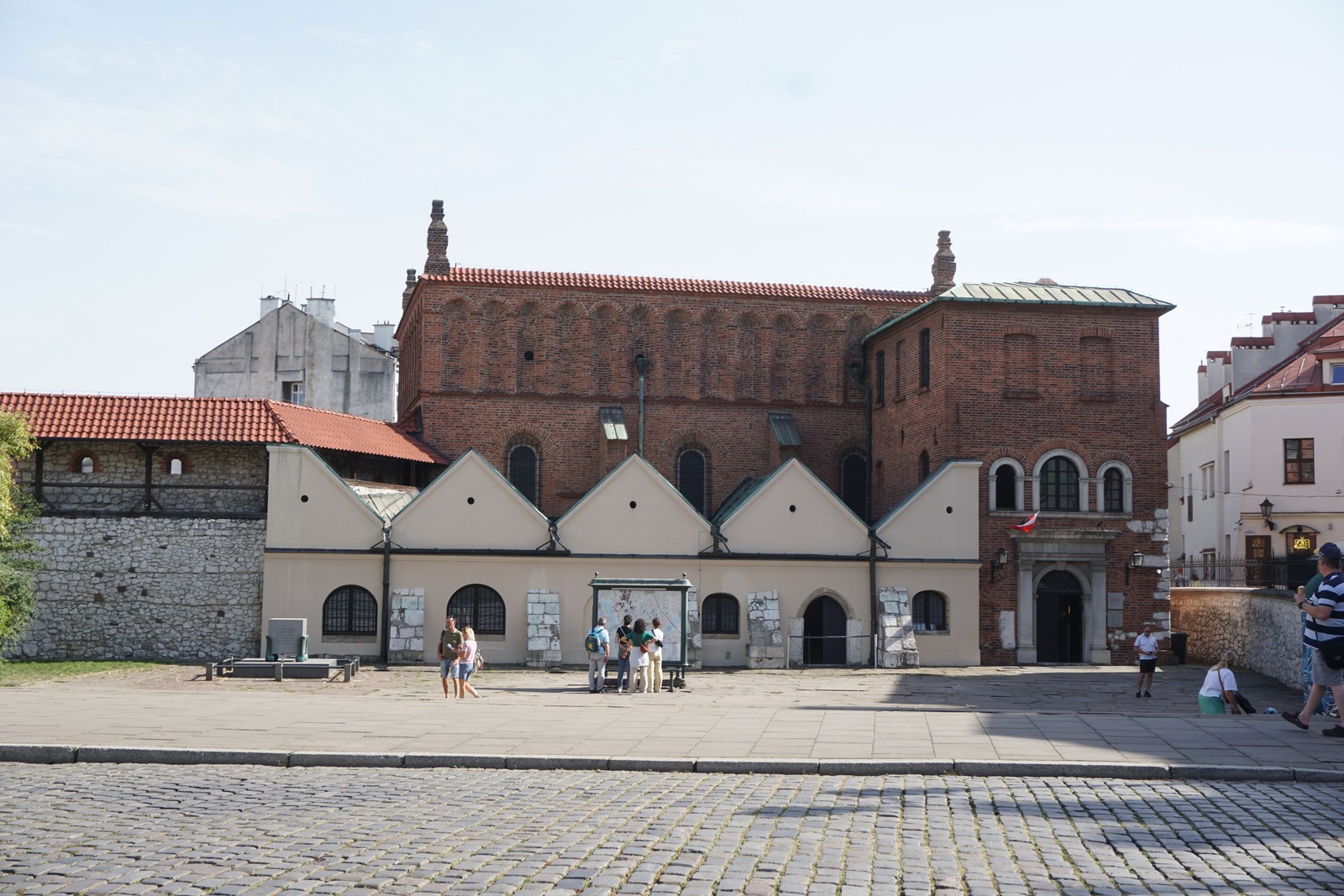
Old Synagogue
ul. Szeroka 24, 31-053 Kraków
The Old Synagogue in Krakow's Kazimierz - Poland's oldest surviving synagogue, now a museum. Opening hours, tickets 22 PLN, free entry on …
 Science
Museum of Engineering and Technology
ul. Świętego Wawrzyńca 15, 31-060 Kraków
Museum of Engineering and Technology Krakow in a historic tram depot. Hours Tue-Sun 10-18, tickets PLN 35/28, free on Tuesdays.
 Culture
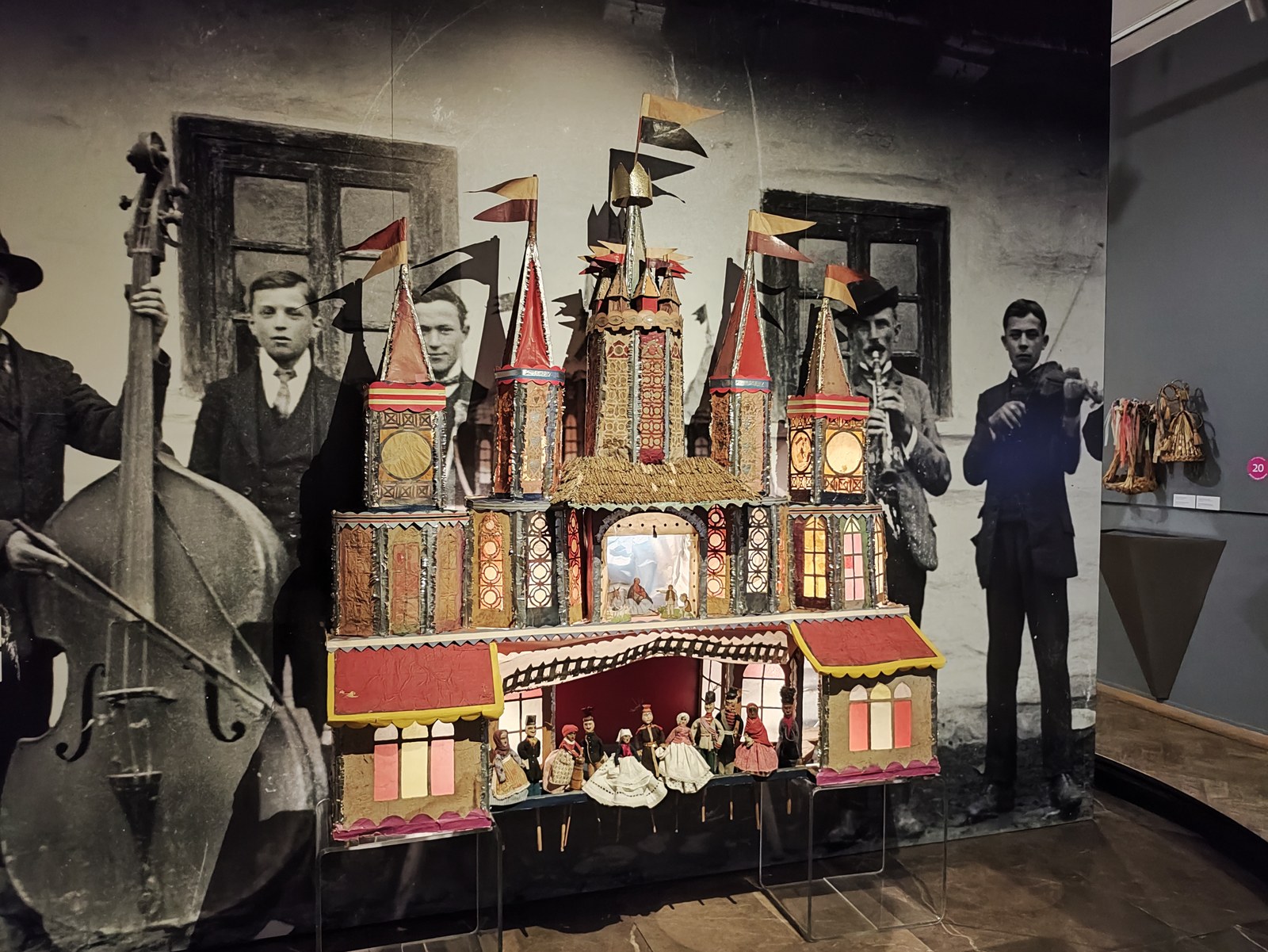
Seweryn Udziela Ethnographic Museum
pl. Wolnica 1, Kraków
The Ethnographic Museum Krakow shows Polish folk culture in Kazimierz's old town hall. Hours Tue-Sun 10-18, tickets PLN 20/15, free on …