Eagle Pharmacy
Apteka pod Orłem
2.1 km from Rynek Główny in Krakow See museums near Rynek Główny in Krakow
- Wheelchair: No
- Elevator: No
Location
What to expect

The Eagle Pharmacy is the one museum in Krakow where you are expected to open the furniture. Photographs, documents and objects are stored inside the drawers and cabinets of the reconstructed pharmacy fittings. Walk through the five rooms without touching anything and you are out in 20 minutes having seen almost nothing.
Each room keeps the function it had as a working pharmacy and carries one theme. The dispensary introduces the place and the people, the compounding room deals with survival strategies inside the ghetto. The duty room is about Tadeusz Pankiewicz as a witness and chronicler. The materialnia (stockroom) covers the pharmacy as a meeting point and a hiding place during the deportation round-ups.
The last room, the laboratory, is not about the ghetto at all. It is about how Krakow forgot its Jews after the war, and it is worth saving a few minutes for.
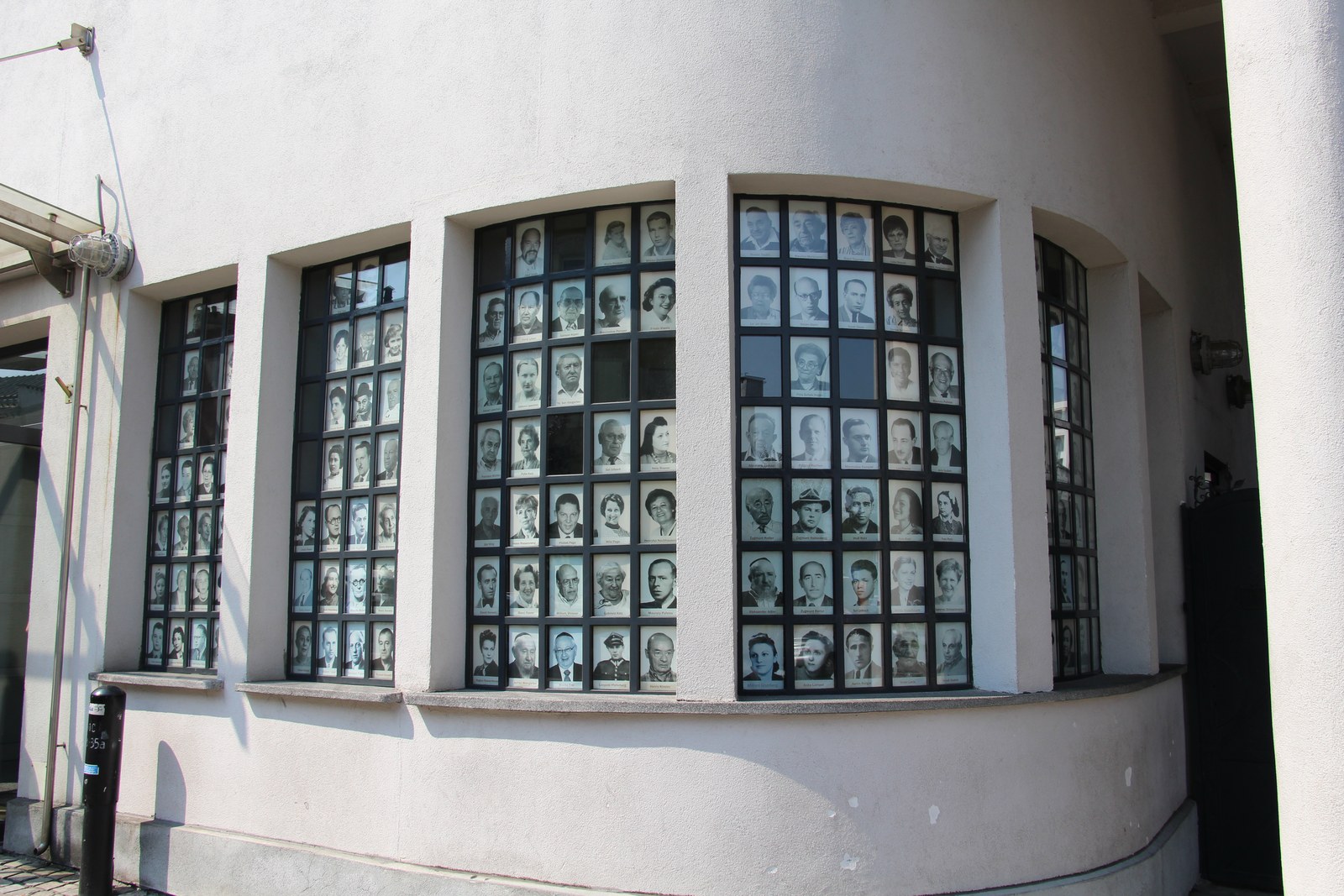
Screens carry letters and recollections written by people living in the sealed district, and projections fill the window openings so that you look out onto 1940s Krakow rather than today’s square. The furniture and apothecary vessels were rebuilt from documentation and survivor accounts, and some pieces come from the original pharmacy. Nothing here is staged for effect.
Allow 45 to 60 minutes. It works best if you already know roughly what the Krakow ghetto was and want to see one person’s conduct inside it. It is a poor choice for children under 12, who get dense text and a heavy subject with nothing to do.
If you are seeing Oskar Schindler’s Enamel Factory on the same day, come here first. After a large narrative exhibition, five small rooms stand no chance of holding your attention.
Tips
- The museum does not publish which languages the exhibition labels are in. Ask at the desk if this matters for you.
- The ticket desk is in the next building. You do not buy your ticket inside the pharmacy - the desk is in the building alongside, up three steps. There are then three steps down at the exhibition door and no lift. Portable ramps are laid out on request, so tell the branch staff in advance if you need one.
- Open the drawers. In the museum’s own words: “W szufladach mebli aptecznych została ukryta część informacyjna wystawy: eksponaty, zdjęcia i dokumenty” - the informative half of the exhibition is hidden in the pharmacy drawers. Treat it as a walk-through and you have paid 22 PLN for an interior.
- Wednesday buys you two branches for nothing. Free entry on Wednesdays also covers Pomorska Street , the third stop on the museum’s Memory Trail, and both open Wednesday to Sunday. Collect free tickets at bilety.muzeumkrakowa.pl or at the desk while they last.
- The Monday free day cannot be combined. Schindler’s Factory is free on Mondays, when this branch is shut, and it is shut on Tuesdays too. There is no single free day that covers both.
- Arrive at 9:00. The rooms are tight and an organised group runs to 25 people including the guide, which fills them completely. Last entry is 30 minutes before closing for individuals, 60 minutes for groups.
- Photography without flash. Bags under 30 litres. Large umbrellas, food and drink stay outside, and only assistance dogs come in.
- Guided tours need four days’ notice. A tour of the permanent exhibition costs 280 PLN for the group, and a late cancellation carries a 250 PLN penalty. The Karta Krakowska, the Large Family Card and eMHaKa club cards are honoured. There is a hearing loop at the ticket desk.
Getting there
Tram: the plac Bohaterów Getta stop. From the Old Town, trams run down ul. Starowiślna and across the Powstańców Śląskich bridge; the museum is on the corner of the square, some 50 metres from the stop.
On foot: about ten minutes from Kazimierz over the Bernatek footbridge, or 15 minutes from ul. Szeroka. From the Main Market Square, allow roughly 30 minutes along Starowiślna.
Bus: services through Podgórze stop at plac Bohaterów Getta and on ul. Limanowskiego.
By car: the square is inside the paid parking zone and full during the day. Leaving the car near ul. Lipowa in Zabłocie and walking back ten minutes is easier.
Nearby
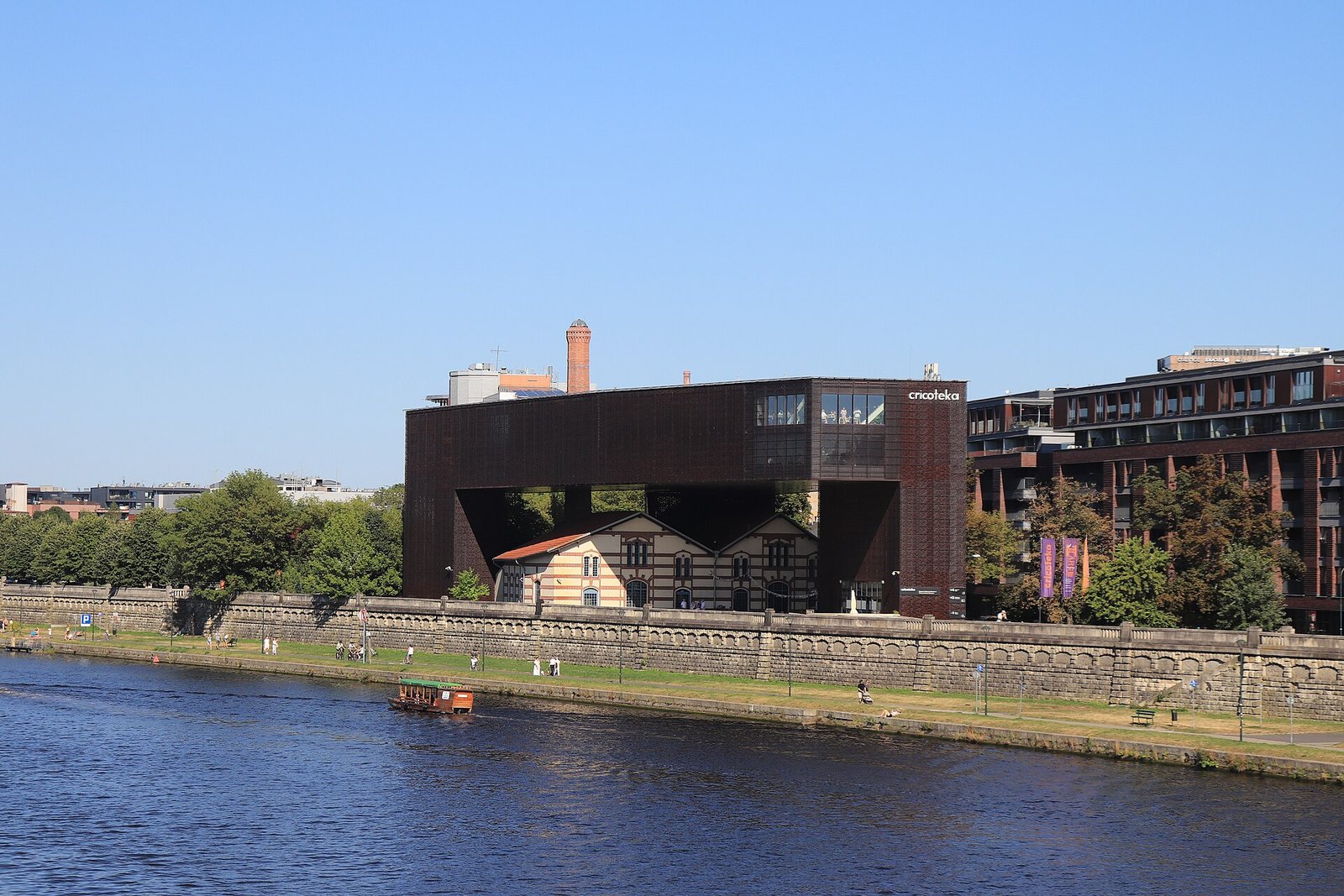
Oskar Schindler’s Enamel Factory is five minutes away with its exhibition on Krakow under occupation - the same Memory Trail, on the scale of several dozen rooms and for 60 PLN. In the same complex on ul. Lipowa, MOCAK shows contemporary art and works as a deliberate change of subject. On the Podgórze riverbank, Cricoteka documents the art of Tadeusz Kantor.
Many visitors treat the pharmacy as the Krakow counterpart to a day at the Auschwitz-Birkenau Memorial and Museum in Oświęcim, 60 km west - a separate day, not an add-on to this one.
Background
The pharmacy was opened in 1909 by Józef Pankiewicz - the fourth in Podgórze and the first outside the centre of what was then a separate town. His son Tadeusz took it over in 1934 after pharmacy studies at the Jagiellonian University. When the Germans sealed the ghetto in March 1941, the premises fell inside the walls. Pankiewicz turned down the offer of a shop on the Aryan side and became the only Pole living in the closed district.
Under German order the pharmacy ran 24 hours a day, and it did considerably more than dispense medicine. It was a meeting place, an illegal post office, a supply line for food and drugs, a refuge during round-ups and a deposit for Torah scrolls, documents and valuables.
The songwriter Mordechaj Gebirtig and the mathematician Tadeusz Ważewski were among the regulars. Pankiewicz handed out hair dye to people changing their appearance and sedatives to keep hidden children quiet. Three women worked alongside him: Irena Droździkowska, Aurelia Danek-Czortowa and Helena Krywaniuk.
His memoir, “The Pharmacy in the Krakow Ghetto”, appeared in 1947. He was recognised as Righteous Among the Nations on 10 February 1983. On 22 April of the same year a museum opened in the old premises, which from 1967 to 1981 had housed an eatery, the Bar Nadwiślański.
It became a branch of the Museum of Krakow in 2003. The present exhibition, curated by Monika Bednarek, opened on 16 March 2013, the 70th anniversary of the ghetto’s liquidation. Roman Polański and Steven Spielberg helped pay for it.
Nearby museums
 History
Oskar Schindler's Enamel Factory
ul. Lipowa 4, 30-702 Kraków
Schindler's Factory in Krakow - the story of the city under occupation 1939-1945. Opening hours, tickets 60/45 PLN, free Mondays, book timed …
 Art
ArtMOCAK Museum of Contemporary Art in Krakow
ul. Lipowa 4, 30-702 Kraków
MOCAK Krakow - Museum of Contemporary Art in Zabłocie, next to Schindler's Factory. Hours Tue-Sun 11-19, tickets 30/20 PLN, free Thursday …
 Art
ArtCricoteka - Centre for the Documentation of the Art of Tadeusz Kantor
ul. Nadwiślańska 2-4, 30-527 Kraków
Cricoteka Krakow: Tadeusz Kantor's stage machines and archive on the Vistula in Podgórze. Hours Tue-Sun 11-19, tickets PLN 25/15, free …