Cricoteka - Centre for the Documentation of the Art of Tadeusz Kantor
Cricoteka - Ośrodek Dokumentacji Sztuki Tadeusza Kantora
1.9 km from Rynek Główny in Krakow See museums near Rynek Główny in Krakow
- Wheelchair: Yes
- Elevator: Yes
Location
What to expect
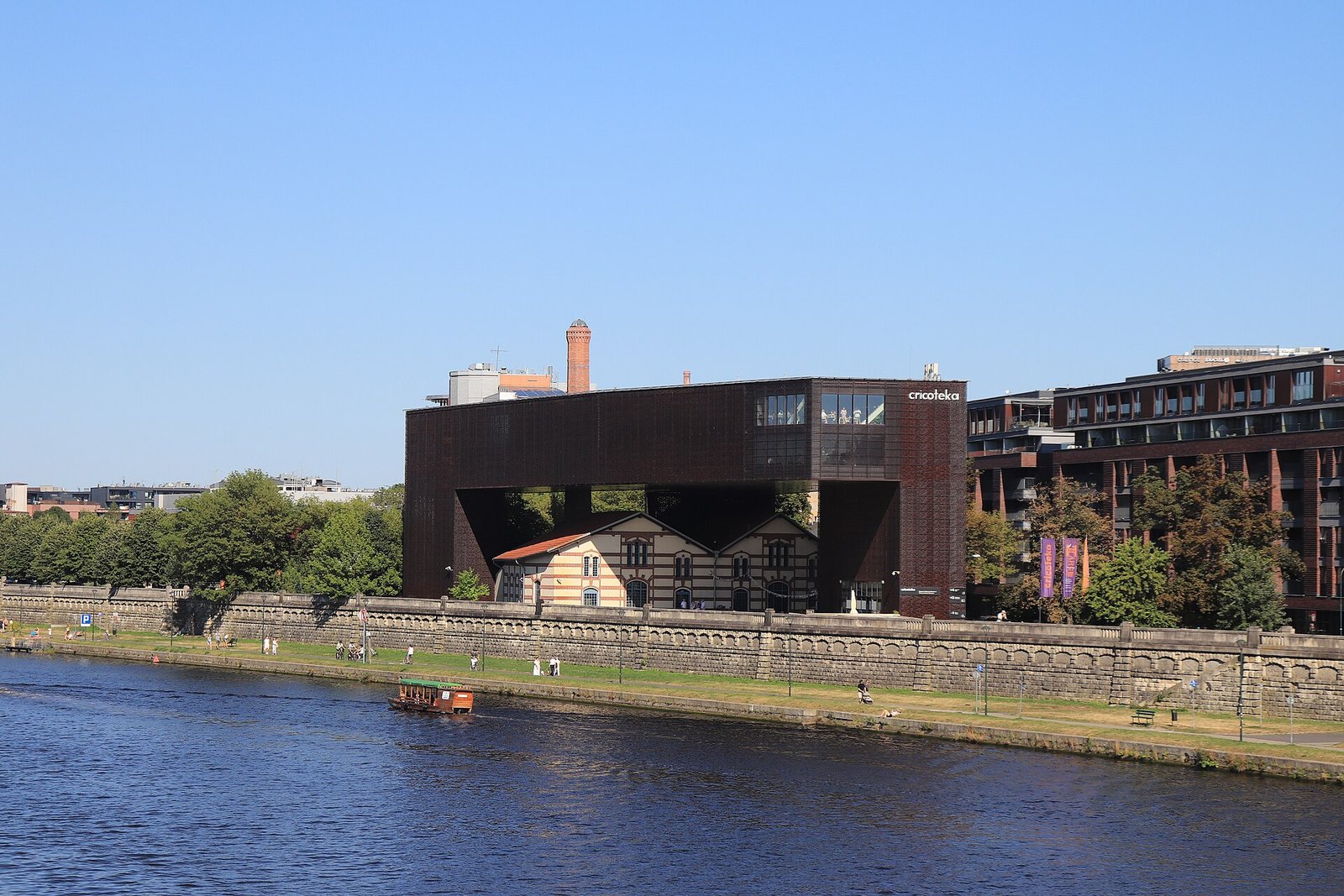
A rust-coloured box slung 20 metres above the brick shell of a 1901 power station in Krakow’s Podgórze district, its underside mirrored so the old roofs float in it. You can see Cricoteka from the far bank of the Vistula long before you know what is inside. What is inside is the collection of Tadeusz Kantor: stage objects and machines from his Cricot 2 theatre, paintings, drawings, photographs of performances and happenings, and the archive he began assembling in his own lifetime.
Since 16 July 2025 that collection has been shown as “Kantor. Terapia widzeń” (“Kantor. Vision Therapy”), curated by Jarosław Suchan. It is built as six thematic chapters - among them “I is someone else”, “In the shadow of catastrophe” and “(Un)memory” - rather than as a life story. Commissioned works by Aneta Grzeszykowska, Nikita Kadan, Goshka Macuga and Gisèle Vienne are placed against Kantor’s own, deliberately arguing with them.
Be warned that nobody walks you from childhood to “The Dead Class” here. A reviewer for Label Magazine (30 September 2025) judged that the display still works for a viewer who has never heard of Kantor. Its framing themes - war, dehumanisation, memory - do the introducing. It also asks for attention and is designed to unsettle rather than reassure.
Worth the crossing if you came to Krakow for twentieth-century avant-garde theatre or for contemporary architecture. If your interest in Kantor is a paragraph in a guidebook, one hour here will leave you intrigued rather than informed, and MOCAK down the road is the easier introduction to Polish contemporary art. Children under six bounce off the abstraction; from about ten they engage with it.
Tips
- The top-floor cafe is a reason on its own. Ambalaż has floor-to-ceiling glazing over the Vistula, the Bernatek footbridge and Wawel, needs no museum ticket, and stays open on Mondays when the galleries are shut.
- Wednesday is free and therefore busiest. Admission is free on Wednesdays to the permanent display “Kantor. Terapia widzeń” and to the Gallery-Studio on ul. Sienna. Both addresses are open on Tuesdays and Wednesdays, since the Gallery-Studio on ul. Sienna opens Monday to Wednesday, 11:00-18:00; Wednesday is the only day you can see both free of charge.
- Buy the combined ticket. The collection display is PLN 25 (reduced 15) and the temporary show the same, but a ticket to both costs PLN 40 (reduced 20). The show in the Galeria Szatnia inside the main building takes a separate ticket: PLN 10 (reduced 5). The Sienna studio is a separate ticket: PLN 10 (reduced 5), free on Wednesdays.
- Allow an hour, 90 minutes with a temporary show. Six chapters go quickly unless you sit through the film material. The cafe will take as long as you let it.
- English on site is not guaranteed. Cricoteka publishes nothing about bilingual wall texts or an audio guide. A guided tour in a foreign language costs PLN 220 and must be booked at least a week ahead; if the labels matter to you, call +48 12 442 77 70 first.
- Kraków Card holders pay the reduced price. The card does not give free entry here - it buys a regular ticket at the reduced rate.
- Do not drive. The building sits inside the paid parking zone and has no car park of its own; it is, however, easy to reach by bike.
- Last entry 18:45. The desk stops admitting a quarter of an hour before closing, and at 17:45 on ul. Sienna.
Getting there
On foot: from Kazimierz across the Bernatek footbridge, then right along the embankment - five minutes from the end of the bridge. Take this approach if you can; the building reads best from the river side.
Tram: stop Plac Bohaterów Getta, then about 600 metres along ul. Nadwiślańska.
Bus: the same interchange at plac Bohaterów Getta takes services from the centre across Piłsudski bridge.
By car: ul. Nadwiślańska is inside the paid parking zone and the museum runs no car park. It is under 3 km from the Main Market Square, which makes walking or a tram the sensible choice.
Nearby
- MOCAK - the district’s other contemporary-art address, 900 metres away and an easier watch. Pair the two if you want to compare how a collection and a curatorial argument each handle the present.
- Oskar Schindler’s Enamel Factory - the crowd magnet of Podgórze, right beside MOCAK. Cricoteka is its quiet counterweight, ten minutes on foot.
- Eagle Pharmacy - a 30-minute stop on plac Bohaterów Getta, directly on the walk between the footbridge and ul. Lipowa.
Background
Cricoteka was founded in 1980 at Kantor’s own initiative, as a living archive of the Cricot 2 theatre. For years the rehearsals and the gallery worked out of the cellars of a canons’ house on ul. Kanonicza, with the registered address at ul. Szczepańska 2. After the artist’s death in 1990 the institution shifted towards showing and explaining his work, in theatre and in the visual arts alike.
The riverside building opened in 2014. IQ2 Konsorcjum (nsMoonStudio and Wizja) kept the walls of the Podgórze power station and lifted a new rust-clad volume over them on two supports. It took the SARP Award of the Year and the Grand Prix of the “Polityka” Architectural Award that same year. Cricoteka also keeps the Gallery-Studio at ul. Sienna 7/5 - the flat where Kantor worked from 1987 until 1990, preserved as he left it. The centre is run by the Małopolska voivodeship.
Temporary exhibitions here
Andrzej Pawłowski. Kineforms
from 16 February 2026
A projector, a film and 1950s documents: Andrzej Pawłowski's kineforms, moving light images from the Cricot 2 stage, at Kantor's Gallery-Studio on ul. Sienna.
Wild Frolics. An Exhibition for All
11 March 2026 - 11 October 2026
An interactive exhibition for children and adults - five spaces for drawing, dressing up and experimenting - at Cricoteka.
I Was Tadeusz Kantor's Assistant. Andrzej Wajda
6 October 2026 - 10 January 2027
In 1976 Andrzej Wajda filmed Kantor's The Dead Class. From 6 October Cricoteka shows unseen documents from the shoot, film excerpts and recordings.
Nearby museums
 History
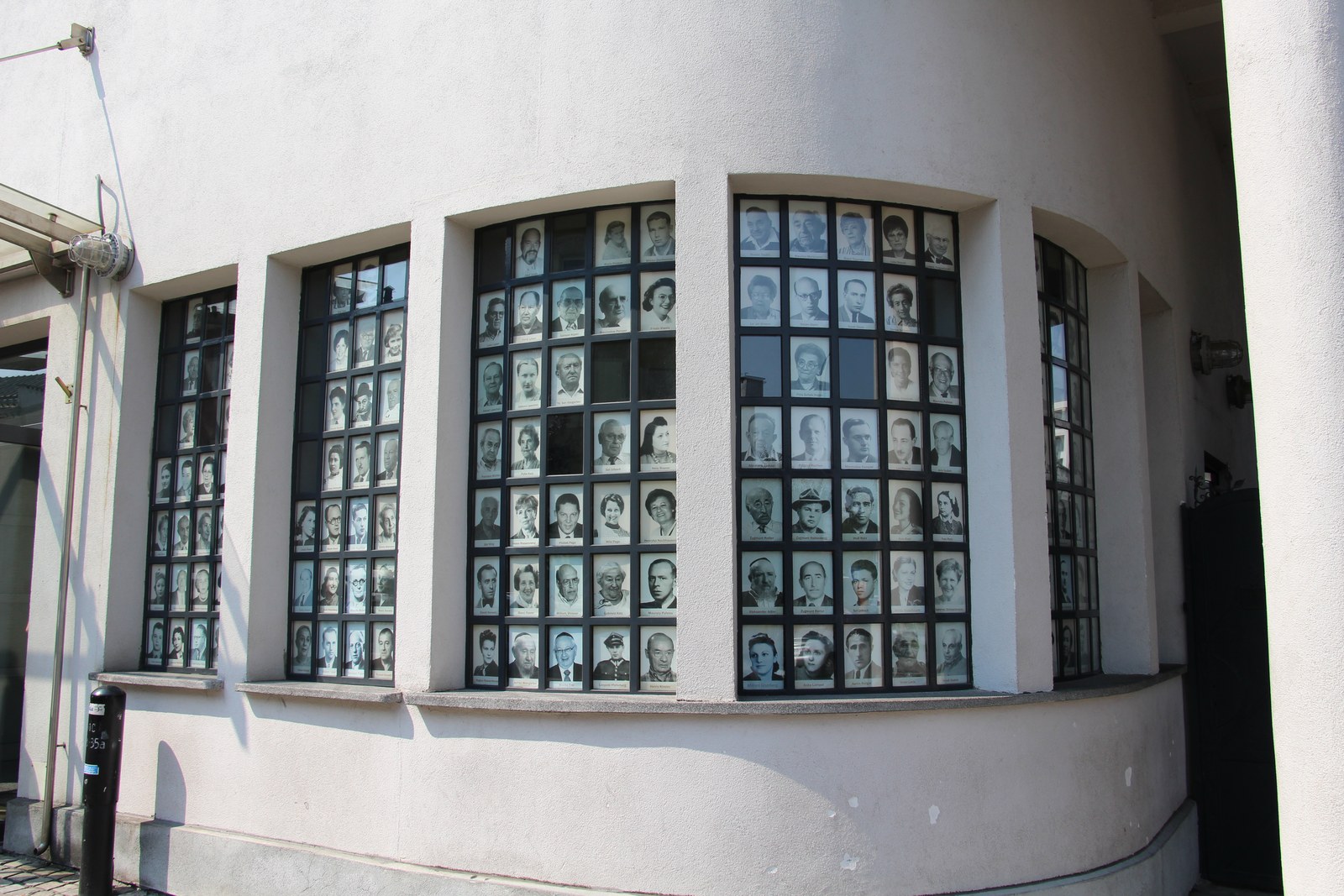
Oskar Schindler's Enamel Factory
ul. Lipowa 4, 30-702 Kraków
Schindler's Factory in Krakow - the story of the city under occupation 1939-1945. Opening hours, tickets 60/45 PLN, free Mondays, book timed …
 History
Eagle Pharmacy
plac Bohaterów Getta 18, 30-547 Kraków
Eagle Pharmacy in Krakow - museum of Tadeusz Pankiewicz's pharmacy in the Podgórze ghetto. Opening hours, tickets 22 PLN, free entry on …
 Art
ArtMOCAK Museum of Contemporary Art in Krakow
ul. Lipowa 4, 30-702 Kraków
MOCAK Krakow - Museum of Contemporary Art in Zabłocie, next to Schindler's Factory. Hours Tue-Sun 11-19, tickets 30/20 PLN, free Thursday …