Jagiellonian University Museum Collegium Maius
Muzeum Uniwersytetu Jagiellońskiego Collegium Maius
278 m from Rynek Główny in Krakow See museums near Rynek Główny in Krakow
- Wheelchair: Yes
- Elevator: No
Location
What to expect
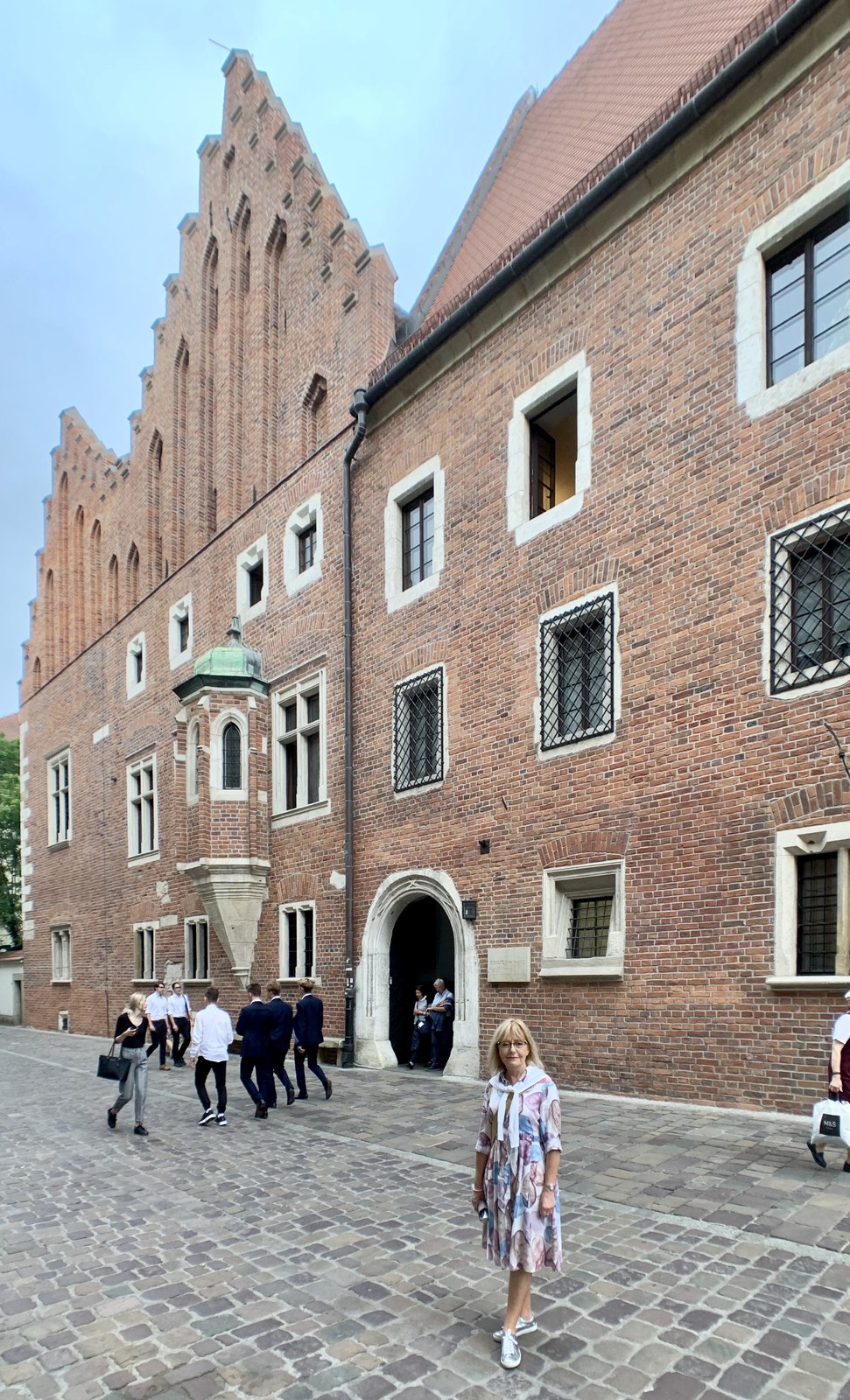
Two different museums operate at this address, and the difference costs nine zloty. The 17 PLN unguided route covers the Libraria, the Stuba Communis, two treasury rooms and two professors’ apartments. The 26 PLN guided route adds the Globe Rooms and the medieval sculpture gallery. If you came for the Jagiellonian Globe, the cheaper ticket will not get you to it, and nothing at the door will warn you.
Three minutes from the Main Market Square, this is the oldest building of a university founded in 1364. You reach the museum itself from the first-floor gallery, through the late-Gothic doorway called the Porta Aurea, up the stairs from the arcaded courtyard. The treasury holds the sceptres of Queen Jadwiga (after 1403), Cardinal Zbigniew Oleśnicki (c. 1454) and Cardinal Fryderyk Jagiellończyk - and, in the same rooms, Andrzej Wajda’s film awards, Wisława Szymborska’s Nobel medal and Robert Korzeniowski’s Olympic gold. The juxtaposition stays with you longer than any single object does.
The Jagiellonian Globe of about 1510 was the first in the history of cartography to carry the name America. It now stands in the Globe Rooms alongside an Arabic astrolabe made in Córdoba in 1054 and instruments that arrived in Krakow in 1493, when Nicolaus Copernicus was a student here. The Copernicus Room is shut for renovation and some of its contents moved there.
This rewards anyone with an interest in the history of science, in old interiors, or with a personal connection to the university. There is no interactive element at all: cases, furniture, portraits, and a guide doing the work. With children under about ten, skip the ticket - the courtyard and the clock are free and they are the part children react to.
The closure list is long at the moment. The Copernicus Room, the Jagiellonian Hall, the Rector’s Stairs, the Green Room and the Dresden Corridor are all closed for renovation, and the lift for visitors with disabilities is out of service with them. The Professors’ Garden and Estreicher’s Lane are closed until further notice. The arcaded courtyard and the “U Pęcherza” cafe are open daily from 9:00 to 18:00 and need no ticket.
Tips
- English tours run at fixed times, not on demand. Tuesday to Thursday the 9:00 tour is in Polish or English, 9:45 is English, 10:30 is French, Spanish or Bulgarian and 11:15 is Polish. The extended tour taking in the scientific instruments is at 12:30 in English, Tuesday to Friday. Fridays follow the same morning pattern, except that 10:30 is in French only.
- The globe needs the guided ticket. The unguided route (17 PLN, reduced 10 PLN) does not enter the Globe Rooms; the guided route (26 PLN, reduced 14 PLN) does. For a first visit, and for anyone who does not read Polish, the guided ticket is the one worth buying.
- Monday is the only full unguided day. Individual visiting runs 9:00-17:00 on Monday, from 13:30 to 17:00 Tuesday to Friday, and 10:00-16:00 on Saturday, with last entry half an hour before closing. The museum takes no visitors on Sunday.
- Free Wednesday is narrower than it sounds. Free entry covers unguided visiting between 13:30 and 17:00, last entry 16:30. Guided tours cost full price on Wednesdays like any other day.
- Time your arrival to the clock. It plays daily at 9:00, 11:00, 13:00, 15:00 and 17:00. Six figures process to 16th-century court music and to “Gaudeamus igitur”: a beadle, Queen Jadwiga, King Władysław Jagiełło, St John Cantius, Hugo Kołłątaj and Rector Stanisław of Skalbmierz. You watch from the courtyard, free.
- Labels: assume Polish, ask at the desk. The museum publishes its tour languages but says nothing about the language of the object labels. That silence is the main argument for taking a guide rather than walking the rooms alone.
- Photography without flash. The museum publishes no photography rule; visitor accounts report that flash is the only thing prohibited.
- Check the news box before you set out. University ceremonies shorten the day regularly. Late September 2026 alone carries eight changes to opening hours, the museum is closed on 29 and 30 September, and the main exhibition is closed on 1 October for the inauguration of the academic year.
- Tickets at the desk or at bilety.uj.edu.pl. There are no timed slots and no booking requirement, unlike the Rynek Underground two minutes away. Group reservations go to collegiummaius.info@uj.edu.pl or +48 12 663 15 21.
Getting there
On foot: three minutes from the Main Market Square along ul. św. Anny, about fifteen minutes from Kraków Główny railway station through the Old Town, ten minutes from Wawel.
Tram: the nearest stop is Filharmonia on ul. Straszewskiego, about five minutes away through the Planty park. Teatr Bagatela is a minute further and serves more directions.
Bus: services running the Planty ring stop at Teatr Bagatela and plac Wszystkich Świętych, five to seven minutes on foot from either.
By car: the whole area sits inside the Old Town’s restricted traffic zone, so you cannot drive to the door. Parking is outside the Planty ring only.
Nearby
- Rynek Underground - two minutes away, beneath the Main Market Square. Both visits turn on entry mechanics, in opposite ways: there you book a fixed time slot in advance, here you fit yourself to the tour timetable.
- Sukiennice Gallery - on the square itself, 19th-century Polish painting. The obvious pairing for the same afternoon if an hour of Gothic interiors leaves you wanting something brighter.
- Czartoryski Museum - five minutes north, home to Leonardo da Vinci’s Lady with an Ermine. A visit for one masterpiece, against a route through a dozen rooms here.
Background
In 1400 King Władysław Jagiełło bought the corner house of the Pęcherz family for 600 grzywien, using a bequest from Queen Jadwiga, and gave it to the renewed Kraków Academy. The college absorbed neighbouring houses through the 15th century; after the fire of 1492 they were unified into one structure, which is when the arcaded courtyard with its crystalline vaulting took shape.
The neogothic face came much later, when the building was adapted for the Jagiellonian Library - Karol Kremer’s work of 1839-1858, continued by Herman Bergmann in 1864-1870. The library moved out in 1940, which opened the way for Karol Estreicher’s restoration back towards the pre-1840 state. The university senate created the Jagiellonian University Museum here in 1947, and Estreicher directed it from 1951 to 1976.
The courtyard clock is the fourth in the building’s history. The first is recorded through a repair in 1465, the third was funded in 1522 by Professor Maciej of Miechów, and the present one started on 30 September 2000.
Temporary exhibitions here
Born of Passion: Calculating Machines from the Walter Szrek Collection
from 13 June 2025
Walter Szrek gave the university 500+ antique calculating machines, the oldest surviving Odhner among them. A selection at Collegium Maius, weekdays at noon.
Nearby museums
 History
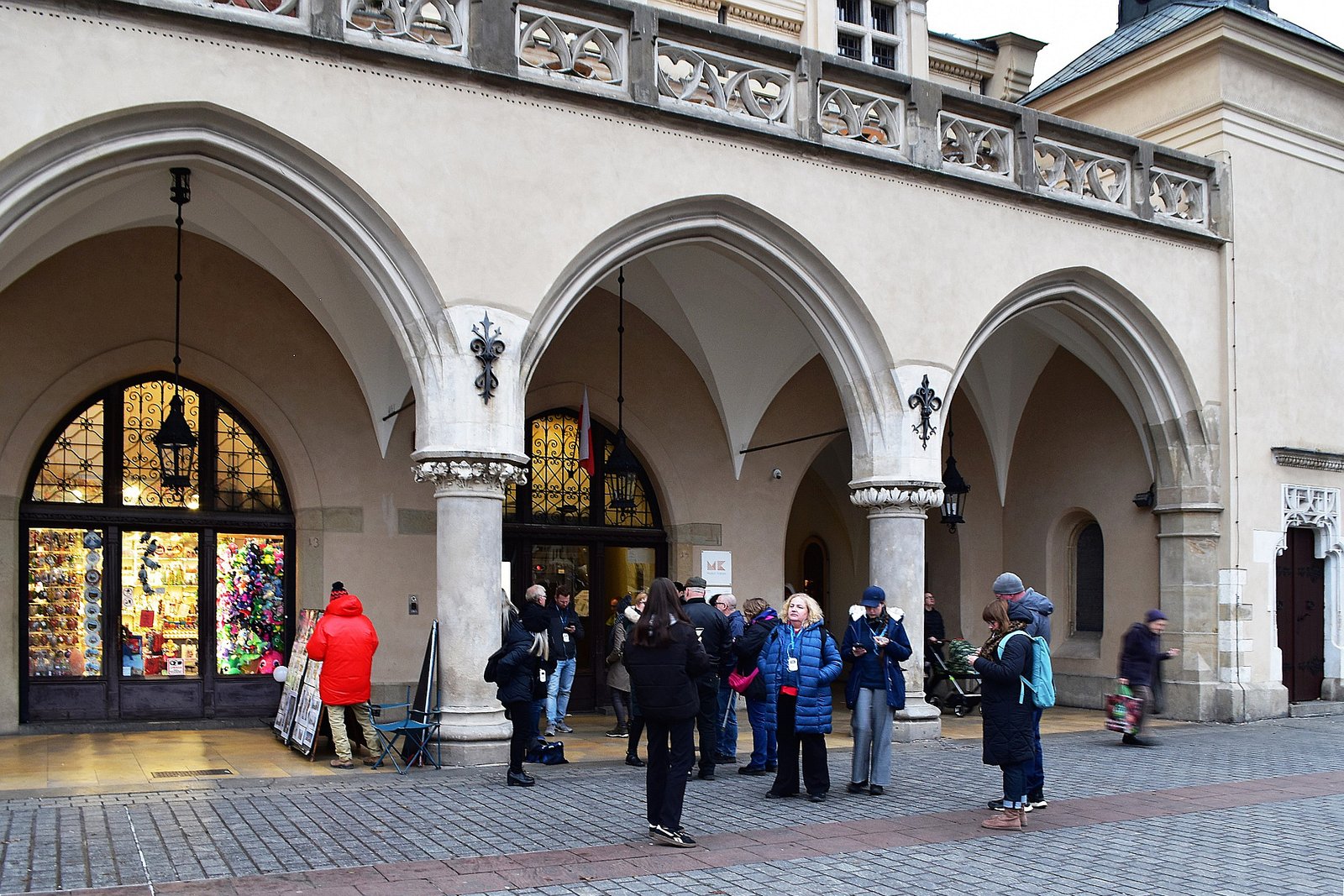
Rynek Underground
Rynek Główny 1, 31-042 Kraków
Rynek Underground Krakow - archaeological route beneath the Main Square. Opening hours, tickets 45/35 PLN, free Tuesdays, booking advice.
 Art
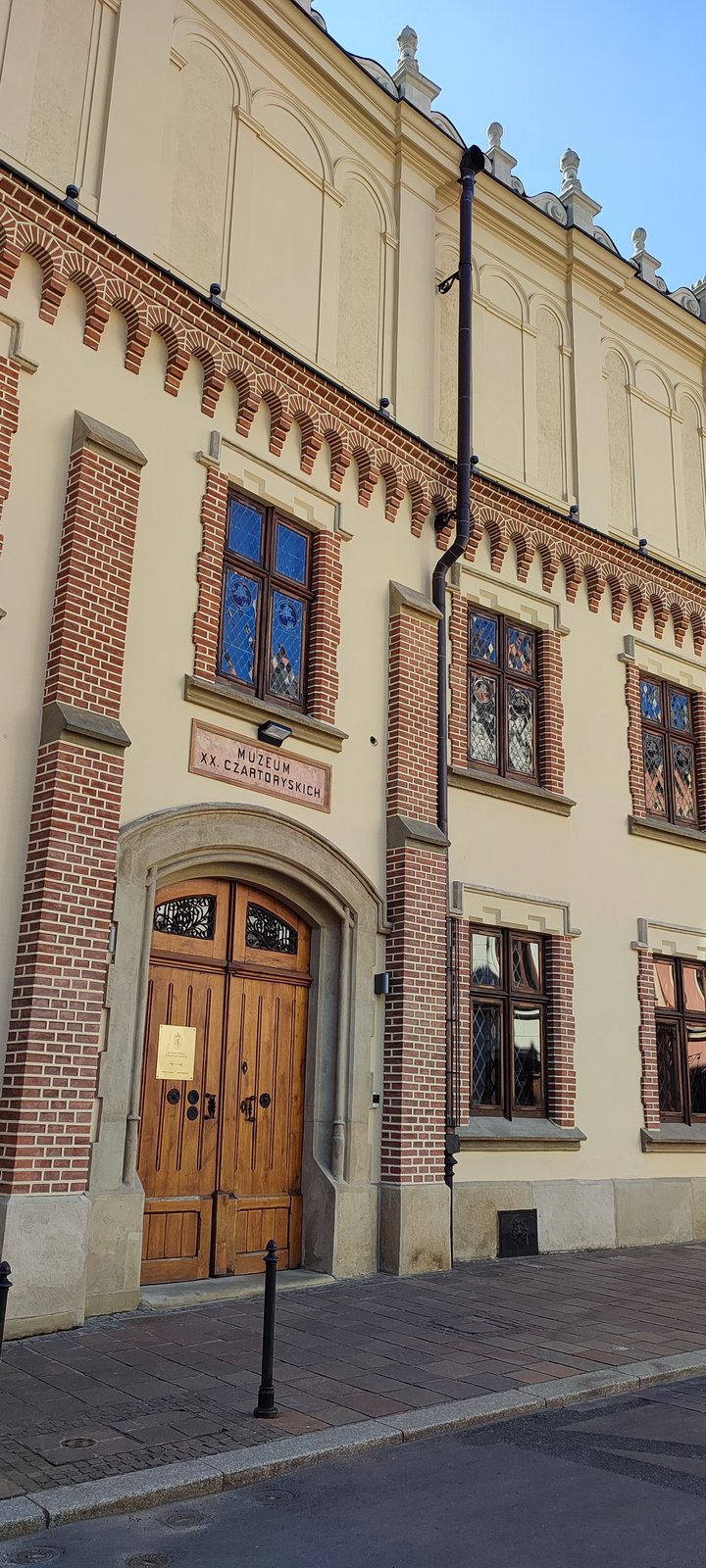
ArtCzartoryski Museum
ul. Pijarska 15, 31-015 Kraków
Czartoryski Museum in Krakow - Leonardo's Lady with an Ermine. Open Tue-Sun 10:00-18:00, tickets 65/50 PLN, free entry on Tuesdays.
 Art
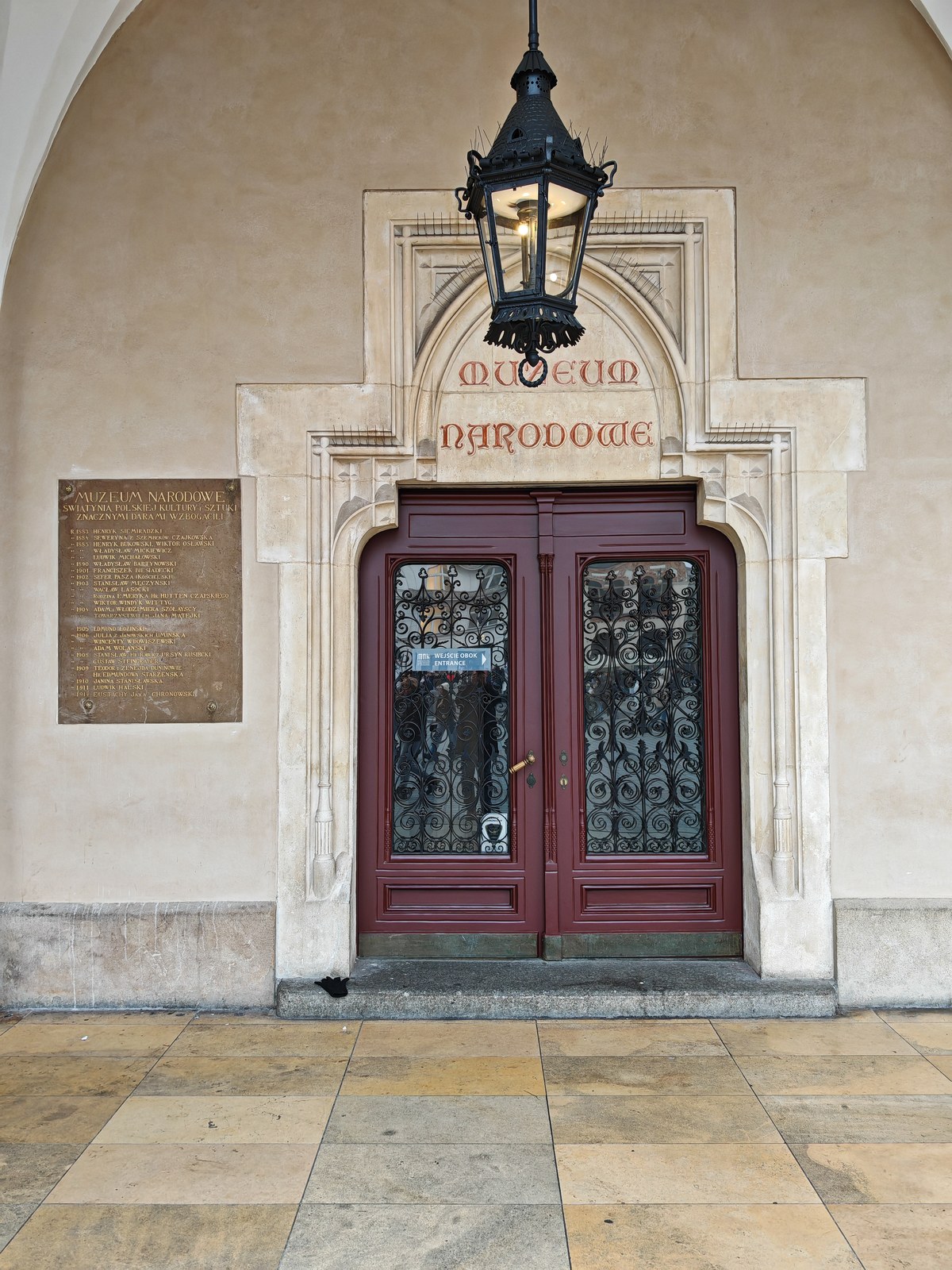
ArtSukiennice - Gallery of 19th-Century Polish Art
Rynek Główny 3, 31-042 Kraków
Sukiennice Gallery of 19th-century Polish art above Krakow's Cloth Hall. Open Tue-Sun 10:00-18:00, tickets 35/25 PLN, free on Tuesdays.