Auschwitz-Birkenau Memorial and Museum
Miejsce Pamięci i Muzeum Auschwitz-Birkenau
52.5 km from Rynek Główny in Krakow See museums near Rynek Główny in Krakow
- Wheelchair: Yes
- Elevator: No
Location
What to expect
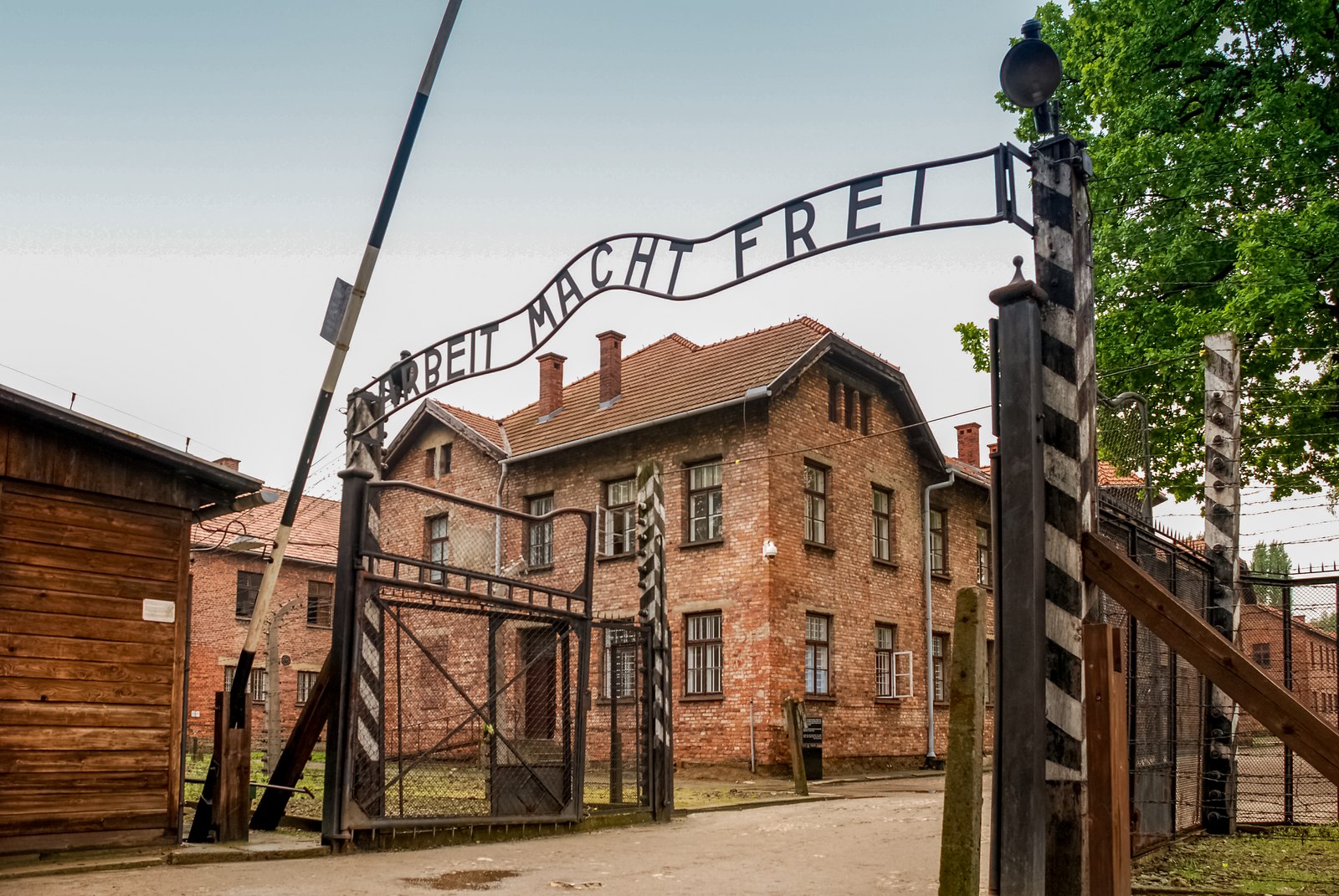
The Auschwitz Museum and Memorial in Oświęcim preserves the site of the largest German Nazi concentration and extermination camp. Around 1.1 million people were murdered here, the overwhelming majority of them Jews, alongside Poles, Roma, Soviet prisoners of war and prisoners of other nationalities. This is not a museum in the everyday sense of the word. It is a memorial: the authentic grounds, the barracks, the ruins of the gas chambers, and the belongings taken from the victims. The former camp has been a UNESCO World Heritage Site since 1979.
A visit has two parts. Auschwitz I, the former main camp, consists of brick blocks housing the exhibitions: documents, photographs, the personal possessions of those deported here, and a series of national exhibitions prepared by individual countries. Auschwitz II-Birkenau, about three kilometres away, is a vast open site with the railway ramp, the remains of wooden barracks, and the ruins of the gas chambers and crematoria. Birkenau is where the scale of the camp becomes fully apparent. Allow at least ninety minutes for each part; the standard guided tour covers both and lasts about 3.5 hours.
According to the museum, parts of the Birkenau site and a section of the exhibition in Block 5 are temporarily closed to visitors, and individual national exhibitions close periodically for maintenance. Check the official website for current notices before you travel.
Booking your entry pass
Entry to the Memorial is free, but everyone needs a personalized entry pass, and passes are issued only online at visit.auschwitz.org. There is no ticket desk at the entrance and no way to walk in unannounced. The booking site is the museum’s only official sales channel; it does not cooperate with third-party resellers, and passes bought elsewhere are a common source of cancelled visits.
Three rules catch visitors out most often:
- Free passes for a self-guided visit (without an educator) must be reserved no later than 7 days before your visit - or until the allocation runs out, which in high season happens fast.
- Entry passes for individual visitors are non-changeable and non-refundable, so choose your date carefully.
- Every visitor, including those arriving with an organised group, must carry their personalized pass and an identity document matching the name on it.
Guided tours with a museum educator carry a fee. The price includes the tour of both parts of the former camp, a headset, and the shuttle bus transfer between Auschwitz I and Birkenau. Concessionary passes are available to pupils and students up to the age of 26, visitors over 75, and disabled visitors with a relevant document. Groups are required to visit with an educator and should reserve one at least a month ahead; on the booking site, educator-led slots are sold up to 5 days before the visit, and language-tour sales close 15 minutes before the tour starts.
Guided tour or self-guided visit?
If this is your first visit, take the guided tour. English-language tours run daily and are the most frequent of all languages - every 15 to 30 minutes through the busy months - and an educator supplies the context that captions alone cannot: individual stories, how the camp system worked, and what you are actually looking at among the ruins. Educators work in about twenty languages, including French, German, Spanish and Italian; longer study tours dig deeper for those who want more than the standard route.
A self-guided visit is possible only in designated time slots in the later part of the day: from 13:00 in December, from 14:00 in January and November, from 15:00 in February, from 16:00 in March and October, and from 17:00 between April and September. The earlier hours are reserved exclusively for educator-led visits. If you plan to visit on your own in summer, expect a late-afternoon entry - and remember the 7-day advance booking rule for free passes.
Opening hours
The Memorial is open every day of the year except 1 January, 25 December and Easter Sunday. Entry starts at 7:30, and the last admission shifts with the season: 14:00 in December, 15:00 in January and November, 16:00 in February, 17:00 in March and October, 18:00 in April, May and September, and 19:00 from June to August. You may stay on the grounds for up to 90 minutes after the last entry hour - until 17:30 in February, until 20:30 in June. The hours listed on this page are the entry window, meaning the times at which you are allowed to begin your visit; once it closes, no one is admitted. The site occasionally closes at short notice for state visits and ceremonies; announcements appear on the official website in advance.
Rules and practicalities
Security checks operate at the entrance, so arrive at least 30 minutes before your entry time. The maximum bag size allowed on the grounds is 35 x 25 x 15 cm; leave anything larger in your car or coach. The main car park and visitor entrance are at 55 Więźniów Oświęcimia Street.
Behave and dress with the solemnity the place demands, keep quiet inside the buildings, and be considerate about photography. The museum advises against visits by children under 14. Do not treat this as one stop among several in a day: with travel from Krakow it takes most of a day, and given the emotional weight of the site, combining it with other sightseeing the same day is simply not advisable.
Getting there from Krakow
The Memorial is in Oświęcim, about 60 kilometres west of Krakow. Trains and buses run from Krakow to Oświęcim; the one-way journey usually takes between an hour and a half and two hours. By car, take the A4 motorway towards Katowice, then local roads to Oświęcim. Many visitors book an organised transfer from Krakow; whichever way you travel, your entry pass time is what matters, so build in a margin for the road. A shuttle bus links Auschwitz I and Birkenau, and the distance between them can also be walked.
Nearby
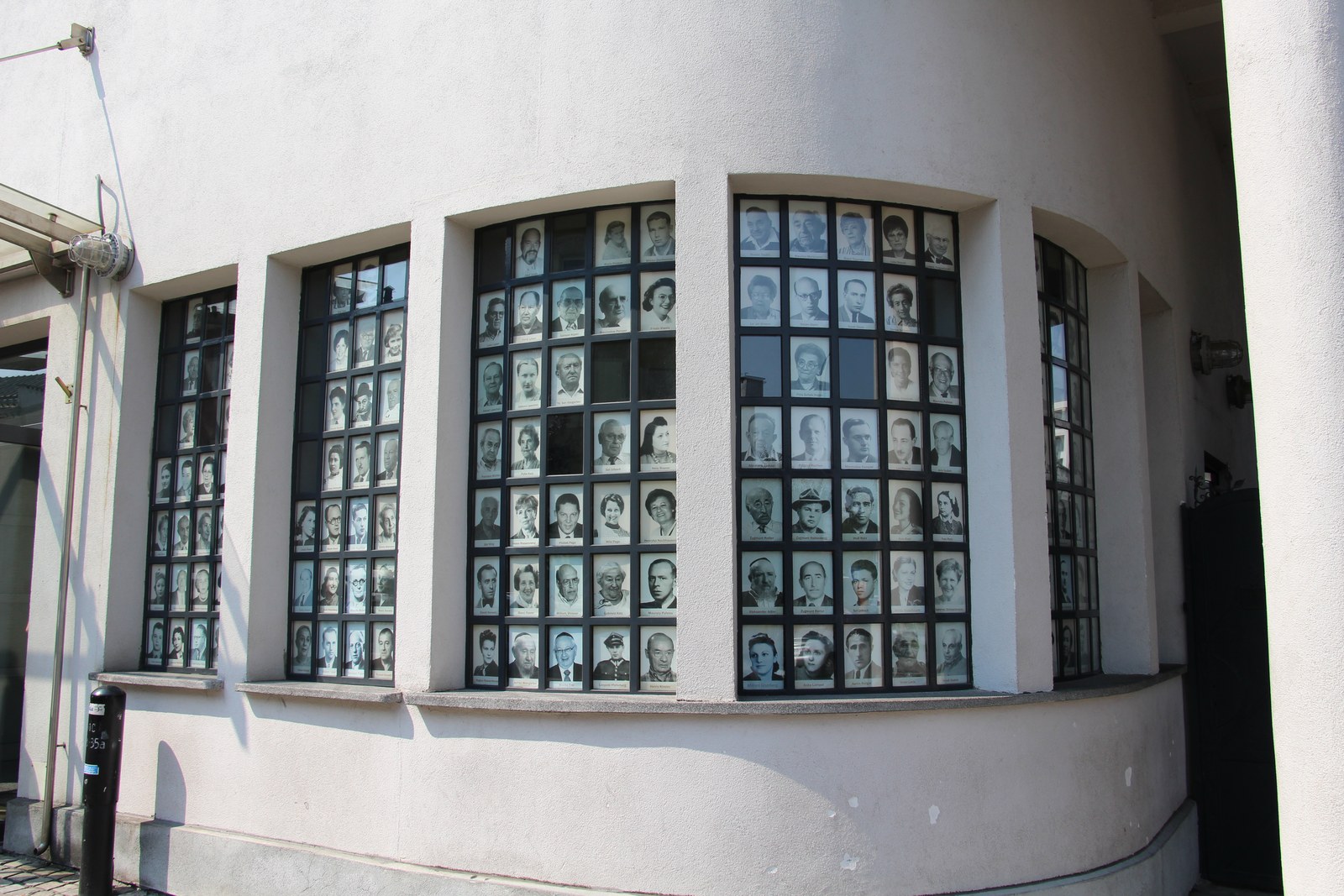
The history of the occupation and the Holocaust in Krakow itself is documented at Oskar Schindler’s Enamel Factory and the Eagle Pharmacy, on the grounds of the former ghetto in Podgórze. For the context of pre-war Jewish life in the region, visit the Galicia Jewish Museum in Kazimierz. Seeing those three before travelling to Oświęcim gives your visit a coherent arc: from the life of the community, through occupied Krakow, to the site of the Holocaust.
Nearby museums
 History
Oskar Schindler's Enamel Factory
ul. Lipowa 4, 30-702 Kraków
Schindler's Factory in Krakow - the story of the city under occupation 1939-1945. Opening hours, tickets 60/45 PLN, free Mondays, book timed …
Eagle Pharmacy
plac Bohaterów Getta 18, 30-547 Kraków
Eagle Pharmacy in Krakow - museum of Tadeusz Pankiewicz's pharmacy in the Podgórze ghetto. Opening hours, tickets 22 PLN, free entry on …
 History
Galicia Jewish Museum
ul. Dajwór 18, 31-052 Kraków
Galicia Jewish Museum in Krakow's Kazimierz - Jewish Galicia told through photography. Open daily 10:00-18:00, tickets 35 PLN, how to get …