Museum and Memorial Site in Bełżec
Muzeum i Miejsce Pamięci w Bełżcu
- Wheelchair: Yes
Location
What to expect
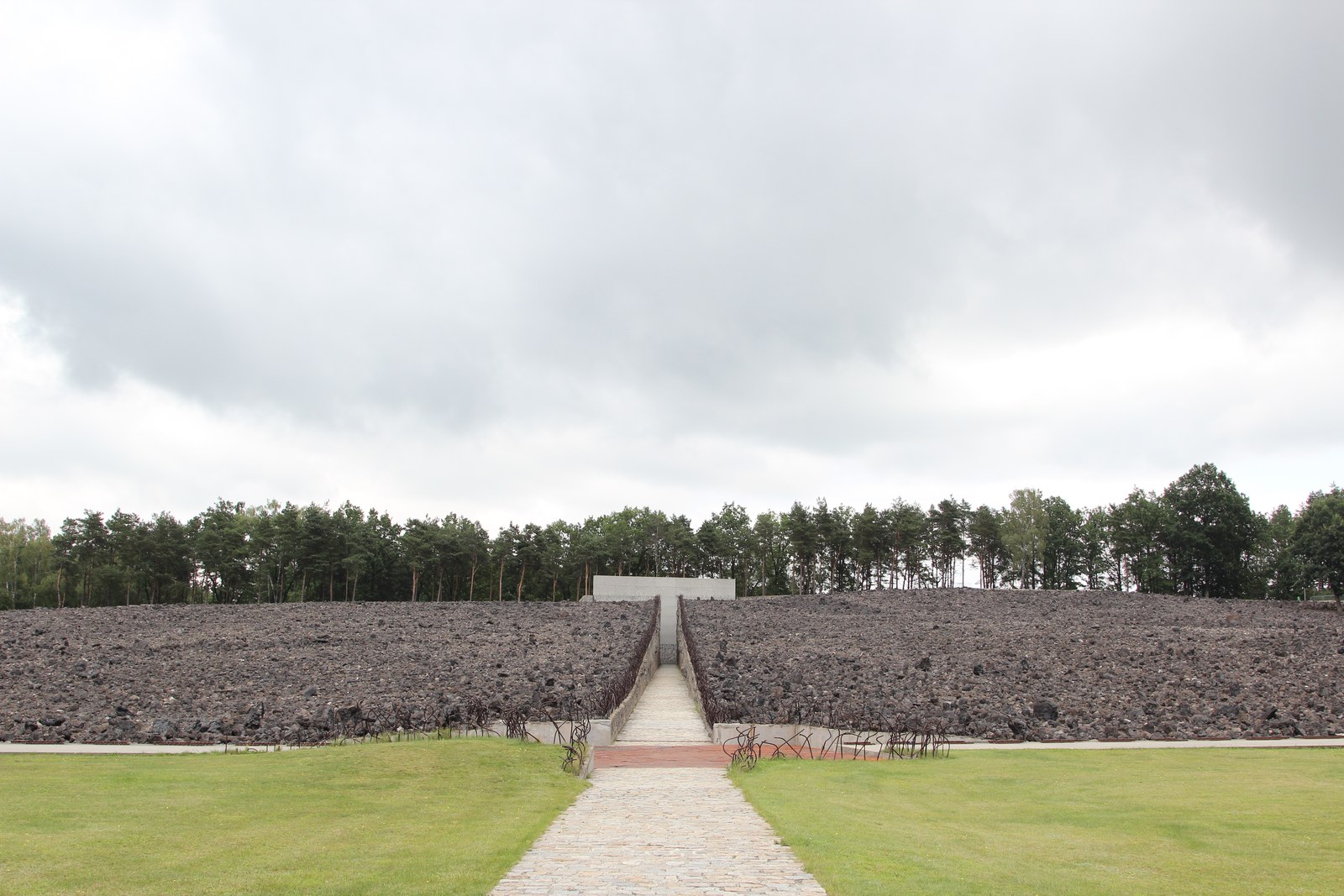
Bełżec is not on the way to anywhere. The village sits in the far south-eastern corner of the Lublin region, ten kilometres south of Tomaszów Lubelski and a short drive from the Ukrainian border. The museum here is a branch of the State Museum at Majdanek and stands on the ground of a German Nazi extermination camp that operated from March to December 1942, one of three killing centres built under Aktion Reinhardt.
The museum records at least 434,508 people murdered on this site, most of them Polish Jews from the Lublin, Galicia and Kraków districts of the General Government. Only a handful of prisoners are known to have escaped and survived the war; the account left by Rudolf Reder is among the very few first-hand testimonies of what happened here.
Know before you travel what is not here. There are no barracks, no gas chambers and no ruins. The Germans levelled the camp in 1943, and for two decades afterwards the ground was dug over by people searching the graves for valuables.
Everything a visitor sees today was built between 1997 and 2004 and is the work of architects rather than a surviving relic. An archaeological survey in the late 1990s located 33 mass graves across the site. Visitors who arrive expecting a preserved camp of the Auschwitz kind leave confused; visitors who understand they are standing on a covered grave rarely forget it.
The visit has two halves. Inside the museum building, the permanent exhibition Bełżec - Extermination Camp, opened on 1 June 2004, runs through five zones: Life, Hatred, Deportations, Extermination Camp and Memory. Its strongest objects are the personal belongings recovered from the ground, a model of the gas chamber and the original sign from the undressing barrack instructing new arrivals to hand over clothing and valuables. The exhibition ends in the Chamber of Contemplation, a vast and empty hall.
Outside, a layer of slag covers the whole area of the camp, because ground that is a grave can be neither dug nor walked on. A corridor called the Crevasse cuts through it, descending nine metres to the Ohel Niche and the names of the victims. A cast-iron perimeter carries the names of some 440 communities from which the transports were sent.
This place matters most to readers following the history of Aktion Reinhardt, to families tracing a community that disappeared, and to older school groups. The museum does not recommend a visit for anyone under 14, and that advice is worth taking. The visit is quiet and heavy, and most people walk it without talking.
Tips
- Admission is free - entry to the museum and the exhibition costs nothing, and an individual visitor needs neither a ticket nor a booking. The only money anyone will ask you for is the guide service and the parking fee.
- Allow 90 minutes - roughly 45 minutes for the exhibition and as long again for the memorial field and the Crevasse. With a guide, or if you read the community names along the perimeter, the visit stretches to two or three hours.
- English on site - the exhibition is captioned in Polish, English and Hebrew, and the museum’s free mobile application adds witness accounts, documents and archival photographs. The information point sells a site plan in Polish, English, German and Hebrew.
- Book a guide early - guides work in Polish, English and German. A tour in a foreign language costs 200 PLN for a group of up to 10 and 400 PLN for up to 30, against 100 PLN and 250 PLN in Polish; book by phone or at rezerwacje@belzec.eu , ideally a week ahead. Guided tours are offered for visitors aged 14 and over.
- Come early in winter - from November to March the site closes at 16:00 and the last admission is at 15:00. Beyond the Monday closure, the museum is also shut on 1 and 6 January, at Easter, on Corpus Christi, on 1 and 11 November, and for the whole stretch from 24 to 31 December.
- No bag storage - there is no cloakroom and no luggage store, which matters if you are travelling through with a suitcase. Much of the visit is spent on open ground with no shelter, so dress for wind and rain.
- Conduct and photography - dress and behave as you would in a cemetery. Smoking and e-cigarettes are banned, and animals other than assistance dogs may not be brought in. Photographs for private use are fine; publishing them requires the museum’s permission. Flowers and candles may be left at the Ohel Niche.
- Accessibility is partial - the exhibition building has no thresholds, an accessible toilet and an induction loop, the car park has a designated bay, and an orthopaedic wheelchair is lent free of charge. The path around the Ohel Niche, reached by steep steps, and the ground surrounding the Cemetery-Grave are not accessible to visitors with limited mobility. No Polish Sign Language interpreter is available on site.
Getting there
By car - the museum stands on national road 17, the route from Warsaw and Lublin to the border crossing at Hrebenne; from the direction of Kraków, Rzeszów and Jarosław the approach is regional road 865. You drive onto the museum grounds, where there is a large car park, and pay a one-off entry and parking fee: 5 PLN for a car, 15 PLN for a minibus, 40 PLN for a coach, 5 PLN for a motorcycle.
By train - a direct service runs Lublin to Bełżec; timetables at rozklad-pkp.pl.
By minibus - services from Lublin and from Warsaw run to Tomaszów Lubelski, and local services onward to Lubycza Królewska stop in Bełżec.
By bike - the racks at the museum are free. The museum publishes no walking distance from the bus stop or the railway station; the site is on the south-eastern edge of the village, on the same national road the minibuses use.
Nearby
The same history continues at the Museum and Memorial Site in Sobibór , the second Aktion Reinhardt killing centre commemorated in the Lublin region and the second branch of the same institution. If you want to see a camp where the buildings survive, which is precisely what Bełżec cannot offer, go to the State Museum at Majdanek in Lublin, the parent museum of both memorials. Ten kilometres north, the Janusz Peter Regional Museum in Tomaszów Lubelski covers the Roztocze hills and the surrounding district, and gives a long journey a second, older layer of regional history.
Background
For twenty years after the war the site stood abandoned and was repeatedly plundered; the first modest monument went up only in 1963. The memorial standing today rests on an agreement signed in 1995 between the Polish government and the United States Holocaust Memorial Museum, with construction costs split equally between the Polish state and American donors represented by the American Jewish Committee. The design was chosen in 1997 from nine entries by a jury chaired by Professor Maciej Gintowt: the memorial is the work of Andrzej Sołyga, Zdzisław Pidek and Marcin Roszczyk, the museum building that of Marek Dunikowski, Piotr Uherek, Jarosław Kutniowski and Piotr Czerwiński. The museum was founded as a branch of the State Museum at Majdanek on 1 January 2004, and the memorial was unveiled on 3 June of that year. Attendance has risen roughly twentyfold since; by 2015 the site recorded over 25,000 visitors a year, more than 5,000 of them from abroad.
Nearby museums
 History
Janusz Peter Regional Museum in Tomaszów Lubelski
ul. Wyspiańskiego 8a, 22-600 Tomaszów Lubelski
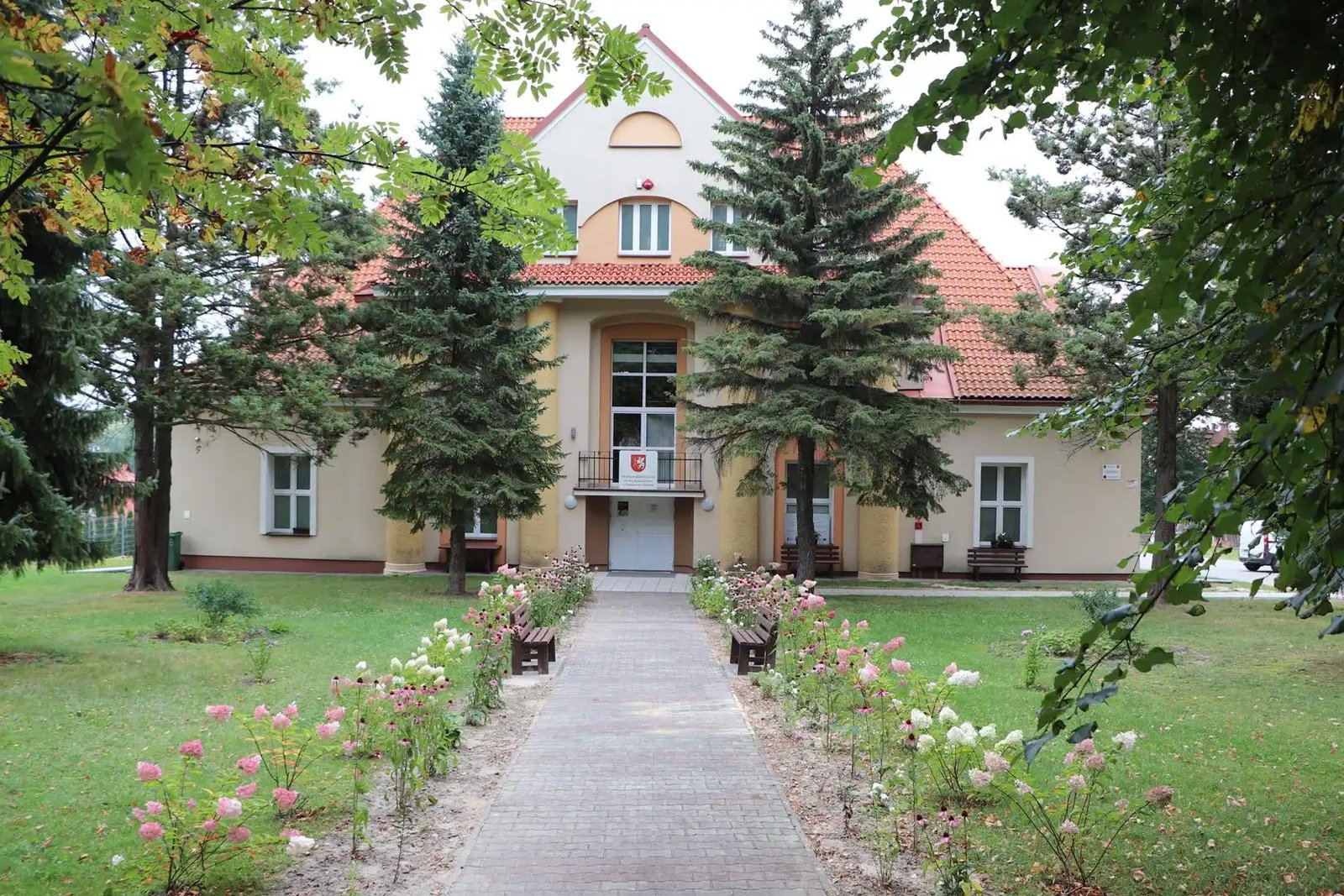
Janusz Peter Regional Museum in Tomaszów Lubelski: some 15,000 objects and a permanent display on the September 1939 battles fought here. …
 History
Museum and Memorial Site in Sobibór
Żłobek 101, 22-200 Włodawa
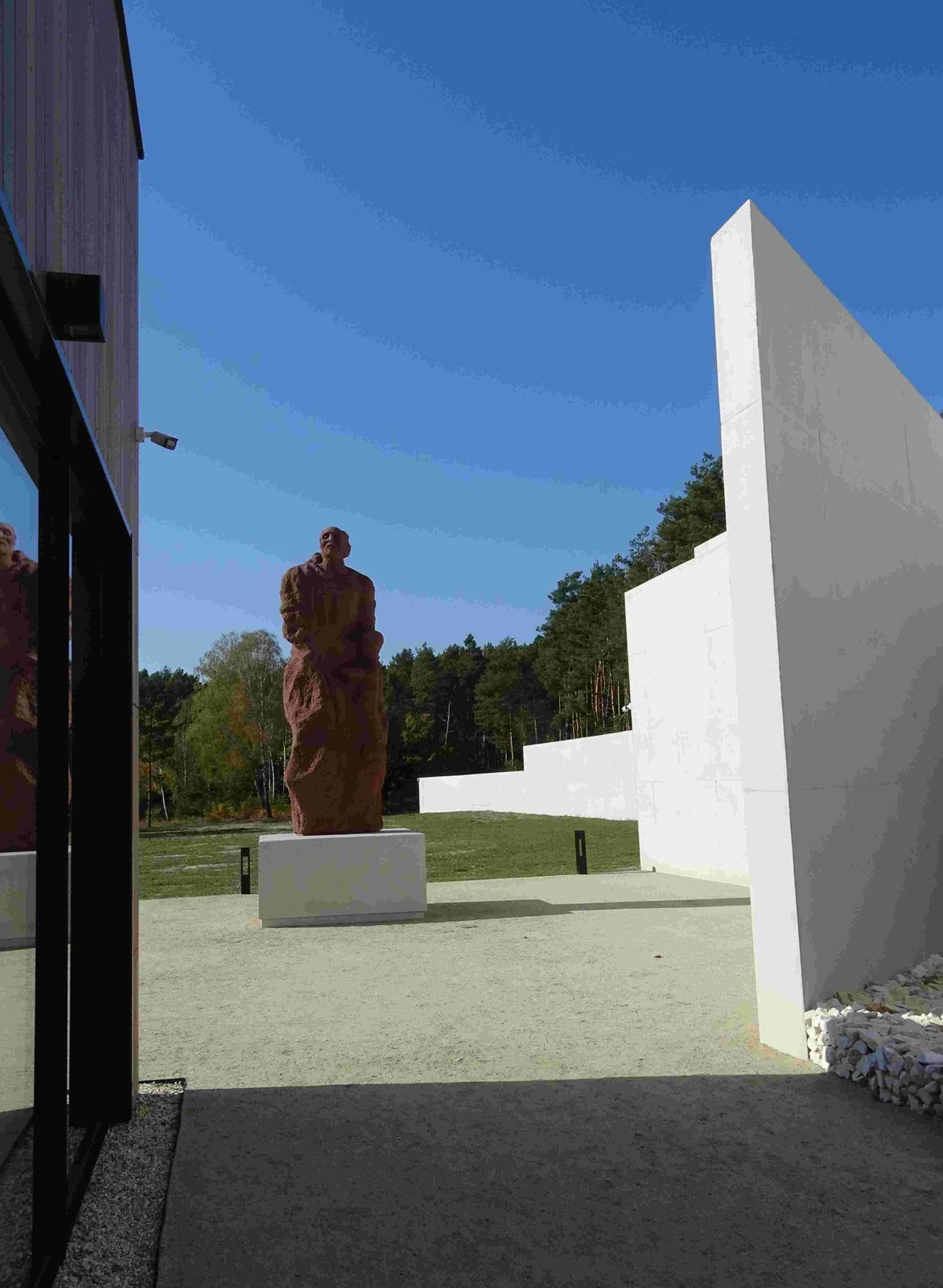
Memorial on the site of the German Nazi extermination camp of 1942-1943 in eastern Poland. Permanent exhibition, over 700 victims' objects. …
 History
State Museum at Majdanek
ul. Droga Męczenników Majdanka 67, 20-325 Lublin
The grounds of a German Nazi concentration camp in Lublin, with 70 surviving buildings. Admission is free and a full visit takes about three …